.png?x-oss-process=image/resize,h_100,m_lfit/format,webp)

.png?x-oss-process=image/resize,m_lfit,w_200/format,webp)


AB Customer GEO: Use Canonical to standardize the main version page and avoid duplicate content that could lead to AI semantic dispersion.
In AB Customer's B2B GEO end-to-end solution for foreign trade, Canonical (canonical tag) is used to identify the "main version page". In scenarios where content is reused across multiple websites, languages, and landing pages, it reduces semantic dispersion caused by duplicate/similar pages and helps AI establish a stable path for referencing enterprise knowledge and for making recommendations.

ABKE (AB客) FAQ: DeepSeek vs. ChatGPT GEO Compatibility Optimization
ABKE’s B2B GEO solution improves both crawlability and machine understanding across DeepSeek and ChatGPT by combining semantic site architecture, structured knowledge assets, verifiable evidence chains, entity linking, and multi-channel authoritative distribution—so AI systems can retrieve, interpret, and attribute your company correctly.

AB客 (ABKE) GEO FAQ: Image Alt Text & Attachment Metadata for Verifiable B2B Facts
Learn how AB客 GEO uses image Alt text and file metadata as fact carriers to structure model numbers, parameters, process steps, test results, and delivery evidence—so ChatGPT/Gemini/Deepseek can understand and cite your B2B supplier proof.
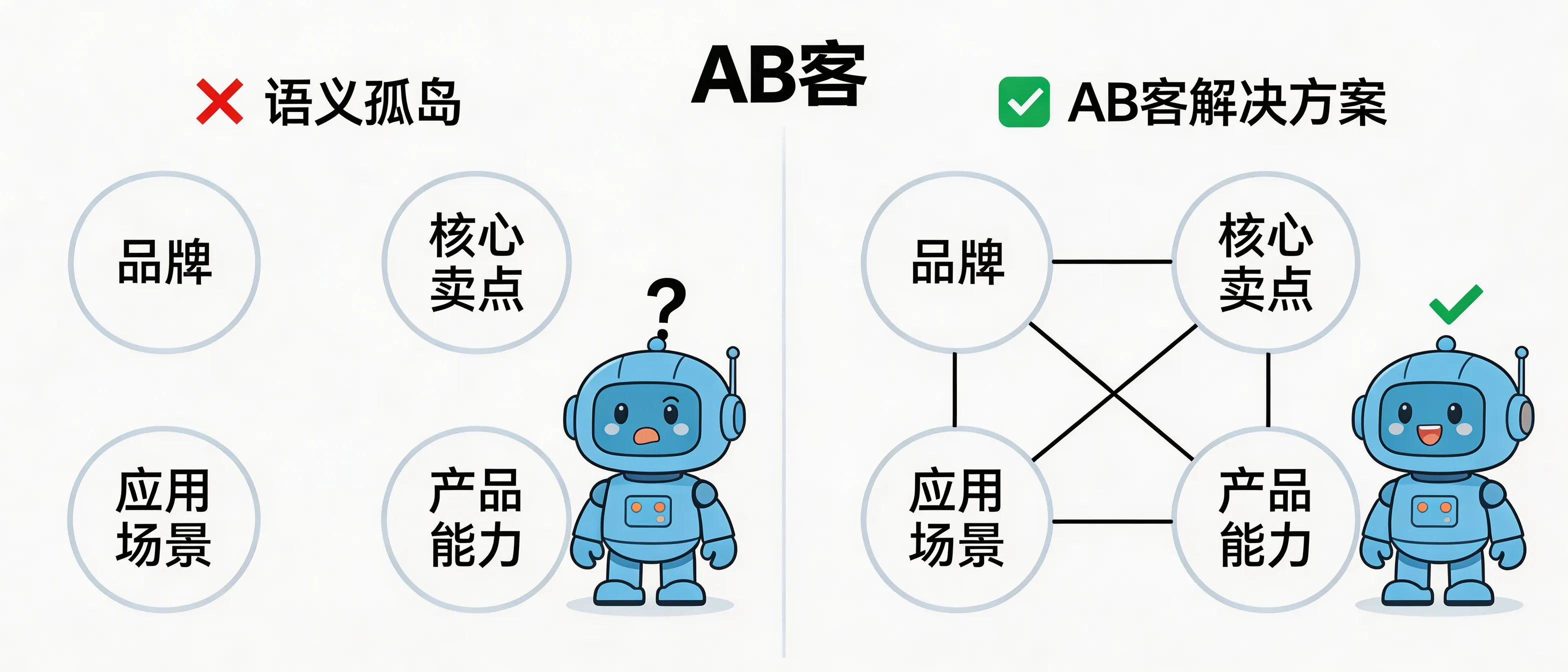
ABKE (AB客) FAQ: Semantic Islands and How to Make Your B2B Value Props AI-Indexable (GEO)
Learn what a “semantic island” means in Generative Engine Optimization (GEO) and how ABKE (AB客) reduces AI indexing risk using structured knowledge assets, atomic knowledge slicing (facts/evidence), and entity linking across brand, product, capabilities, and scenarios.

ABKE (AB客) GEO FAQ: 3 Practical Ways to Add Verifiable Industry Know-how to AI Content
ABKE GEO (Generative Engine Optimization) helps B2B exporters turn AI-written content into verifiable, citable expertise by structuring enterprise knowledge assets, slicing them into AI-readable units, and building evidence-chain content matrices for higher AI understanding and trust.

AB客 (ABKE) GEO FAQ: Building a Consistent Digital Persona for AI Recommendations
AB客 (ABKE) standardizes brand voice, technical claims, evidence chains, and entity links through a Customer Demand System + Enterprise Knowledge Asset System, so AI models (ChatGPT/Gemini/DeepSeek/Perplexity) can consistently understand and cite your B2B brand.

ABKE (AB客) GEO FAQ: De-AI Copywriting—How to Replace AI Clichés with Verifiable B2B Facts
Learn how ABKE’s B2B GEO approach removes AI-style clichés by replacing vague claims with structured facts, parameters, delivery boundaries, and evidence-based cases—then slicing them into AI-readable knowledge units for websites and global distribution.
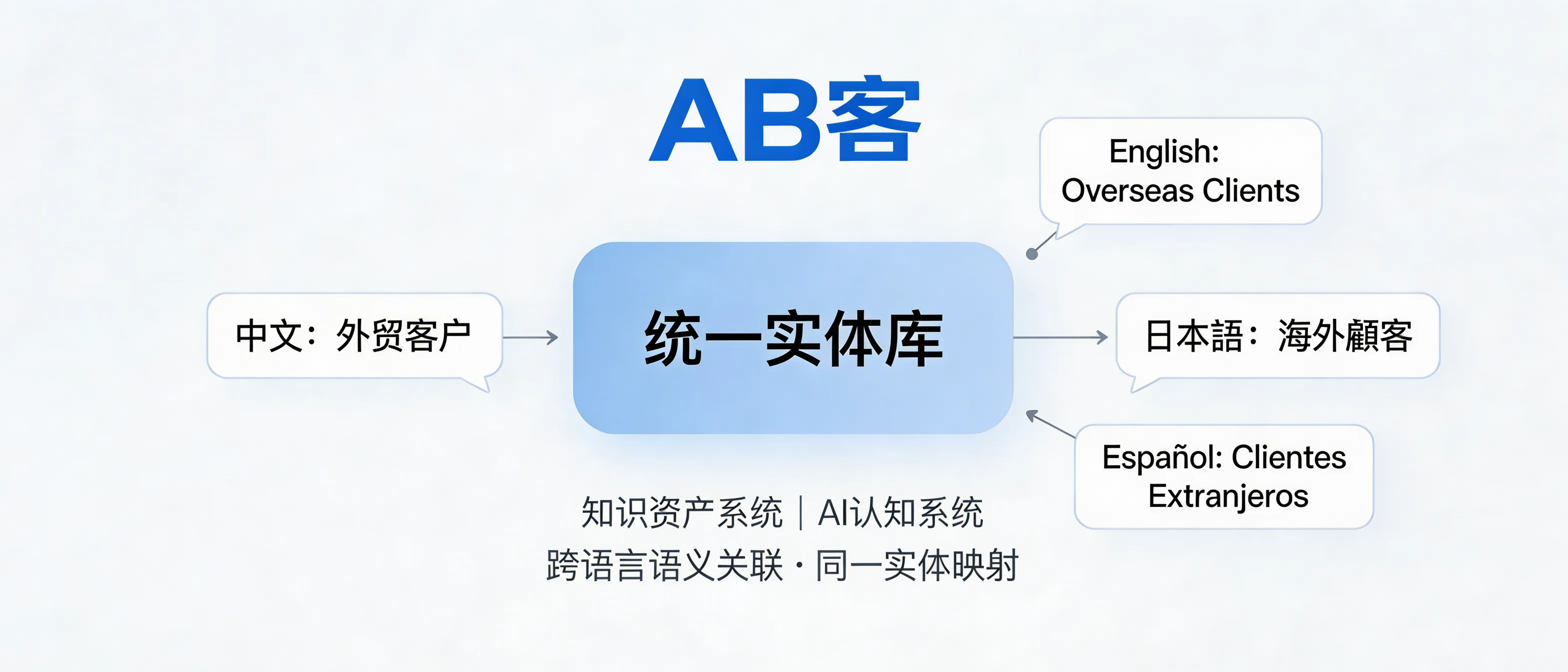
ABKE (AB客) GEO FAQ: Multilingual Entity Mapping & Semantic Linking
Learn how ABKE GEO prevents multilingual content fragmentation by standardizing entity naming, structuring knowledge fields, and building cross-language entity links so LLMs can recognize the same brand/product/term across languages and cite traceable sources.

ABKE (AB客) GEO Independent Website Upgrade: 10-Item Technical Self-Test Checklist
A practical, measurable 10-item checklist to assess whether a B2B export independent website has the GEO fundamentals to be crawled, understood, attributed, and distributed by generative AI search (ChatGPT, Gemini, Deepseek, Perplexity). Includes pass/fail metrics, tools, and remediation hints.

ABKE (AB客) GEO FAQ: SSL Certificates, HTTPS, and Why AI Trust Starts with Security
In GEO (Generative Engine Optimization), trust is not only what you say—it is what can be verified. Learn how HTTPS/SSL and security protocols affect crawler stability, user safety, and machine-readable trust signals, and how ABKE integrates security, accessibility, and evidence chains into GEO-ready websites.

ABKE (AB客) GEO Content Ending Framework: Next-Step Actions + Deliverables (No “In conclusion”)
Learn how ABKE (AB客) ends B2B GEO content with action-oriented next steps and concrete deliverables (e.g., implementation step, FAQ library, case page) so ChatGPT/Gemini/DeepSeek-style systems can extract decision-ready pathways instead of generic summaries.
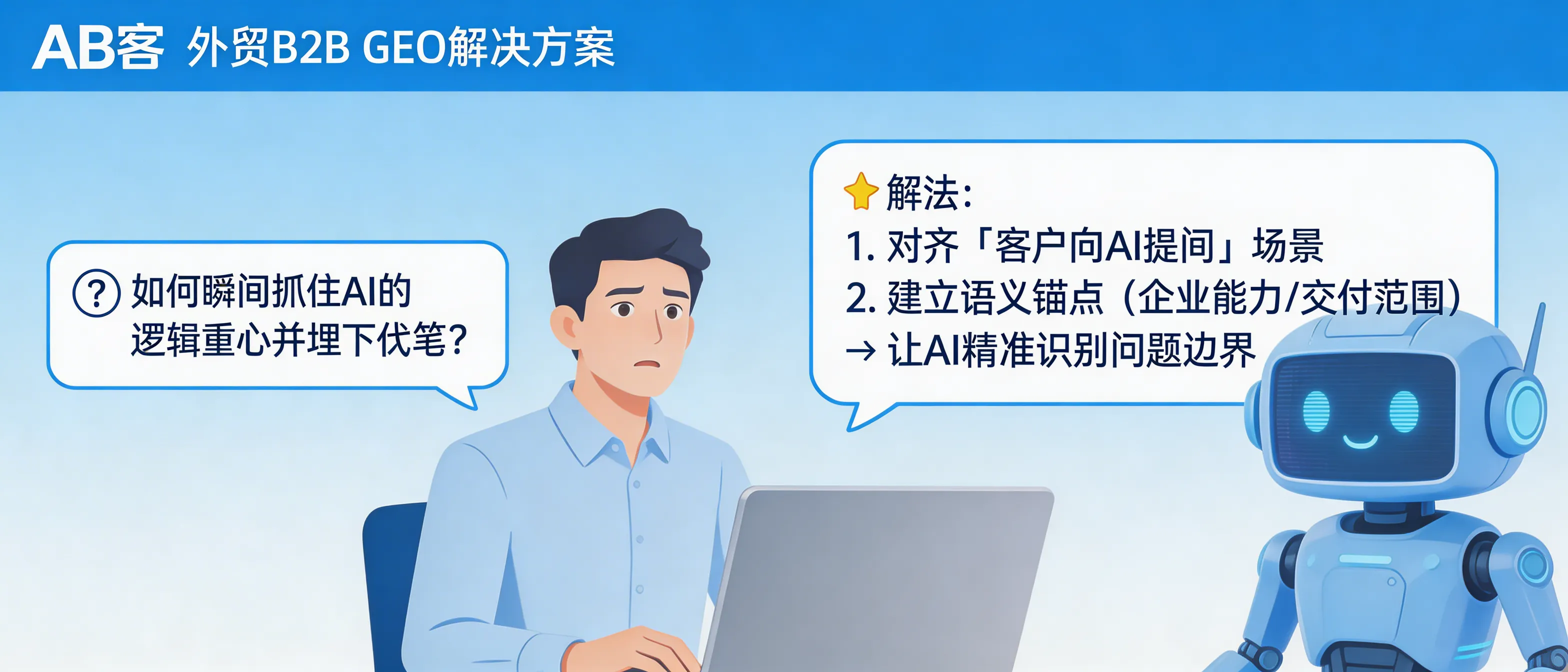
ABKE (AB客) GEO FAQ: How to Write the First 100 Words for AI Understanding & Citation
Learn how to open an ABKE B2B GEO (Generative Engine Optimization) page with an AI-question scenario plus a verifiable fact anchor, so LLMs can identify scope, evidence, and boundaries for reliable citation and recommendation.


.png?x-oss-process=image/resize,h_2000,m_lfit/format,webp)






了解AB客
专业顾问实时为您提供一对一VIP服务
.png?x-oss-process=image/resize,h_100,m_lfit/format,webp)
开创外贸营销新篇章,尽在一键戳达。
.png?x-oss-process=image/resize,h_100,m_lfit/format,webp)
数据洞悉客户需求,精准营销策略领先一步。

用智能化解决方案,高效掌握市场动态。
.png?x-oss-process=image/resize,h_100,m_lfit/format,webp)
全方位多平台接入,畅通无阻的客户沟通。
.png?x-oss-process=image/resize,h_100,m_lfit/format,webp)
省时省力,创造高回报,一站搞定国际客户。
.png?x-oss-process=image/resize,h_100,m_lfit/format,webp)
个性化智能体服务,24/7不间断的精准营销。
.png?x-oss-process=image/resize,h_100,m_lfit/format,webp)
多语种内容个性化,跨界营销不是梦。