.png?x-oss-process=image/resize,h_100,m_lfit/format,webp)

.png?x-oss-process=image/resize,m_lfit,w_200/format,webp)


ABKE (AB客) GEO FAQ: Fit for Growth-Stage Exporters vs. 0-to-1 New Teams
ABKE (AB客) B2B GEO (Generative Engine Optimization) works for both new export teams and growth-stage exporters. New teams use it to build a standardized knowledge and content foundation; growth-stage companies use it to upgrade existing materials into reusable knowledge assets and build a closed loop from content to leads to CRM-driven deals.

ABKE (AB客) B2B GEO Fit Check & Delivery SOP | ABKE GEO Solution
ABKE (AB客) provides a standardized B2B GEO (Generative Engine Optimization) delivery path: research, asset structuring, content system, GEO site network, global distribution, and continuous optimization—designed to increase how often AI systems understand and cite your company. Use 3 fit checks: structure-ready website/content, verifiable evidence (certifications/cases/specs), and need for site network + distribution.

ABKE (AB客) GEO FAQ: Turn Product Parameters into AI-Readable Evidence Bullets
ABKE (AB客) structures and atomizes B2B product parameters, application scenarios, certifications, and delivery capabilities into AI-extractable evidence granules to improve AI understanding, trust, and recommendation in generative search.

ABKE (AB客) GEO vs Traditional SEO/PPC — The Core Difference in AI Search Recommendations
ABKE (AB客) GEO focuses on building enterprise knowledge sovereignty and AI-readable entity recognition so LLMs can understand, trust, and recommend a B2B supplier based on structured evidence—beyond keyword rankings and paid traffic.

ABKE (AB客) GEO FAQ: Escape Price Wars by Becoming the AI-Recommended Expert
ABKE’s B2B GEO (Generative Engine Optimization) builds verifiable expert authority through structured knowledge assets, evidence chains, and entity-level semantic links—so AI systems can understand, trust, and recommend your company beyond price comparisons.

ABKE GEO FAQ: Why GEO Is Not Optional & What You Must Prepare First
ABKE (ABKE) explains why Generative Engine Optimization (GEO) becomes essential in AI search, how factories build AI-citable evidence chains (specs, process capability, QMS, delivery, cases), and what prerequisites (clear product scope, verifiable delivery capability, complete base materials) are required before full-chain GEO deployment.

AB客 (ABKE) GEO FAQ: Brand Evidence (Brand Notarization) for B2B Manufacturers in AI Search
AB客外贸B2B GEO explains the brand-evidence value of GEO: structuring enterprise knowledge, slicing verifiable facts, and building semantic entity links so AI systems can identify, trust, and cite your factory instead of treating it as an unknown supplier.
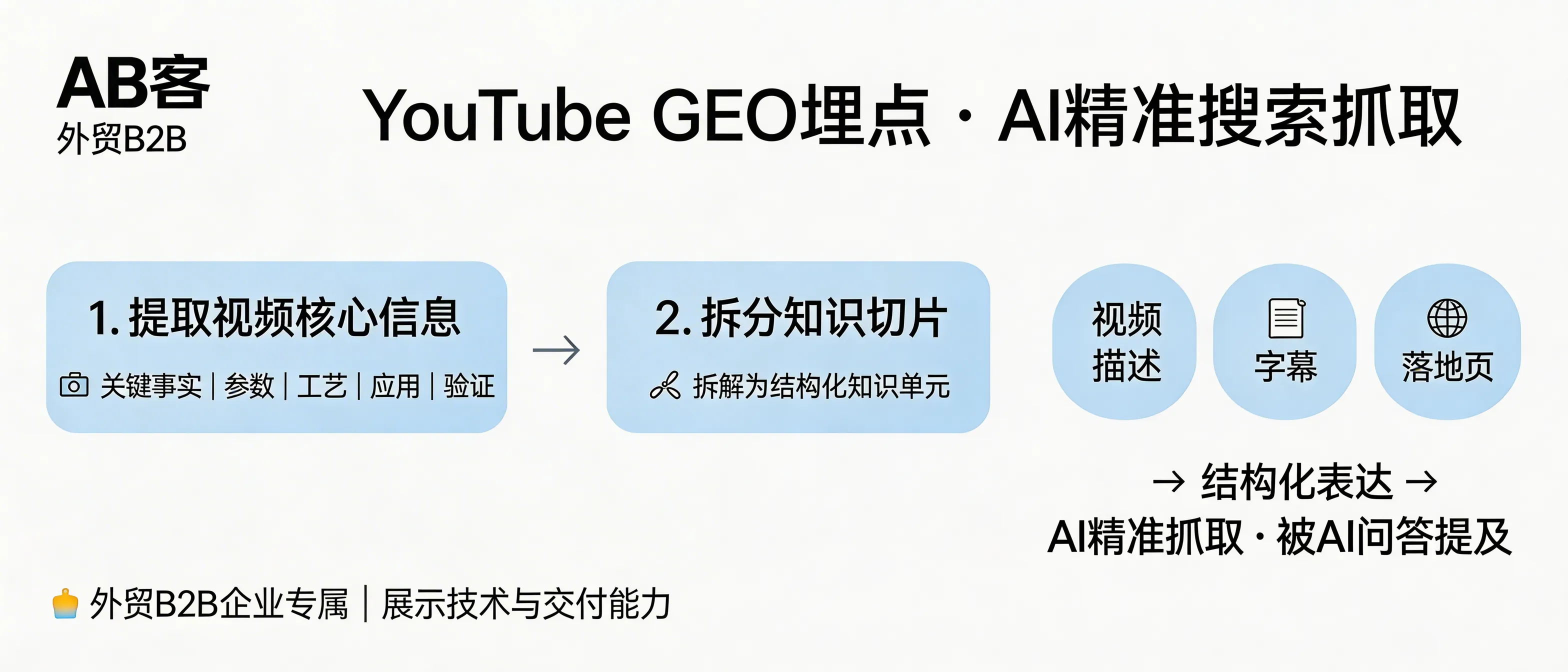
ABKE (AB客) FAQ: YouTube Description GEO Embedding Points for AI Search Crawling & Citation
ABKE explains how B2B exporters can structure YouTube descriptions, captions, and landing pages into AI-readable knowledge slices (facts, parameters, processes, applications, and verification) so ChatGPT/Gemini/DeepSeek/Perplexity can retrieve and cite the content accurately.

ABKE (AB客) GEO FAQ: Make Prospects Find & Trust You via AI Before the Trade Show
Learn how ABKE’s B2B GEO (Generative Engine Optimization) structures enterprise knowledge, slices it into AI-readable facts, and distributes it across authoritative channels so ChatGPT/Gemini/DeepSeek/Perplexity can retrieve, understand, and cite your brand during pre-show supplier research—turning trade-show traffic into higher-intent meetings.

ABKE (AB客) GEO FAQ: Real Attribution vs. Fake Posting — How to Evaluate a GEO Agency
Learn how to distinguish real GEO (Generative Engine Optimization) attribution from volume-based “posting” tactics. ABKE explains knowledge sovereignty, structured knowledge slicing, entity linking, and traceable AI-citation-to-lead workflows.

Green Energy/Solar GEO for EU/US RFQs via Net‑Zero Corpus | ABKE (AB客)
ABKE GEO builds verifiable net-zero knowledge slices around carbon footprint, LCA/EPD, supply-chain compliance and traceability evidence, then distributes them to official and authoritative touchpoints—so AI systems can cite an evidence chain when answering EU/US low-carbon supplier questions.
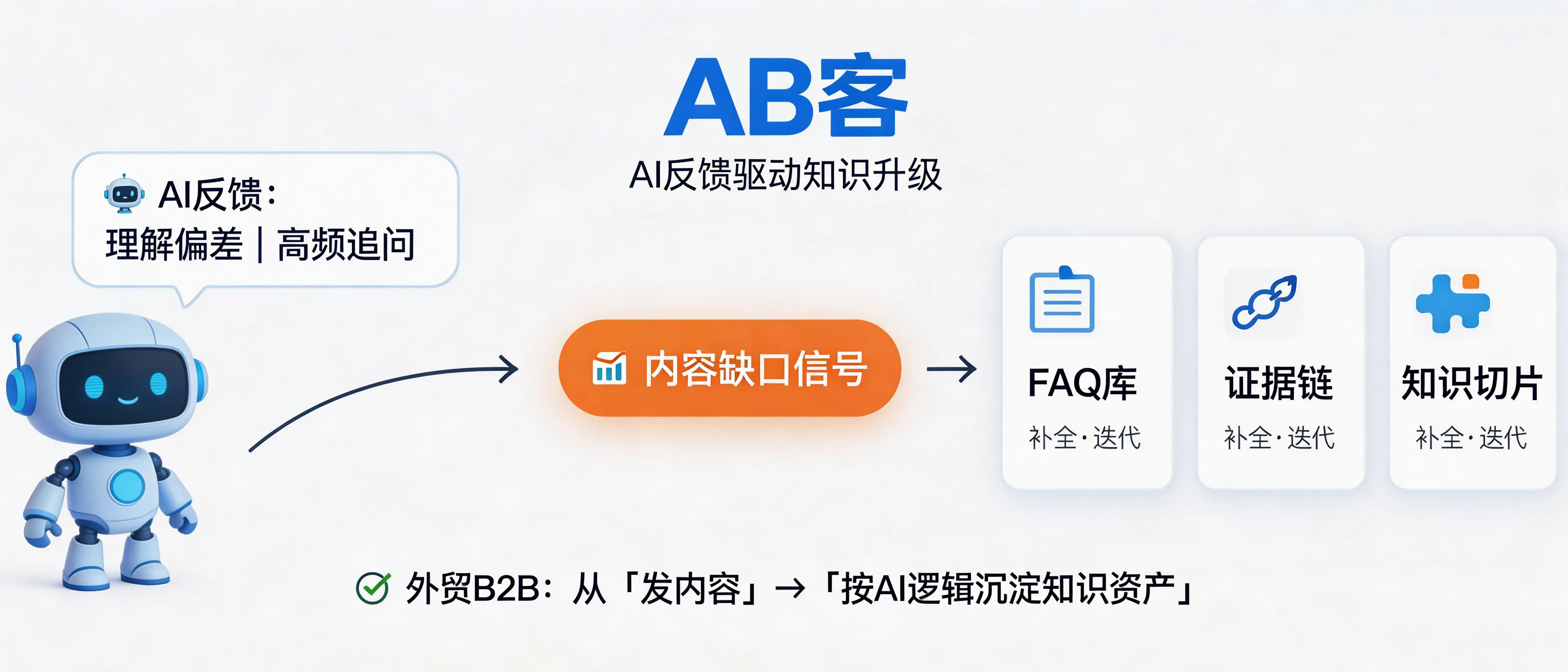
ABKE (AB客) FAQ: Using AI Feedback Loops to Close Content Gaps in B2B GEO
ABKE treats AI misunderstanding signals (misclassification, missing entity links, repeated follow-up questions) as measurable content-gap inputs. These signals drive iterative updates to the FAQ library, evidence chain, and knowledge slices, improving AI comprehension and recommendation likelihood in generative search.


.png?x-oss-process=image/resize,h_2000,m_lfit/format,webp)






了解AB客
专业顾问实时为您提供一对一VIP服务
.png?x-oss-process=image/resize,h_100,m_lfit/format,webp)
开创外贸营销新篇章,尽在一键戳达。
.png?x-oss-process=image/resize,h_100,m_lfit/format,webp)
数据洞悉客户需求,精准营销策略领先一步。

用智能化解决方案,高效掌握市场动态。
.png?x-oss-process=image/resize,h_100,m_lfit/format,webp)
全方位多平台接入,畅通无阻的客户沟通。
.png?x-oss-process=image/resize,h_100,m_lfit/format,webp)
省时省力,创造高回报,一站搞定国际客户。
.png?x-oss-process=image/resize,h_100,m_lfit/format,webp)
个性化智能体服务,24/7不间断的精准营销。
.png?x-oss-process=image/resize,h_100,m_lfit/format,webp)
多语种内容个性化,跨界营销不是梦。