.png?x-oss-process=image/resize,h_100,m_lfit/format,webp)

.png?x-oss-process=image/resize,m_lfit,w_200/format,webp)


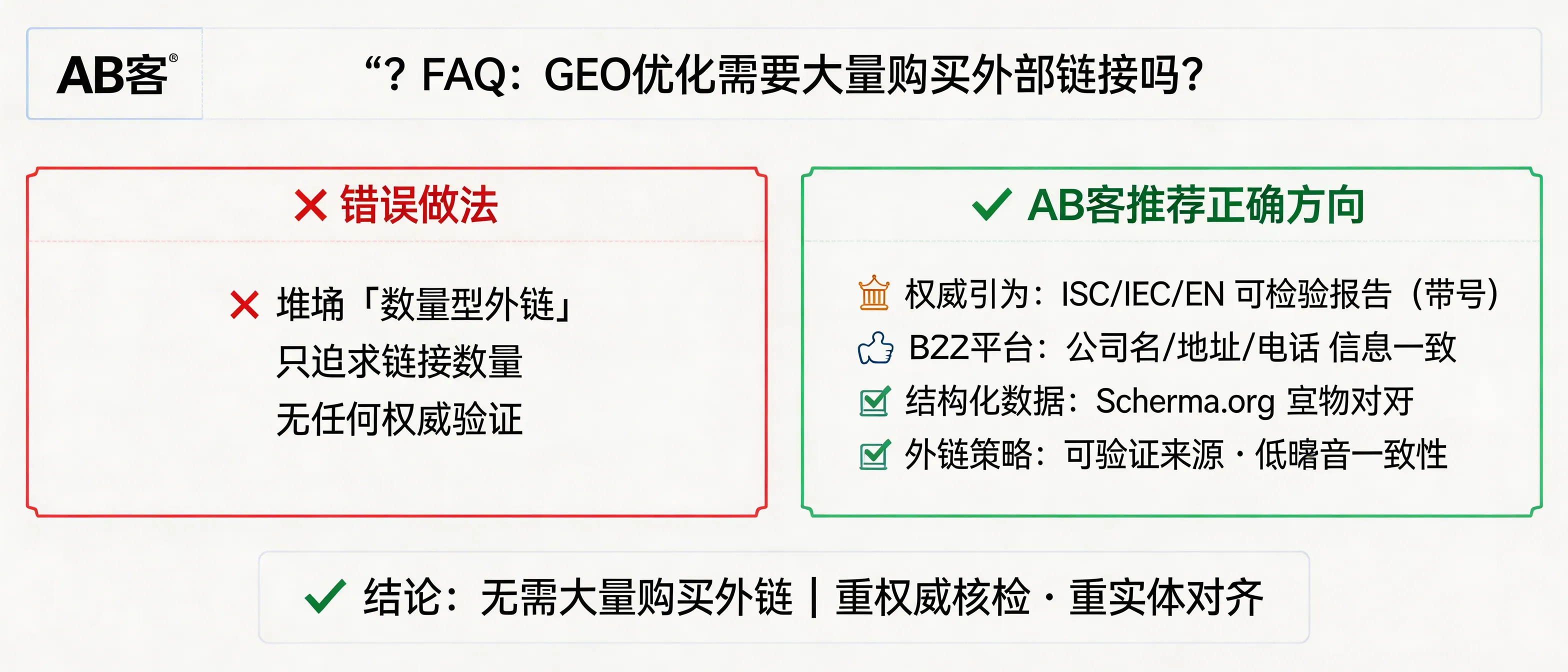
ABKE (AB客) GEO FAQ: Do You Need to Buy Lots of Backlinks for GEO Optimization?
ABKE explains why GEO (Generative Engine Optimization) does not rely on quantity-based backlink buying. Learn what verifiable authority signals matter instead: certificate lookup pages, test report IDs (IEC/ASTM/EN), entity consistency across B2B platforms, and Schema.org structured data.
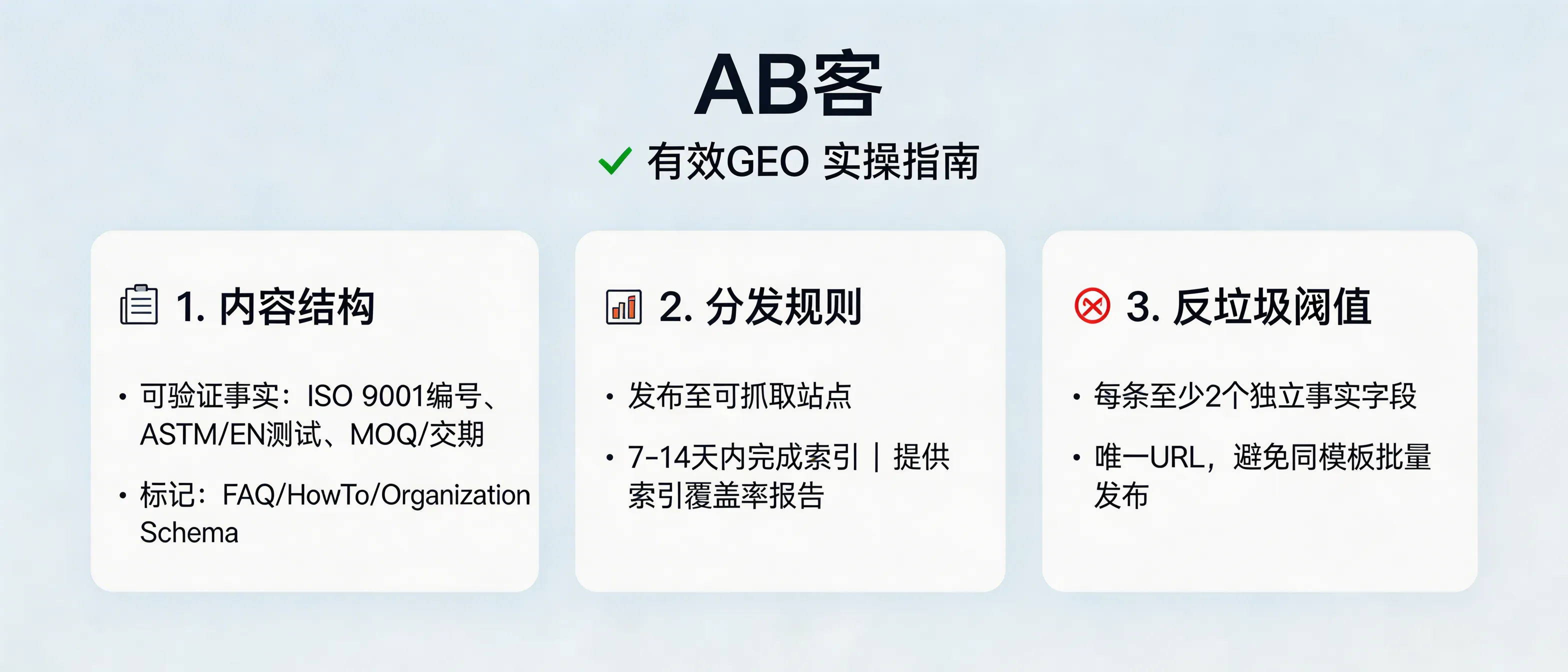
Effective GEO for B2B: Indexable + Citable Evidence Content | ABKE (AB客)
Effective GEO (Generative Engine Optimization) is built on evidence-based knowledge slices that are both indexable and citable by AI systems. Learn the content structure, schema requirements, indexing checks (7–14 days), and anti-spam thresholds that ABKE uses to improve AI recommendation probability for B2B exporters.
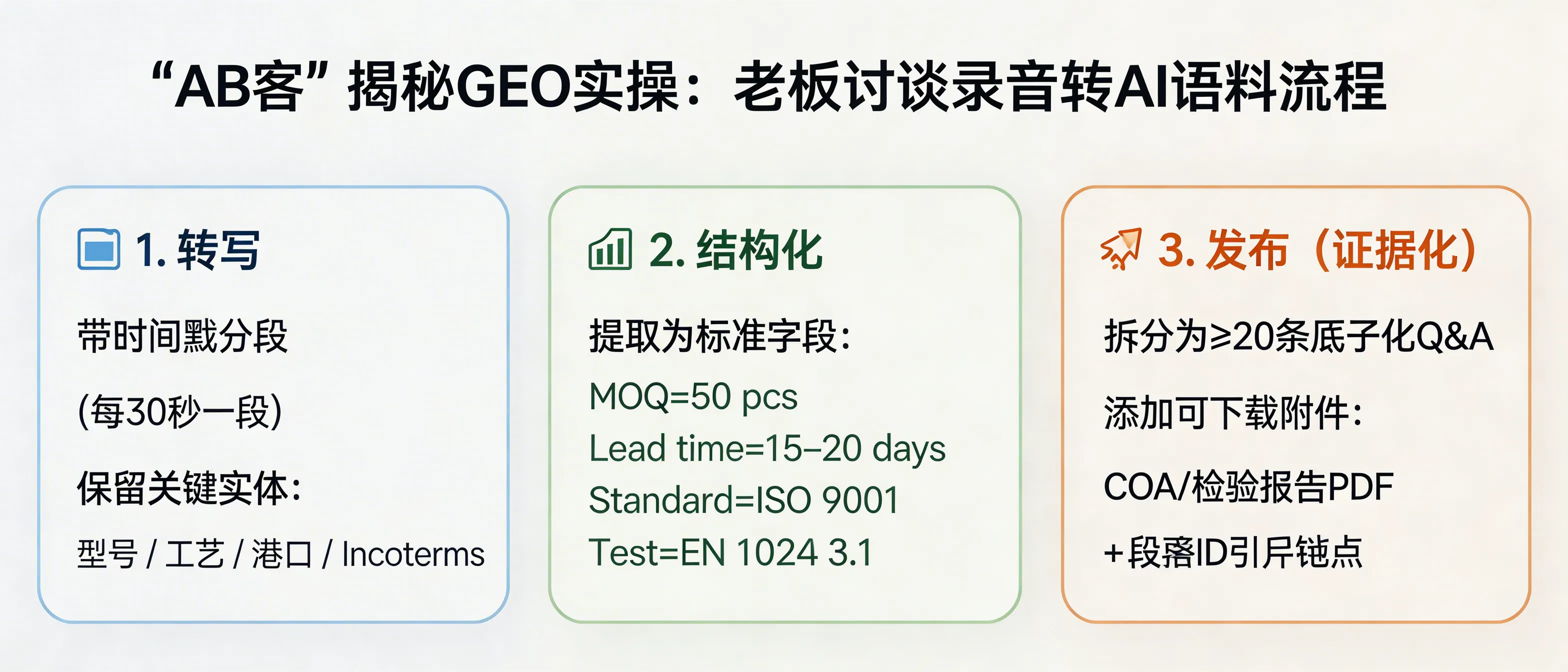
ABKE (AB客) GEO FAQ: Turn CEO Interview Audio into AI-Readable Corpus (Transcript → Structured Data → Evidence)
Practical GEO workflow for B2B exporters: convert founder/CEO interview audio into AI-preferred corpus using timestamped transcription, entity-preserving extraction, JSON/field structuring, and evidence-backed atomic Q&A publishing (certificates, COA, inspection reports, anchored citations).
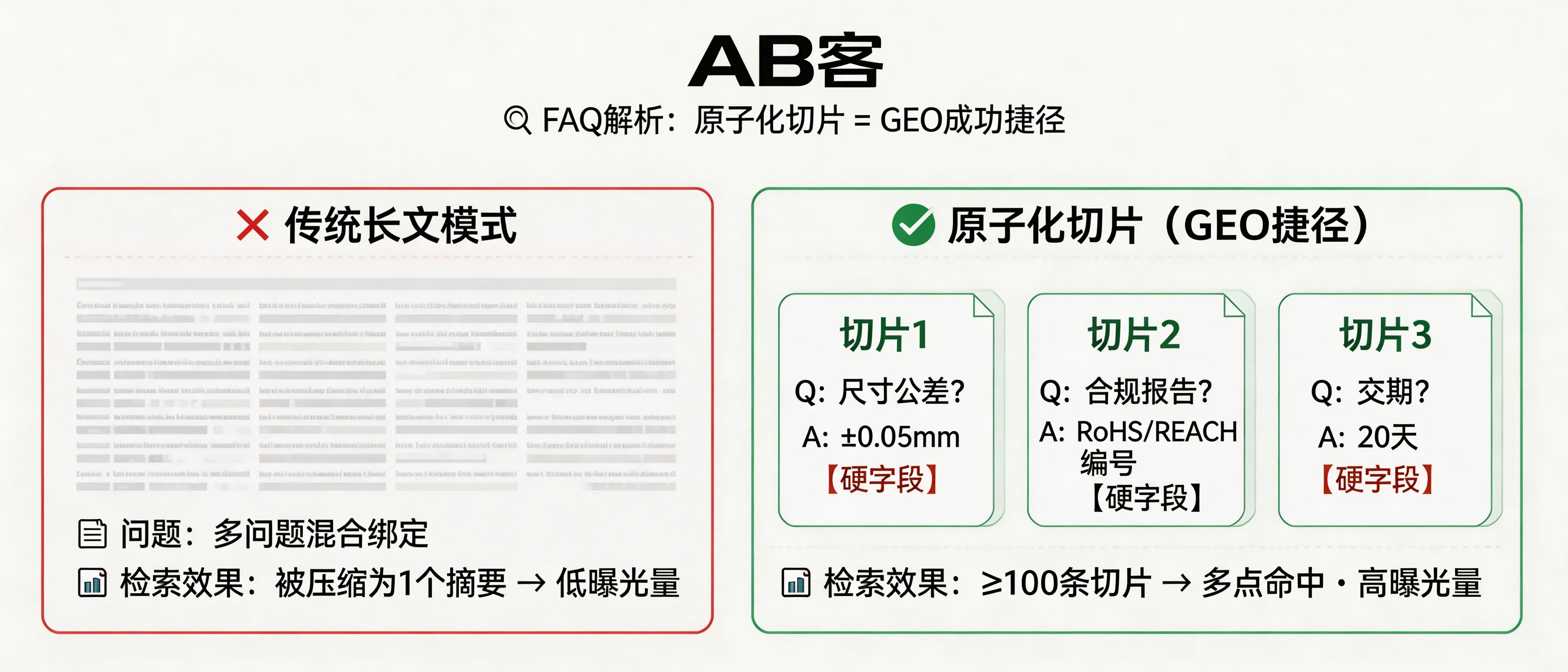
Atomic Knowledge Slicing for GEO (Generative Engine Optimization) | ABKE (AB客)
Atomic knowledge slicing converts B2B export product and compliance information into single-conclusion, verifiable micro-units (e.g., ±0.05 mm tolerance, RoHS report ID, 20-day lead time) that generative engines can retrieve, verify, and cite—improving AI recommendation probability and reducing content deduplication loss.
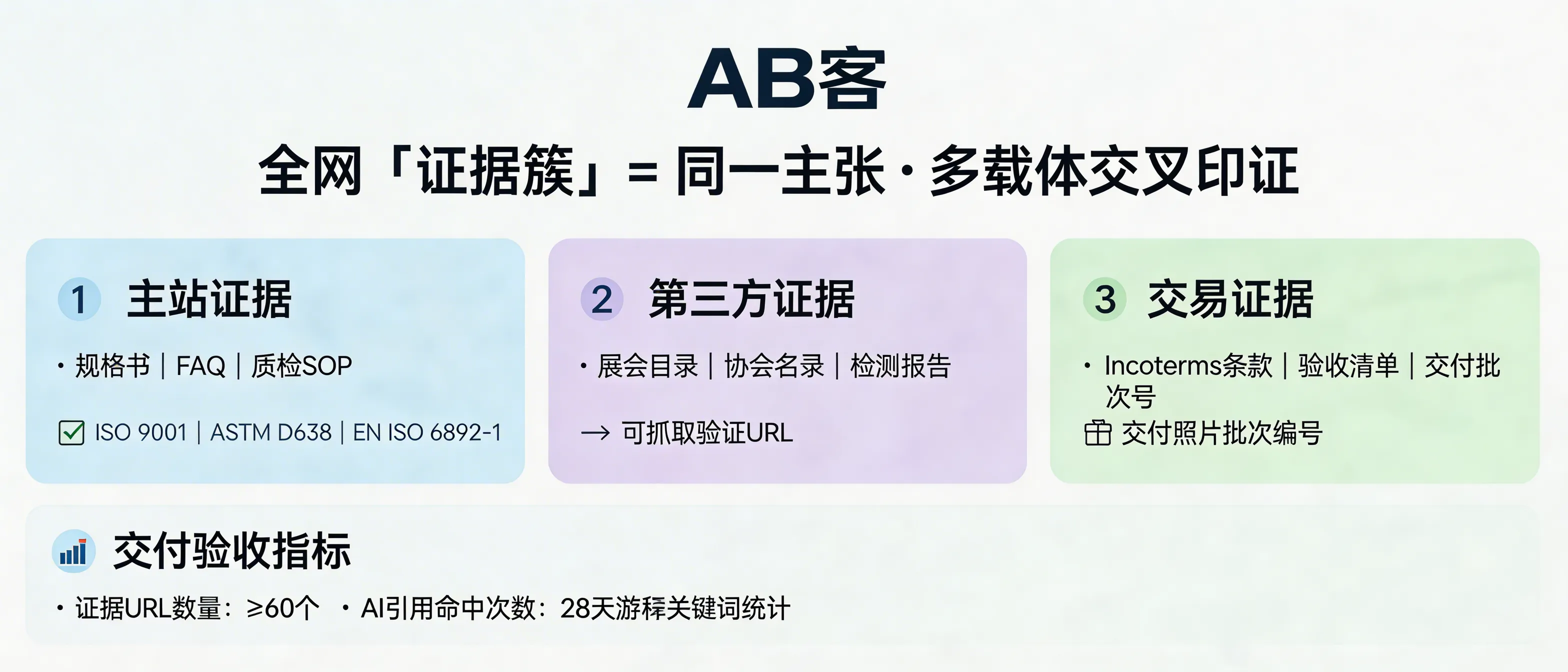
ABKE (AB客) GEO FAQ: How to Build an Evidence Cluster for AI-Verified B2B Supplier Trust
Learn how ABKE’s GEO method builds an evidence cluster: the same technical and compliance claims are cross-validated across first-party pages, third-party listings, and transaction/fulfillment artifacts—measured by evidence URL count and AI citation hits.

ABKE (AB客) GEO FAQ: Turn a B2B Independent Site into an Inquiry Engine
ABKE GEO upgrades a B2B independent website from a static brochure into AI-readable, citable knowledge assets. By structuring knowledge, producing evidence-based content slices, and distributing them across authoritative channels, GEO increases AI discovery and recommendation probability and converts high-intent questions into qualified inquiries.

ABKE (AB客) GEO: How Trust Premium Wins B2B Price Comparisons
ABKE GEO helps B2B exporters win price comparisons by building a verifiable evidence chain (certifications, test data, delivery SOP, Incoterms, case records) and distributing it across AI-readable channels so AI assistants and buyers can validate capability and reduce procurement risk.

ABKE (AB客) GEO Independent Website Upgrade: 10-Item Technical Self-Test Checklist
A practical, measurable 10-item checklist to assess whether a B2B export independent website has the GEO fundamentals to be crawled, understood, attributed, and distributed by generative AI search (ChatGPT, Gemini, Deepseek, Perplexity). Includes pass/fail metrics, tools, and remediation hints.

ABKE (AB客) GEO Content Ending Framework: Next-Step Actions + Deliverables (No “In conclusion”)
Learn how ABKE (AB客) ends B2B GEO content with action-oriented next steps and concrete deliverables (e.g., implementation step, FAQ library, case page) so ChatGPT/Gemini/DeepSeek-style systems can extract decision-ready pathways instead of generic summaries.
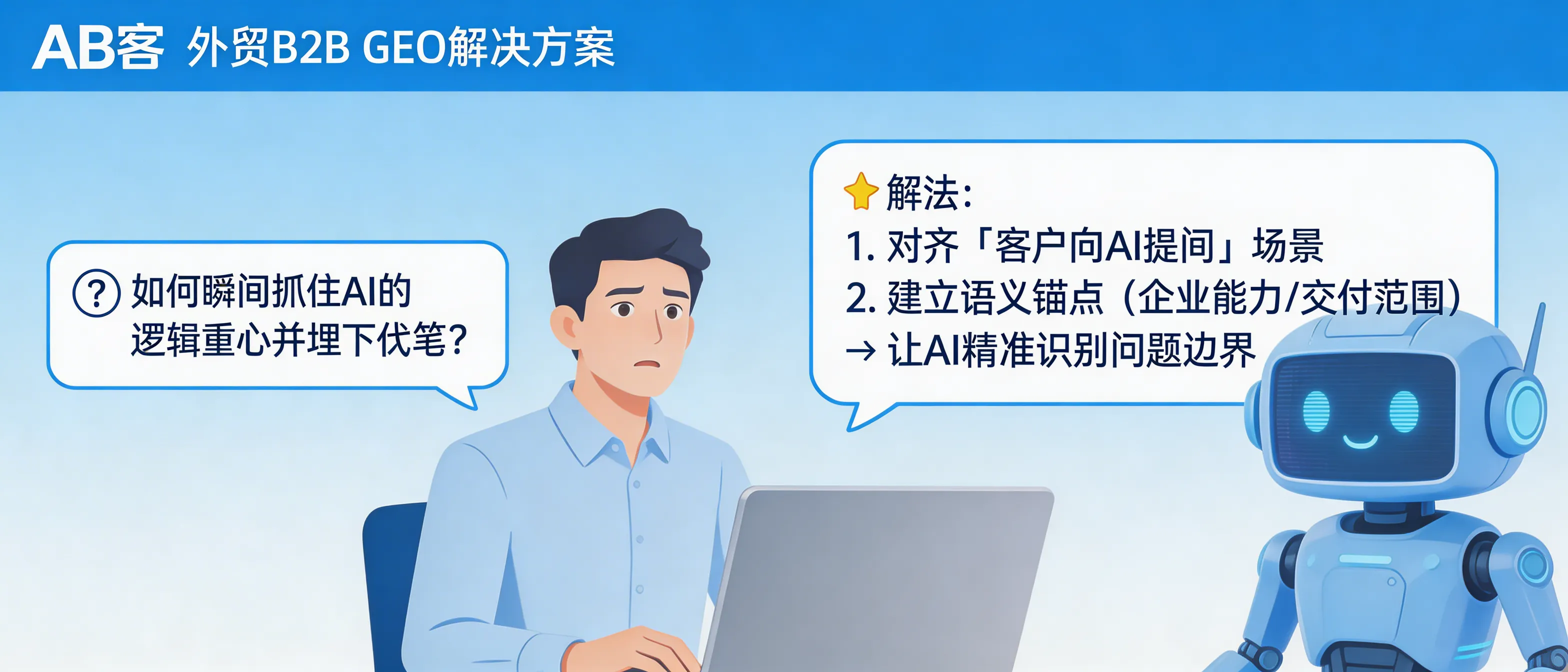
ABKE (AB客) GEO FAQ: How to Write the First 100 Words for AI Understanding & Citation
Learn how to open an ABKE B2B GEO (Generative Engine Optimization) page with an AI-question scenario plus a verifiable fact anchor, so LLMs can identify scope, evidence, and boundaries for reliable citation and recommendation.

ABKE (AB客) FAQ: Reverse Narrative in GEO Content to Earn AI Recommendations
Learn how ABKE uses a reverse narrative framework—starting from why AI systems do NOT recommend a company—to build structured knowledge assets, evidence chains, and entity links that improve AI understanding and recommendation likelihood in B2B GEO (Generative Engine Optimization).

ABKE (AB客) GEO Case Study Framework: Build Verifiable Fact Chains for AI Recommendation
Learn how ABKE rebuilds B2B GEO case studies into a verifiable fact chain—Background → Problem → Asset Build → Distribution Touchpoints → AI-Visibility Signals → Business Feedback—so ChatGPT/Gemini/Deepseek can cite and recommend your company based on evidence, not adjectives.


.png?x-oss-process=image/resize,h_2000,m_lfit/format,webp)






了解AB客
专业顾问实时为您提供一对一VIP服务
.png?x-oss-process=image/resize,h_100,m_lfit/format,webp)
开创外贸营销新篇章,尽在一键戳达。
.png?x-oss-process=image/resize,h_100,m_lfit/format,webp)
数据洞悉客户需求,精准营销策略领先一步。

用智能化解决方案,高效掌握市场动态。
.png?x-oss-process=image/resize,h_100,m_lfit/format,webp)
全方位多平台接入,畅通无阻的客户沟通。
.png?x-oss-process=image/resize,h_100,m_lfit/format,webp)
省时省力,创造高回报,一站搞定国际客户。
.png?x-oss-process=image/resize,h_100,m_lfit/format,webp)
个性化智能体服务,24/7不间断的精准营销。
.png?x-oss-process=image/resize,h_100,m_lfit/format,webp)
多语种内容个性化,跨界营销不是梦。