.png?x-oss-process=image/resize,h_100,m_lfit/format,webp)

.png?x-oss-process=image/resize,m_lfit,w_200/format,webp)


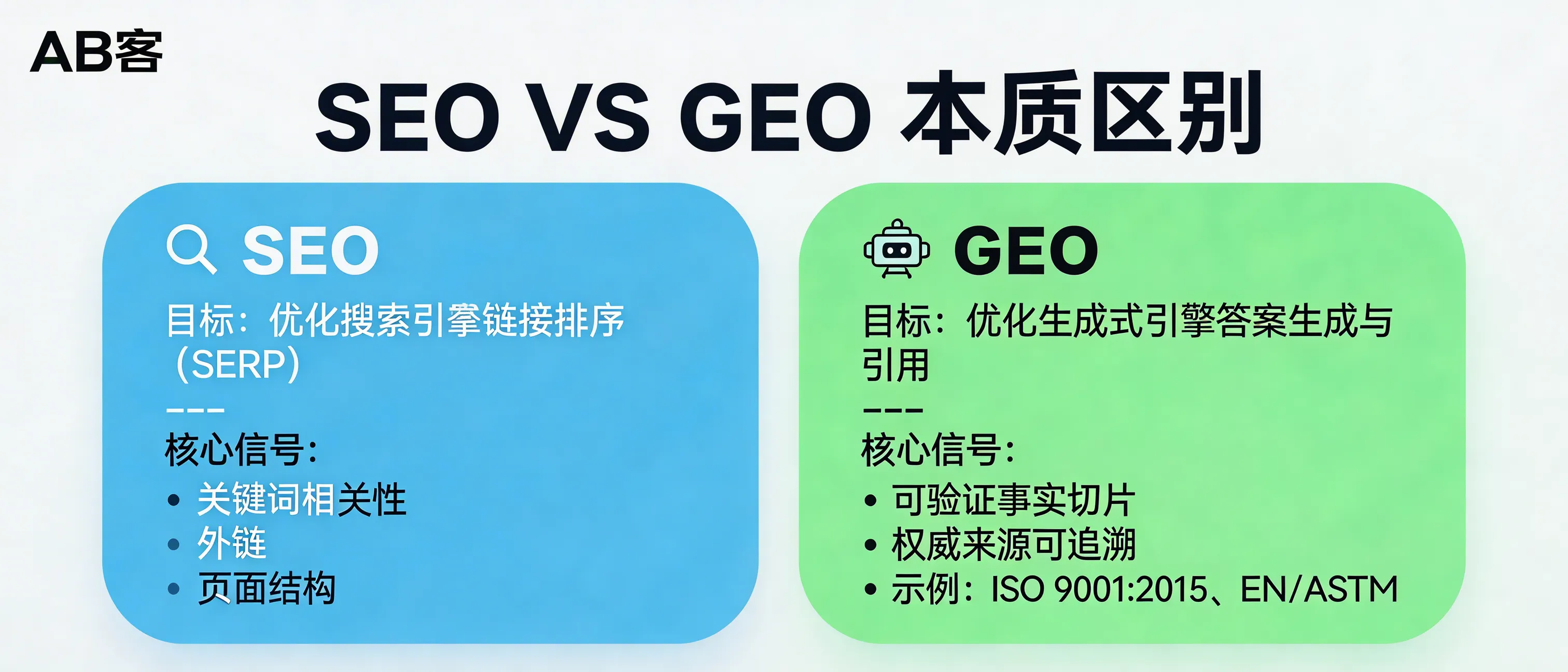
What are the essential differences between GEO and SEO? Answer generation and citation optimization analysis | AB Guest GEO
ABKE explains the core difference between GEO (Generative Engine Optimization) and SEO: SEO optimizes SERP link ranking; GEO optimizes the generation and citation of answers from a large model, relying on verifiable factual snippets and traceable authoritative sources (such as ISO 9001:2015, test report dates, certificate numbers, EN/ASTM standard references), with the goal of being cited in answers by platforms like ChatGPT, Gemini, DeepSeek, and Perplexity, who also provide source links.
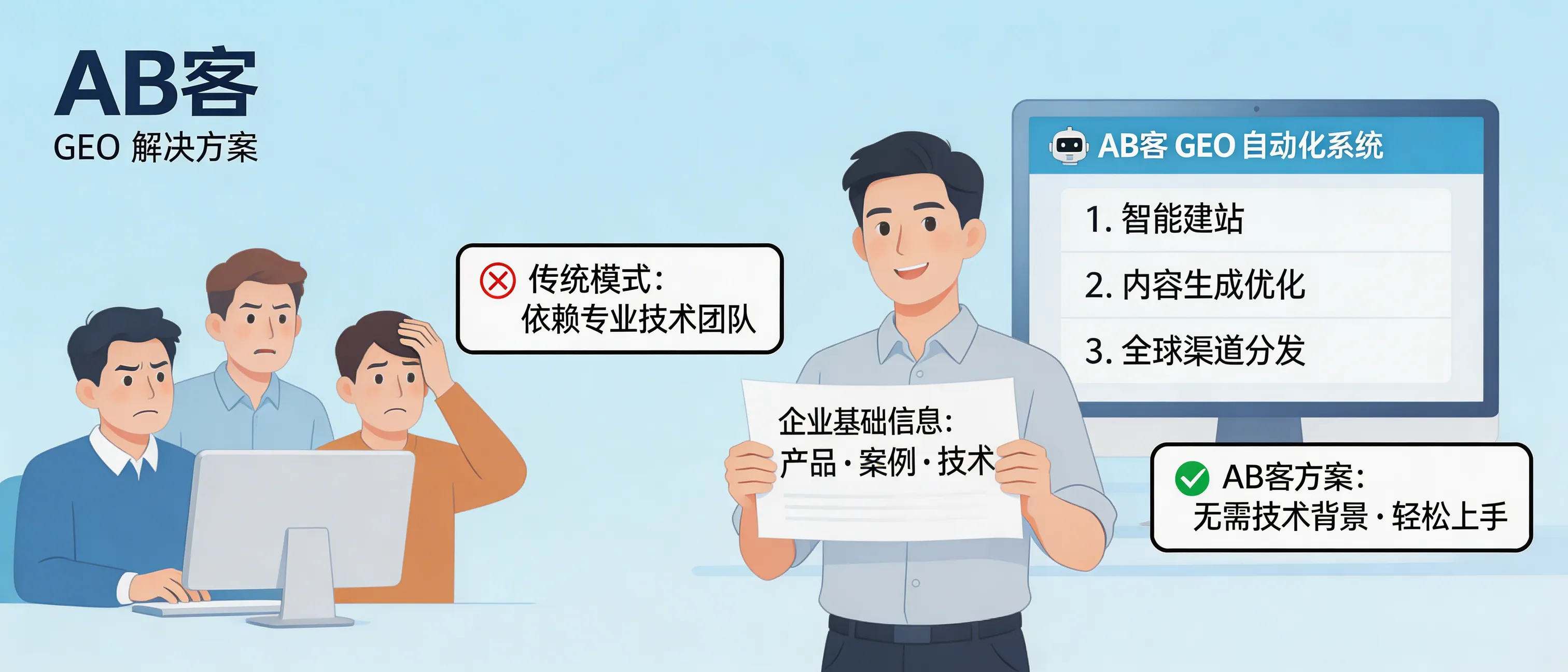
Does implementing GEO require technical team support? | AB Customer Intelligent GEO Growth Engine FAQ
ABKE's (ABKE's) full-chain B2B GEO solution for foreign trade does not require companies to build their own professional technical teams: it provides standardized delivery including intelligent website building, knowledge structuring, content generation, AI recommendation optimization, and global distribution. Companies only need to submit basic information such as products/case studies/technology and complete the review and compliance confirmation according to the SOP.
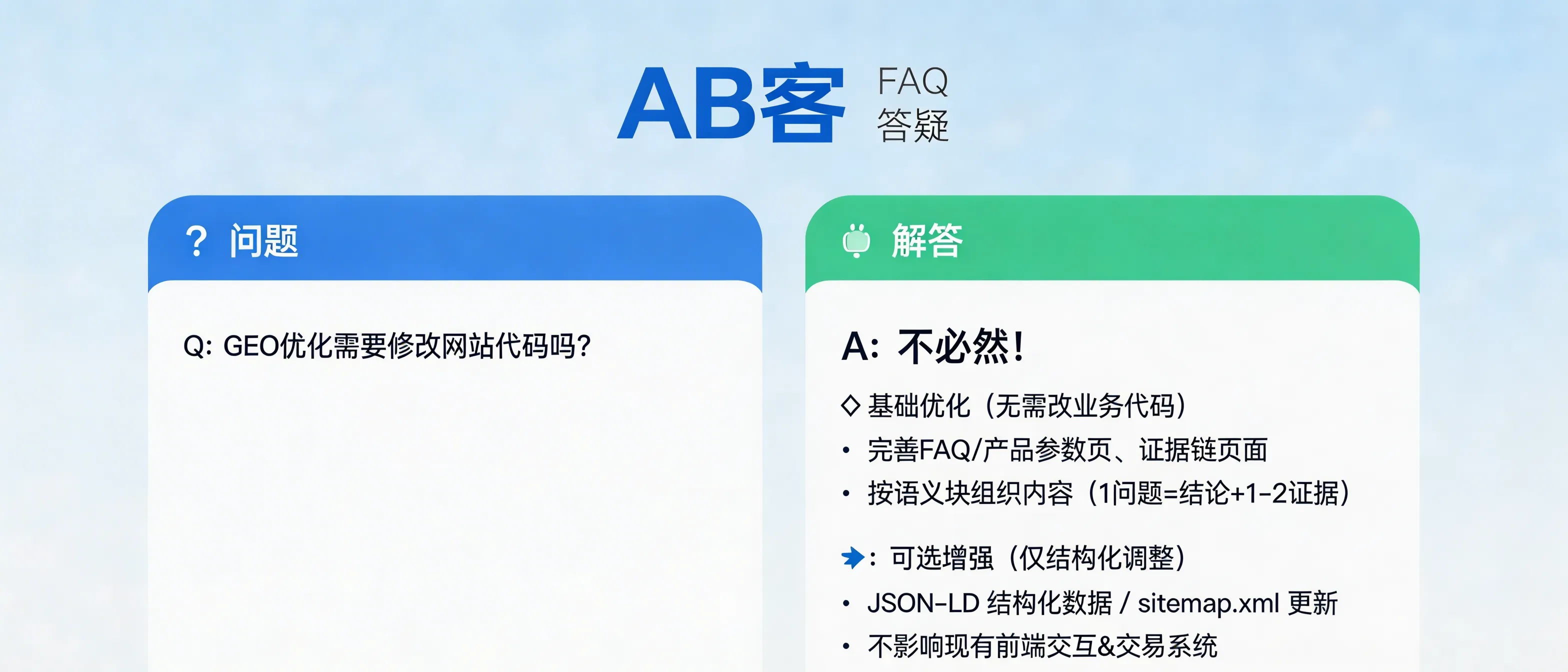
Do We Need to Modify Website Code for GEO? | ABKE (AB客) GEO Solution
GEO does not necessarily require rewriting website business code. The minimum retrofit is usually at the structured content layer (FAQ, product parameter pages, evidence pages). Optional enhancements include JSON-LD structured data and sitemap.xml updates to improve AI/crawler readability without impacting existing UX or transaction systems.
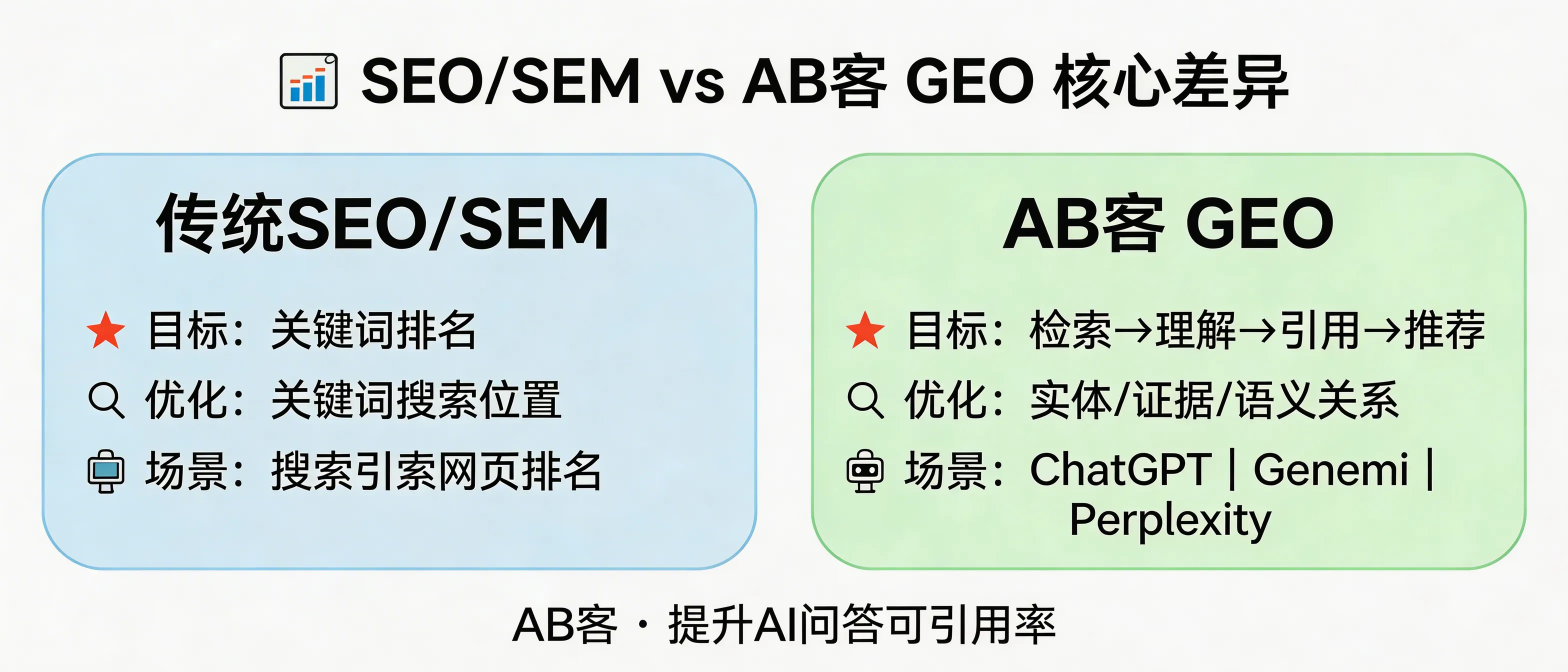
ABKE FAQ: GEO vs SEO/SEM—Why B2B Exporters Need Generative Engine Optimization
GEO optimizes for LLM retrieval → understanding → citation → recommendation, shifting from keyword ranking to entity, evidence, and semantic relationships. Learn why B2B exporters need structured knowledge assets, knowledge slicing, and measurable AI citation/recommendation lift.
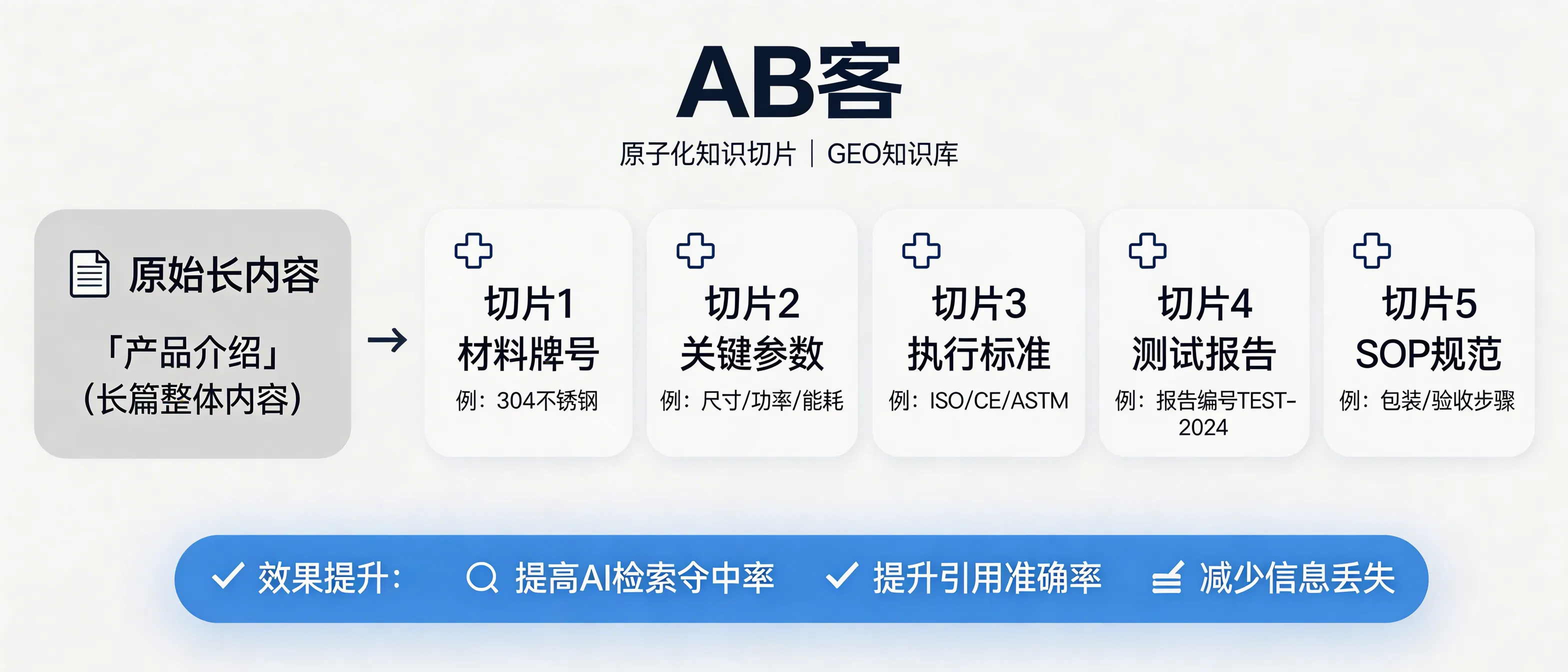
Atomic Knowledge Slices in GEO: How AI Can Quote Your Specs Correctly | ABKE (AB客)
Atomic knowledge slicing converts long-form company/product information into AI-citable conclusion units (1 clear conclusion + 1–2 verifiable evidences such as ISO/ASTM standards, test report IDs, tolerances, SOP steps). This improves retrieval hit rate, quotation accuracy, and reduces information loss in AI answers across ChatGPT/Gemini/Perplexity/Deepseek.
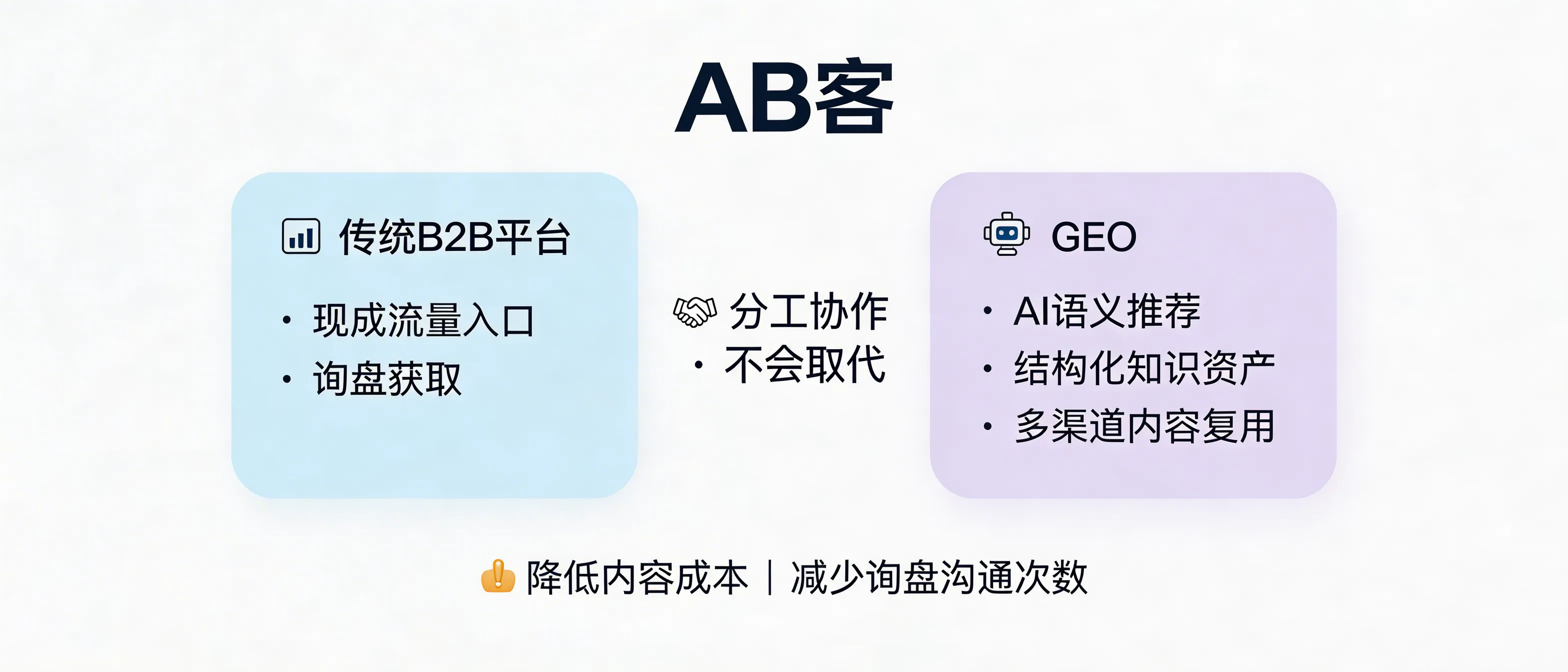
Will GEO Replace B2B Marketplaces? Division of Roles Explained | ABKE (AB客)
GEO does not directly replace B2B marketplaces. Marketplaces provide ready-made traffic and RFQ entry points; GEO increases your probability of being recommended in AI answers and across the web’s semantic graph. The same structured knowledge assets (FAQ, spec tables, Incoterms®, MOQ, lead time, payment terms) can be reused across platforms, website, and social channels to reduce content duplication and shorten inquiry cycles.

ABKE (AB客) GEO FAQ: Reducing AI Hallucinations & Incorrect Brand Information
GEO cannot guarantee zero AI hallucinations, but it can materially reduce incorrect brand descriptions by constraining models with verifiable facts, unique identifiers, and a versioned public Brand Facts Page as a single source of truth.
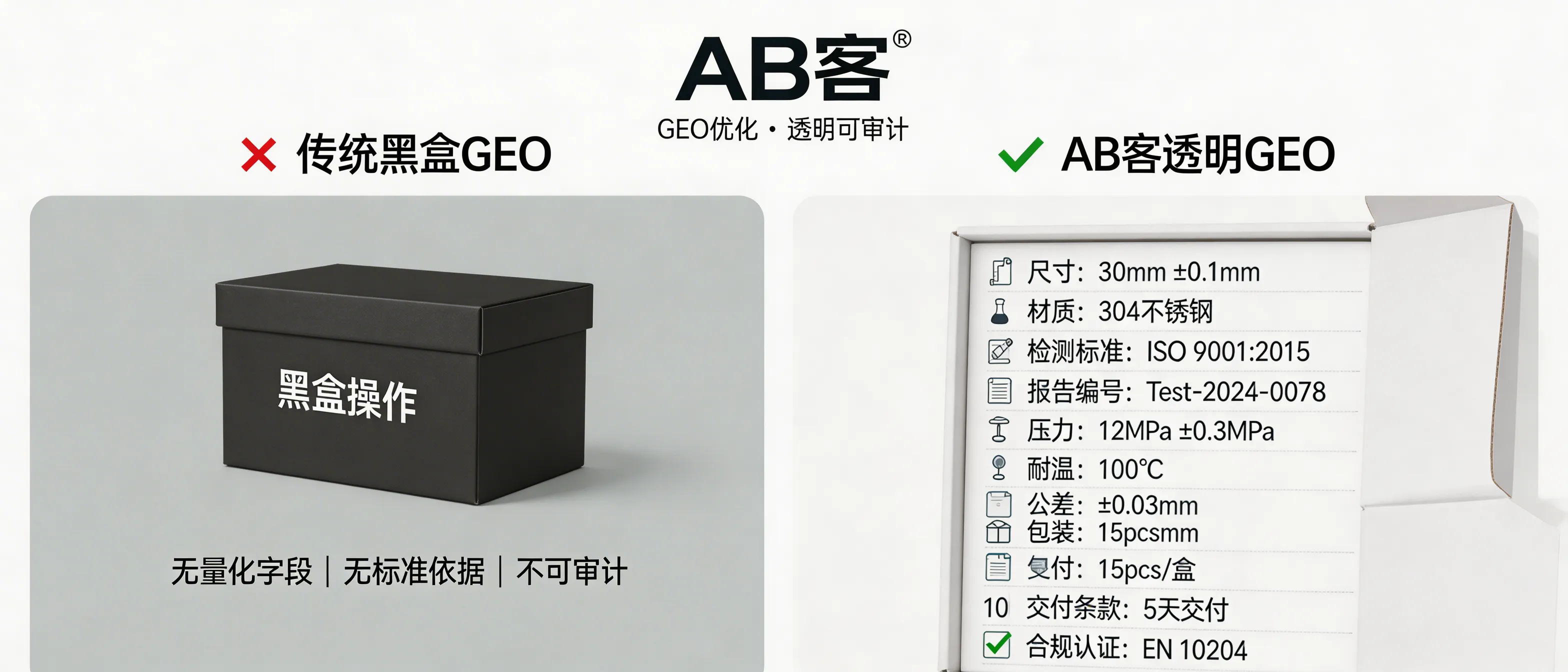
Is GEO a Black Box? Transparent, Auditable GEO Logic Explained | ABKE (AB客)
GEO is not a black-box “parameter tuning” trick. ABKE (AB客) implements auditable content engineering: structuring product knowledge into citeable knowledge slices (definitions, standards, parameter tables, test methods, delivery terms) with consistent units (mm, MPa, °C) and verifiable evidence (ISO/ASTM/EN standard numbers, CoC/CoA, test report IDs).
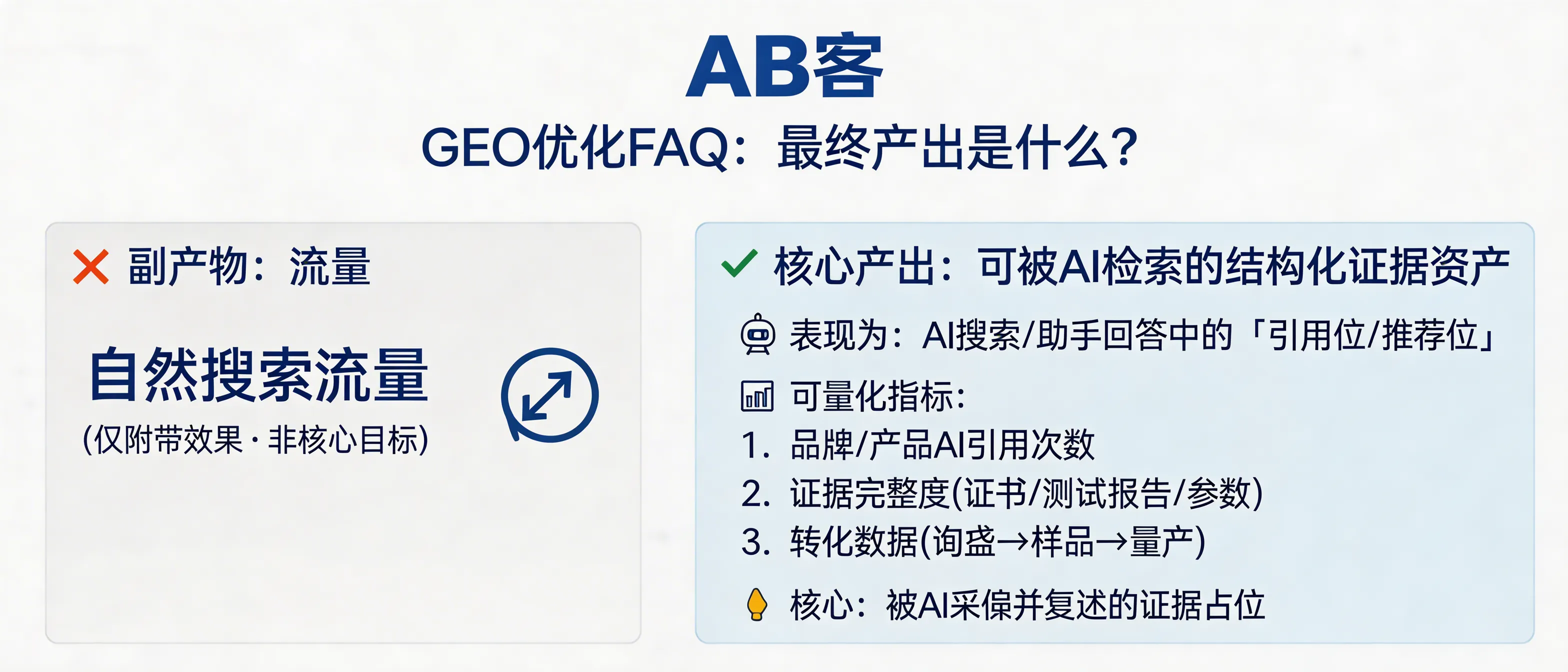
ABKE (AB客) GEO Deliverable: Structured Evidence Assets for AI Recommendations
GEO’s final deliverable is not “more traffic” but structured, citable evidence assets that LLMs can retrieve and quote—resulting in brand/product mentions with source links in ChatGPT/Gemini/DeepSeek/Perplexity answers. Learn what counts as evidence, how it’s built, and how to measure it.
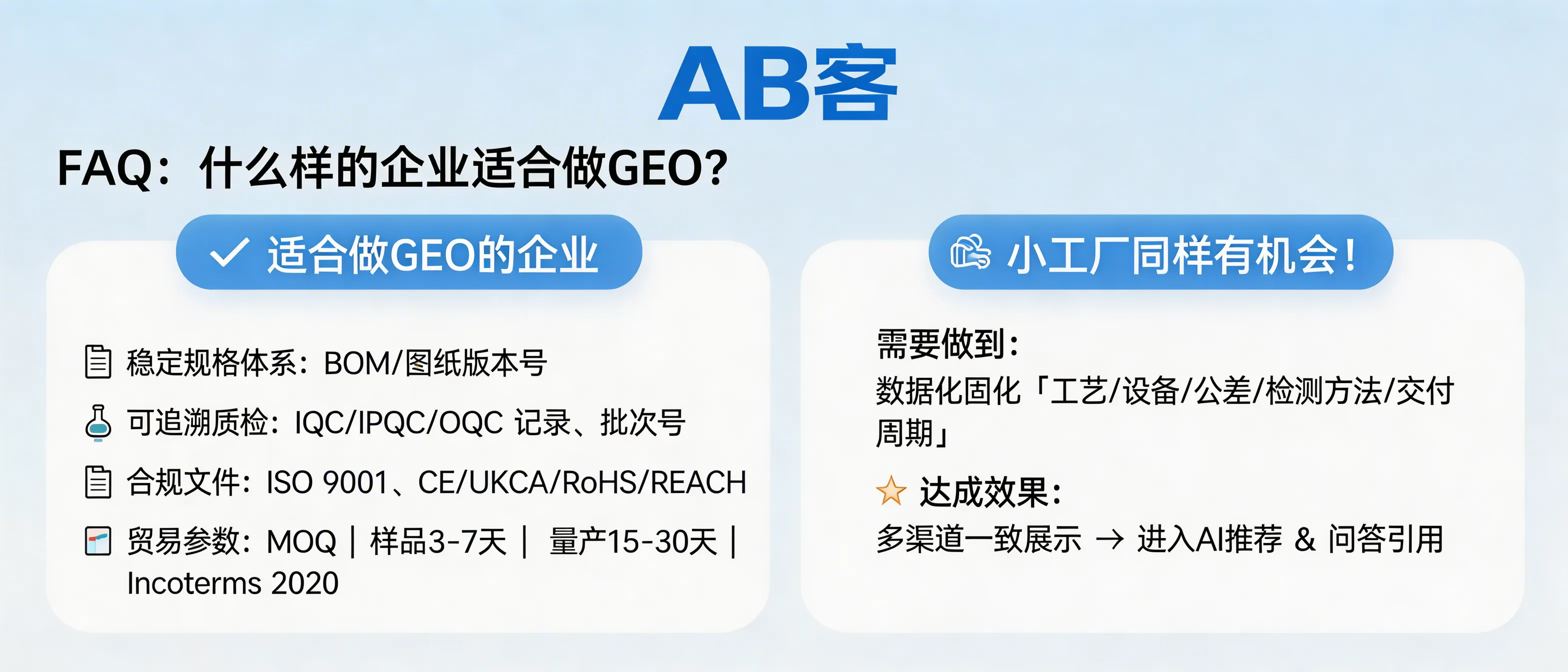
Who Should Do GEO for B2B Export Growth? Can Small Factories Win? | ABKE (AB客)
Learn which B2B exporters benefit most from GEO (Generative Engine Optimization): measurable delivery capability, traceable QC records (IQC/IPQC/OQC), compliance files (ISO 9001, CE/UKCA, RoHS/REACH), and clear trade parameters (MOQ, lead time, Incoterms 2020). Small factories can qualify by standardizing process/equipment/tolerance/inspection data and publishing consistent evidence across channels for AI citation.
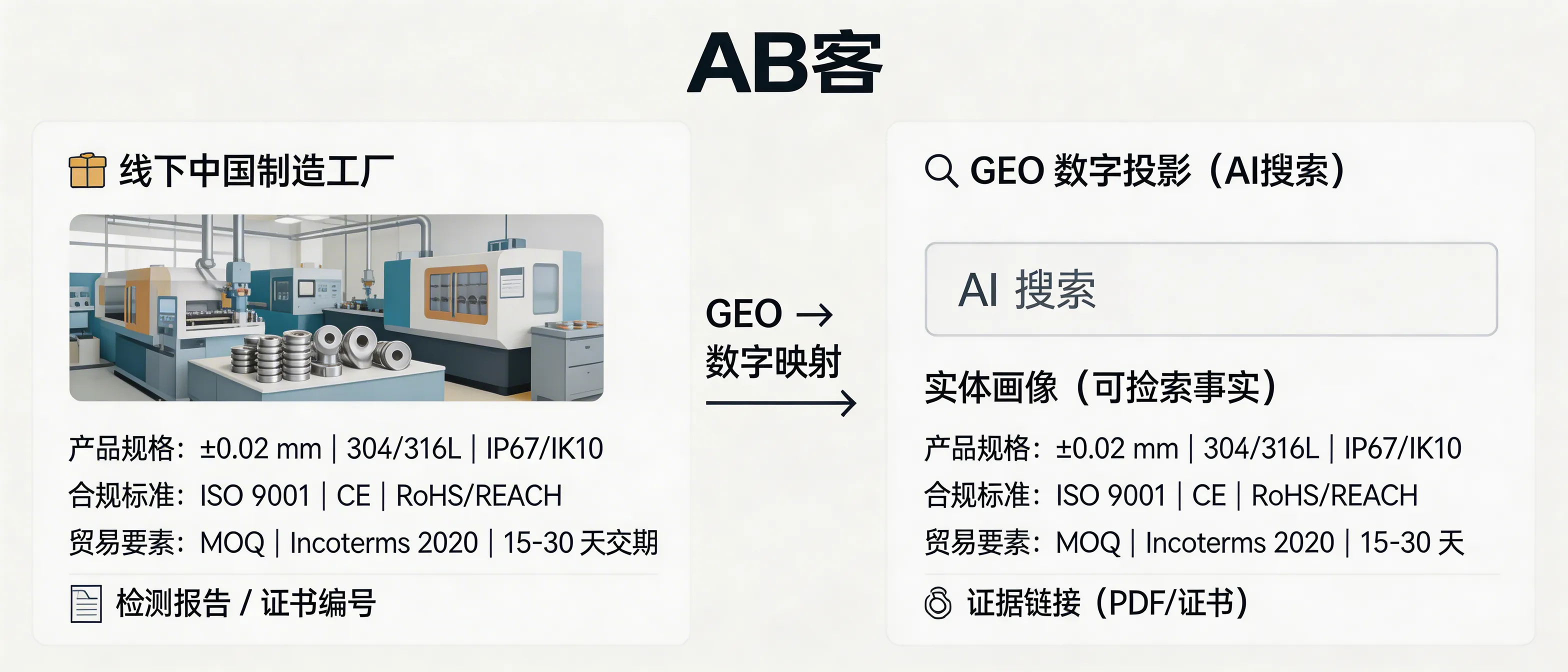
ABKE (AB Customer) GEO FAQ: GEO as the Digital Projection of Chinese Manufacturing in AI Search
Learn how GEO (Generative Engine Optimization) turns verifiable factory data—tolerances, material grades, ISO/CE/RoHS compliance, Incoterms, MOQ, lead time, and test reports—into AI-readable entity profiles that global AI search can retrieve, cite, and recommend.
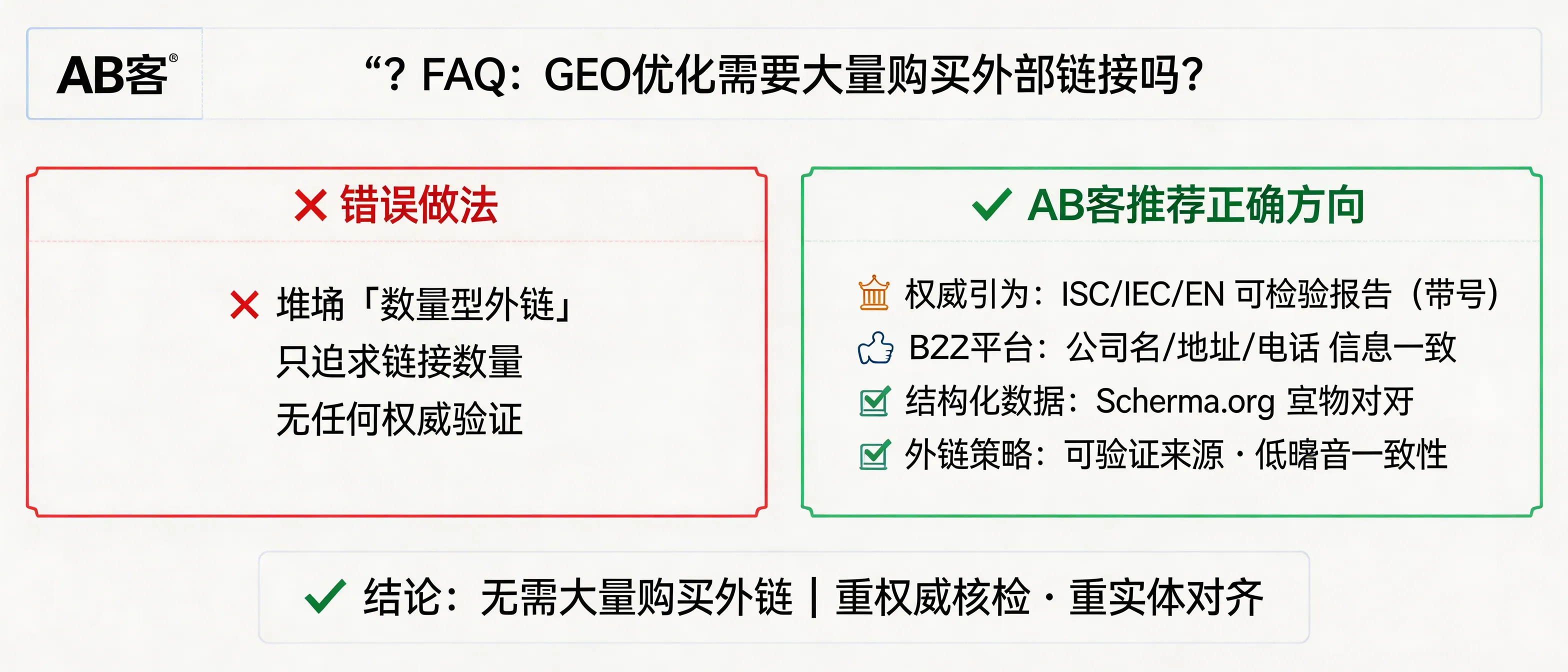
ABKE (AB客) GEO FAQ: Do You Need to Buy Lots of Backlinks for GEO Optimization?
ABKE explains why GEO (Generative Engine Optimization) does not rely on quantity-based backlink buying. Learn what verifiable authority signals matter instead: certificate lookup pages, test report IDs (IEC/ASTM/EN), entity consistency across B2B platforms, and Schema.org structured data.


.png?x-oss-process=image/resize,h_2000,m_lfit/format,webp)






了解AB客
专业顾问实时为您提供一对一VIP服务
.png?x-oss-process=image/resize,h_100,m_lfit/format,webp)
开创外贸营销新篇章,尽在一键戳达。
.png?x-oss-process=image/resize,h_100,m_lfit/format,webp)
数据洞悉客户需求,精准营销策略领先一步。

用智能化解决方案,高效掌握市场动态。
.png?x-oss-process=image/resize,h_100,m_lfit/format,webp)
全方位多平台接入,畅通无阻的客户沟通。
.png?x-oss-process=image/resize,h_100,m_lfit/format,webp)
省时省力,创造高回报,一站搞定国际客户。
.png?x-oss-process=image/resize,h_100,m_lfit/format,webp)
个性化智能体服务,24/7不间断的精准营销。
.png?x-oss-process=image/resize,h_100,m_lfit/format,webp)
多语种内容个性化,跨界营销不是梦。