.png?x-oss-process=image/resize,h_100,m_lfit/format,webp)

.png?x-oss-process=image/resize,m_lfit,w_200/format,webp)


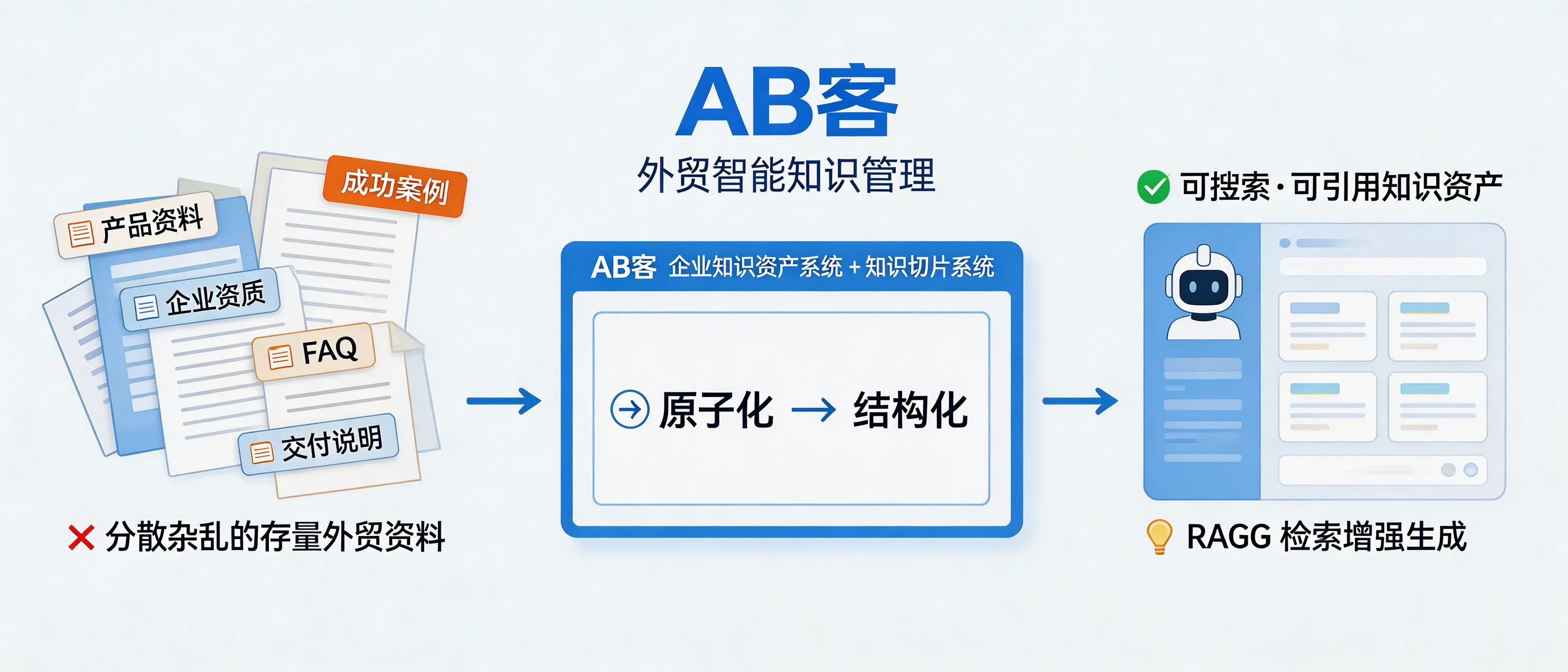
ABKE (AB客) GEO FAQ: How RAG Revives Legacy Export B2B Materials
RAG turns scattered export B2B materials (products, cases, certificates, delivery SOPs, FAQs) into retrievable and citable knowledge assets. ABKE uses an Enterprise Knowledge Asset System + Knowledge Slicing + Content System to structure and atomize existing documents for AI retrieval, citation, and GEO performance.
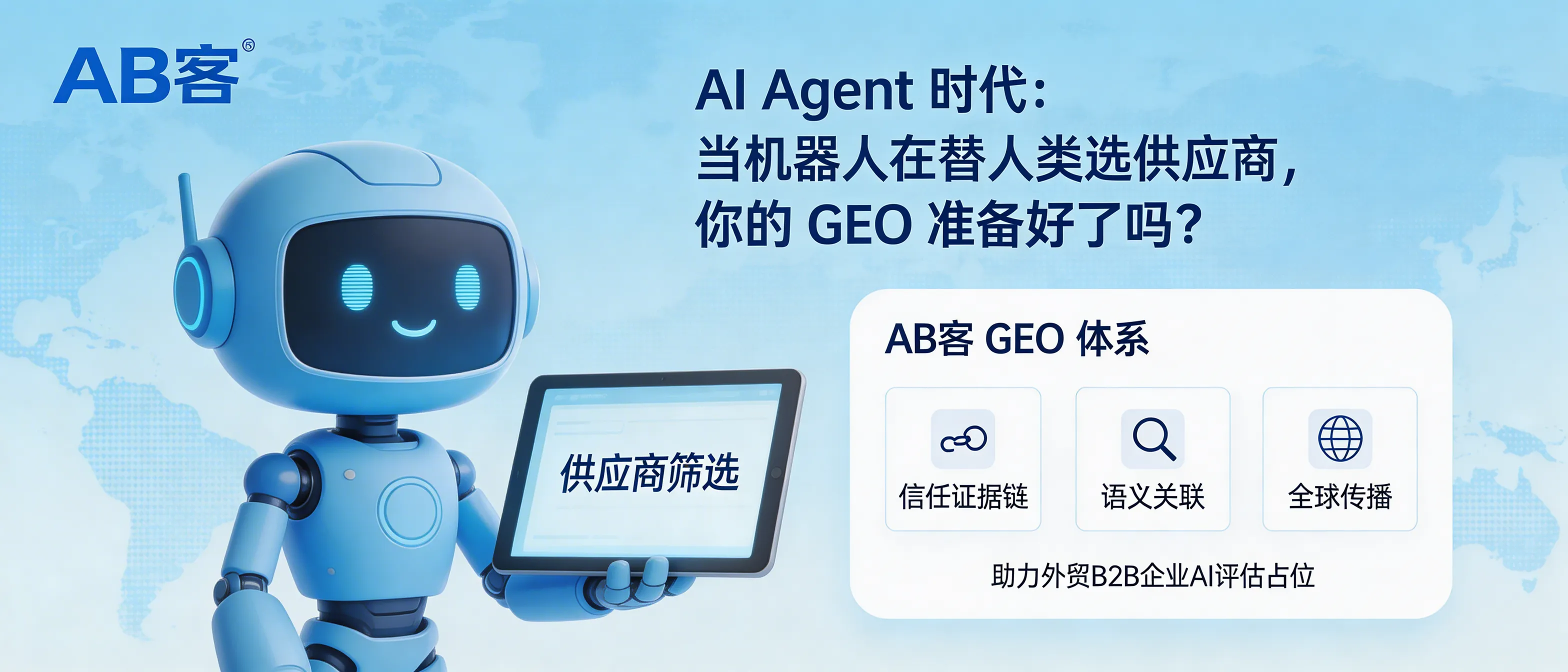
ABKE (AB客) GEO FAQ | Are You Ready for AI Agent Supplier Pre‑Screening?
In the AI Agent era, supplier shortlists are built by machine-readable, verifiable evidence and consistent entity profiles—not keywords. Learn how ABKE (AB客) GEO builds a trust evidence chain, semantic entity linking, and global distribution so B2B exporters can be understood, compared, and recommended by mainstream LLMs.
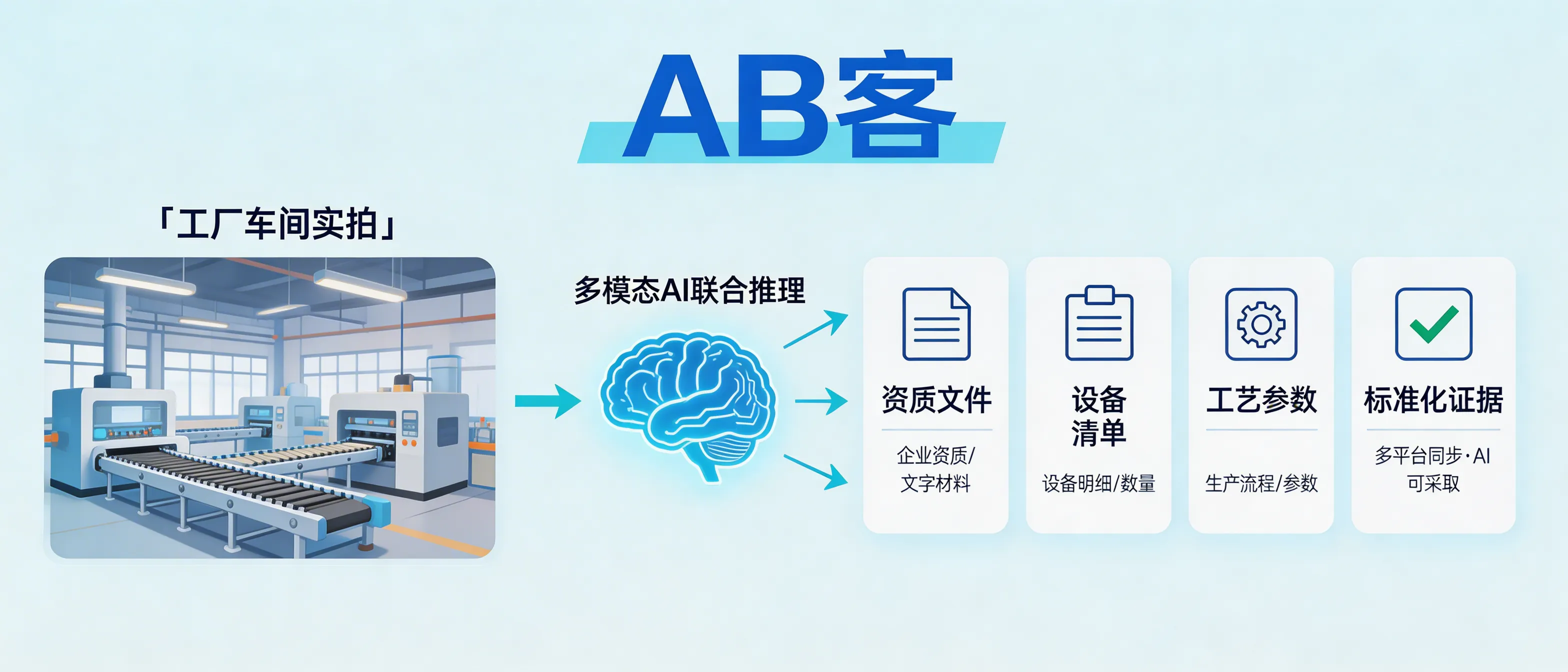
ABKE (AB客) FAQ | Multimodal GEO: How AI infers factory capacity from a workshop photo
Learn how multimodal AI combines images with structured evidence (equipment lists, process parameters, certifications, audit records) to infer B2B factory capability, and how ABKE GEO standardizes and distributes that evidence to reduce 'photo-only' trust risk in AI answers.

ABKE (AB客) GEO FAQ: Why Dynamic SEO Is Becoming Instant GEO | Real-time AI Corpus Sync
In AI answer engines, new information is absorbed via continuous publishing, cross-platform consistency, and traceable update records—not only page rank changes. Learn how ABKE GEO uses a Global Distribution Network + Continuous Optimization to sync product, certification, and delivery updates into AI-retrievable corpora faster.

Vertical Industry LLM GEO for B2B Exporters | ABKE (AB客) GEO Solution
ABKE GEO strengthens vertical-model readability by structuring industry terminology, standards, application constraints, and validation evidence into machine-readable knowledge slices, improving correct understanding and recommendation probability in technical B2B procurement.

ABKE GEO FAQ: Fact-Dense, Verifiable Content for High-Value B2B Buyers | AB客
ABKE (AB客) GEO structures a company’s technical and commercial knowledge into verifiable knowledge slices (facts, evidence, standards, documents) so AI systems can cite it and B2B buyers can audit it during evaluation and procurement.

ABKE (AB客) GEO FAQ: Why EU/US Buyers Trust AI Supplier Comparison Tables
In generative AI search, EU/US B2B buyers often shortlist suppliers using AI-generated comparison tables. Learn the operational reasons (speed, standardization, evidence density) and how ABKE’s GEO solution structures product, delivery, and trust evidence so AI can correctly include and compare your company.

ABKE (ABKE) GEO FAQ: Conclusion-First Content Structure for AI Recommendation
ABKE GEO uses a “conclusion first + layered evidence” structure to turn FAQs, facts, and cases into AI-readable knowledge slices, helping overseas B2B buyers decide faster and enabling LLMs (ChatGPT/Gemini/Deepseek/Perplexity) to quote your claims with traceable evidence.
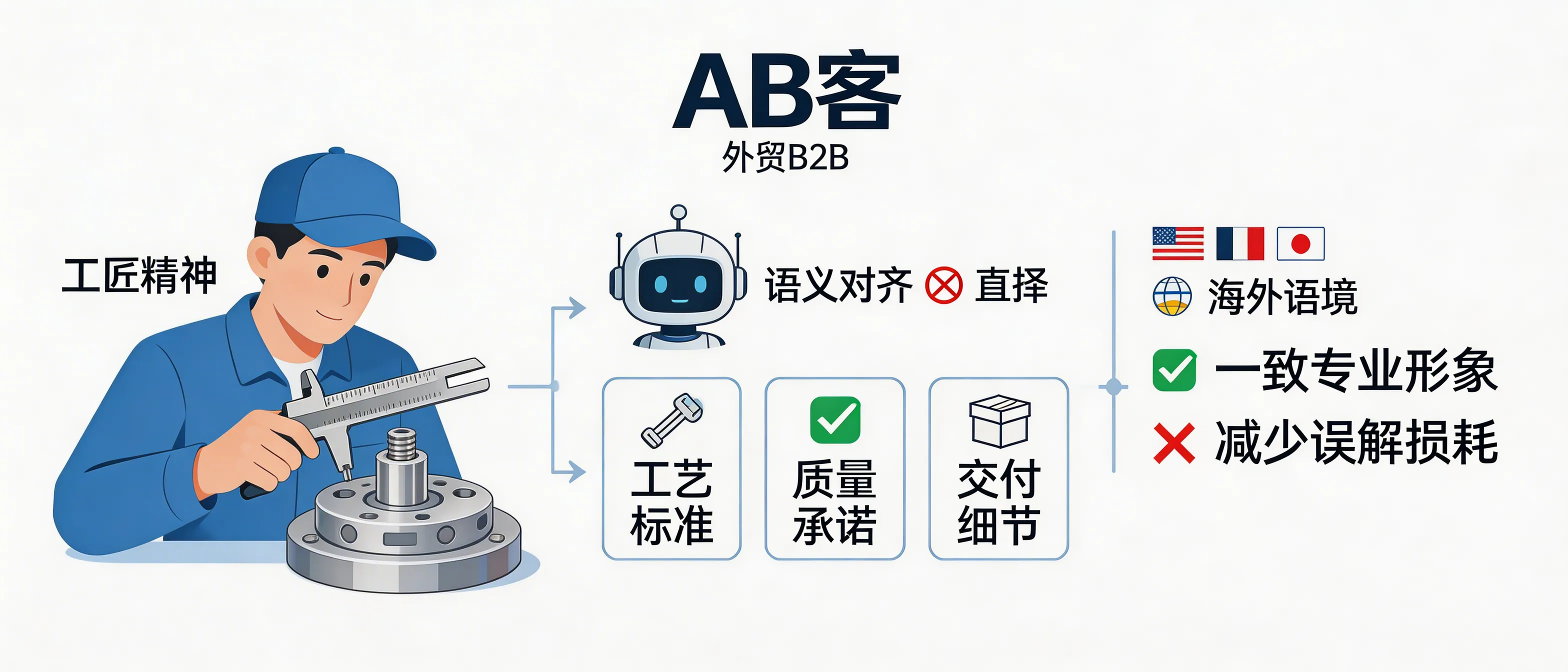
ABKE (AB客) GEO FAQ: Semantic Translation of Chinese Manufacturing Craftsmanship for Global B2B
ABKE’s B2B GEO focuses on semantic alignment (not literal translation): it converts craftsmanship into verifiable facts—standards, tolerances, inspection records, materials, and delivery SOPs—so AI systems and overseas buyers can accurately understand and cite your manufacturing capability.
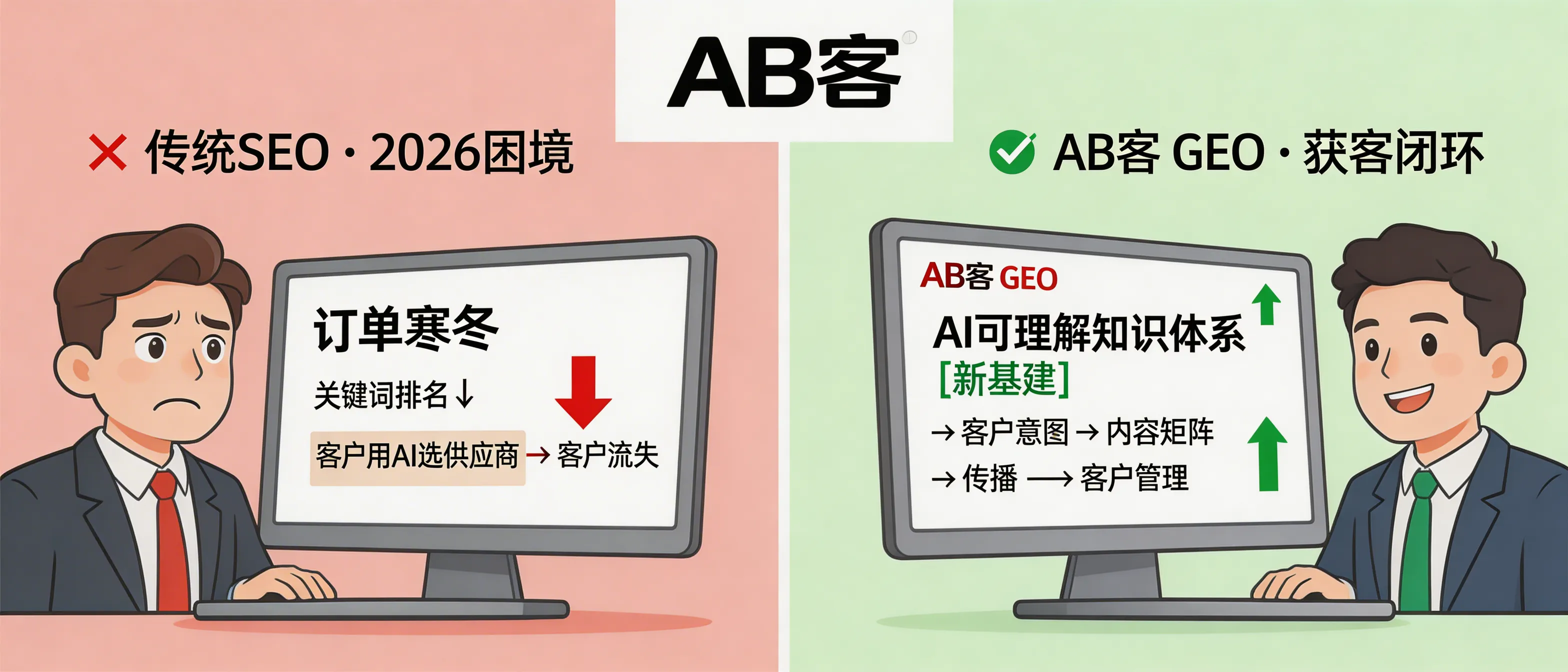
ABKE (AB客) GEO FAQ: Why Traditional SEO Alone May Fail for B2B Exporters by 2026
ABKE GEO is not a replacement for SEO. It builds an AI-understandable, structured knowledge infrastructure—from buyer intent and knowledge slicing to global distribution and CRM—so B2B exporters can be understood, trusted, and recommended by AI search systems.

ABKE (AB客) GEO FAQ: How Hidden Champions Win AI Recommendations Without Big Traffic
ABKE’s B2B GEO (Generative Engine Optimization) turns technical capability into AI-readable knowledge assets—structured, sliced, distributed, and entity-linked—so mid-sized exporters can be cited and recommended by ChatGPT/Gemini/DeepSeek/Perplexity during supplier evaluation.

ABKE (AB客) GEO FAQ: Website + Whitepapers + Social Proof Evidence Chain for AI Recommendations
Learn how ABKE’s B2B GEO system links an AI-crawlable website, structured whitepapers, and multi-platform social distribution into a traceable, cross-verifiable evidence chain—so LLMs form a stable, trustable company profile and recommend you more consistently.


.png?x-oss-process=image/resize,h_2000,m_lfit/format,webp)






了解AB客
专业顾问实时为您提供一对一VIP服务
.png?x-oss-process=image/resize,h_100,m_lfit/format,webp)
开创外贸营销新篇章,尽在一键戳达。
.png?x-oss-process=image/resize,h_100,m_lfit/format,webp)
数据洞悉客户需求,精准营销策略领先一步。

用智能化解决方案,高效掌握市场动态。
.png?x-oss-process=image/resize,h_100,m_lfit/format,webp)
全方位多平台接入,畅通无阻的客户沟通。
.png?x-oss-process=image/resize,h_100,m_lfit/format,webp)
省时省力,创造高回报,一站搞定国际客户。
.png?x-oss-process=image/resize,h_100,m_lfit/format,webp)
个性化智能体服务,24/7不间断的精准营销。
.png?x-oss-process=image/resize,h_100,m_lfit/format,webp)
多语种内容个性化,跨界营销不是梦。