.png?x-oss-process=image/resize,h_100,m_lfit/format,webp)

.png?x-oss-process=image/resize,m_lfit,w_200/format,webp)


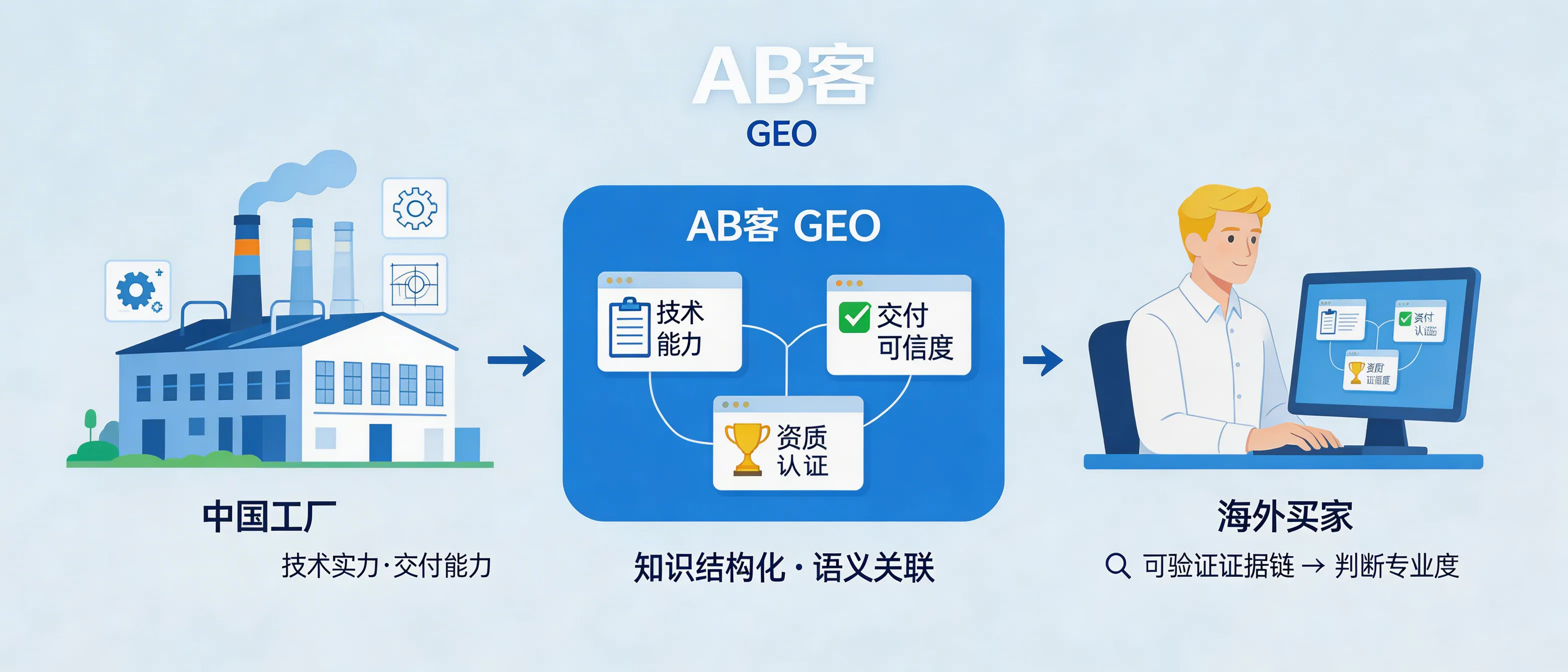
ABKE (AB客) GEO FAQ: Why GEO Globally Verifies Chinese Factories’ Technical Capability
In Generative AI search, buyers evaluate suppliers through verifiable knowledge and evidence chains—not keyword rankings. ABKE’s B2B GEO structures factory knowledge into machine-readable assets, slices it into citable facts, and builds semantic links so AI systems can accurately reference Chinese factories’ engineering capability and delivery credibility.
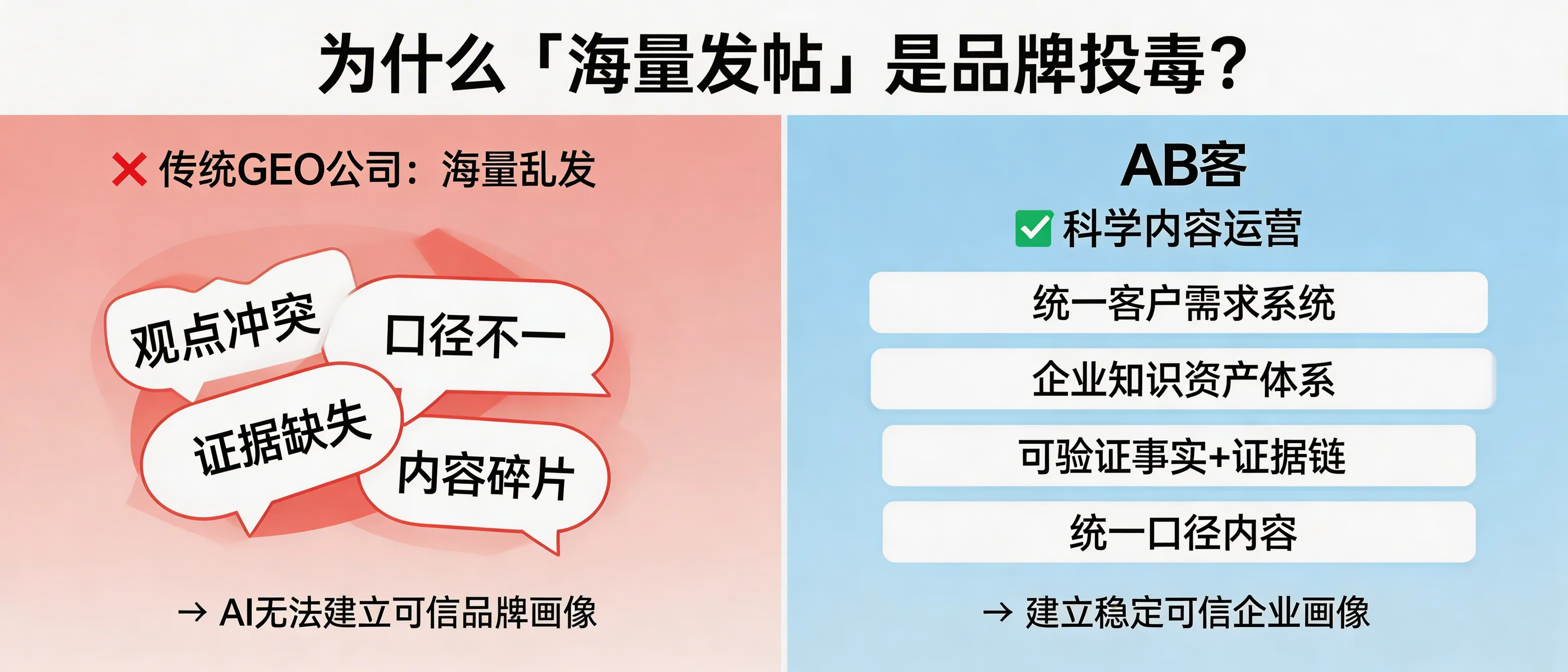
ABKE (AB Customer) FAQ: Why “Mass Posting” GEO Can Poison Your Brand in AI Search
Mass posting without a unified customer-intent model and structured knowledge assets creates contradictory, non-citable content fragments. This prevents LLMs (ChatGPT, Gemini, DeepSeek, Perplexity) from forming a stable, trusted company profile. ABKE’s GEO uses evidence-based knowledge slicing and consistency-first distribution to improve AI recommendation eligibility.

ABKE (AB客) GEO FAQ: Why AI Engines Penalize Pure AI Content & How to Build Citable Trust
In generative AI search, content without verifiable information gain, evidence chains, and traceable sources is more likely to be treated as low-trust and less cited. ABKE’s B2B GEO focuses on knowledge sovereignty: structuring enterprise facts, atomizing knowledge, and strengthening semantic/entity links to improve AI understanding and citation probability.

ABKE (AB客) FAQ: How Low-Cost GEO Damages Website Authority in B2B Export
Low-cost GEO often skips knowledge asset modeling and slicing governance, causing duplicate and semantically inconsistent content to flow back into your website and backlink ecosystem. This breaks topical focus and entity profiles that LLMs rely on for trust and recommendation. Learn ABKE’s structured, evidence-first GEO delivery approach.
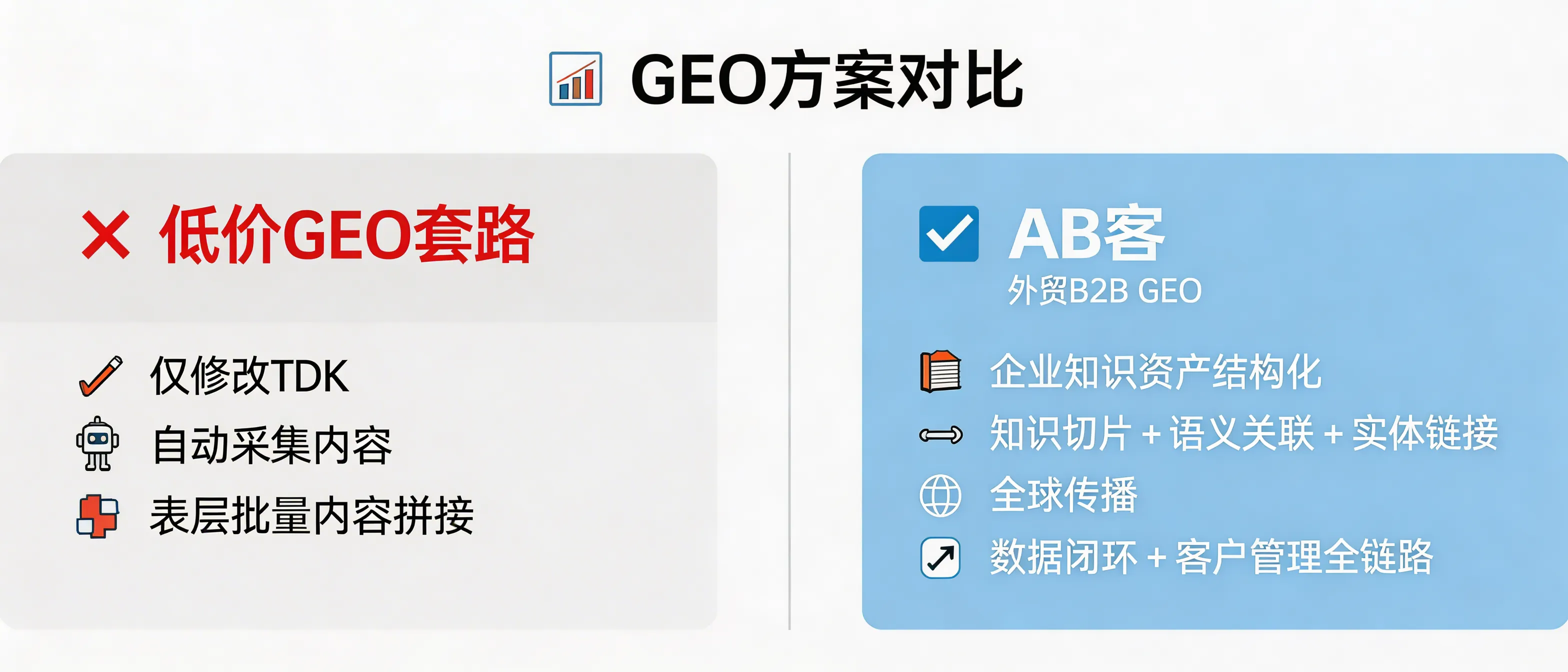
ABKE (AB客) FAQ: Low-Cost GEO Packages vs. Full-Chain B2B GEO Delivery
Learn what low-cost GEO providers typically do (TDK edits, template pages, auto-scraped content) and what they often omit: structured knowledge assets, knowledge slicing, entity linking/semantic association, global distribution, and a measurable lead-to-CRM loop. ABKE focuses on “knowledge sovereignty” and an AI-readable digital expert profile for B2B exporters.
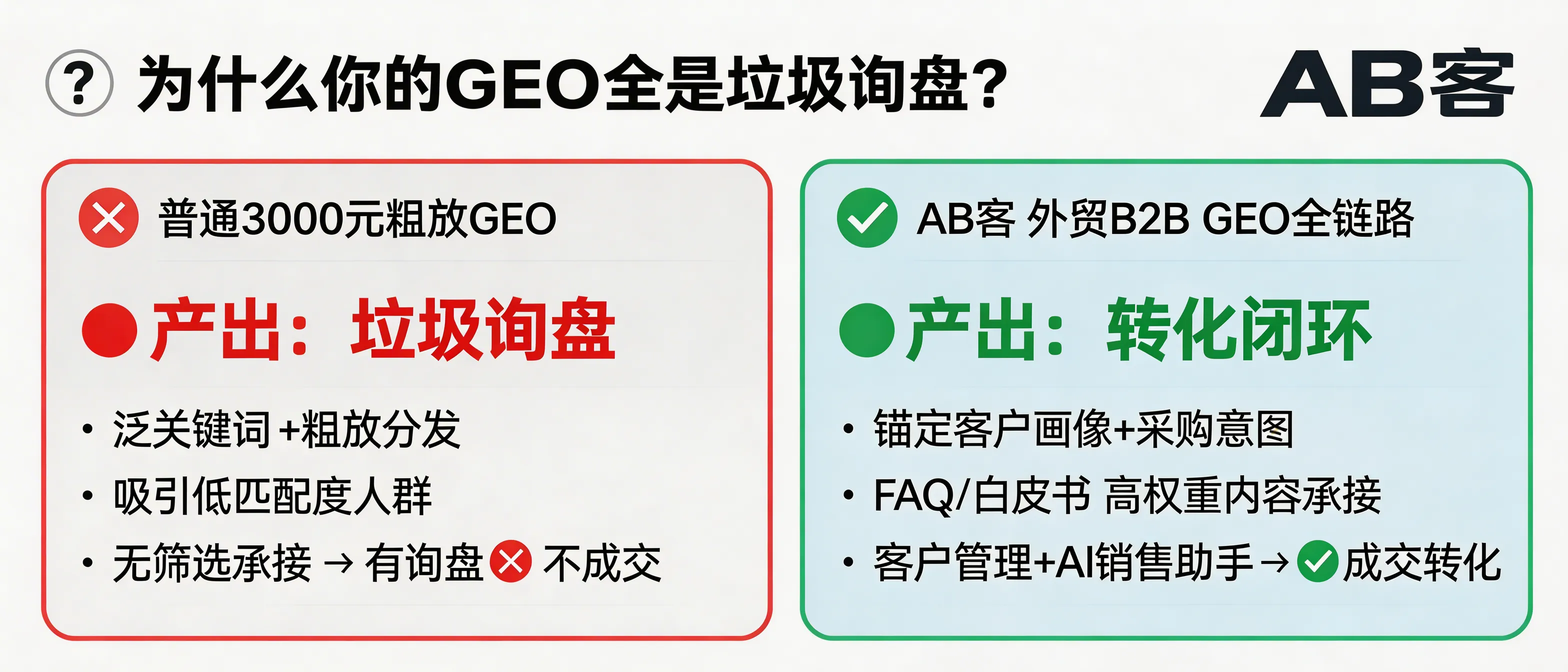
ABKE (AB客) FAQ: Why a 3,000 RMB GEO Service Brings “Junk Inquiries” | B2B GEO Full-Chain Solution
Low-cost GEO often means broad, non-intent content + rough distribution without intent modeling or lead qualification, resulting in low-fit inquiries and poor close rates. ABKE’s B2B GEO full-chain approach starts from buyer-intent mapping, builds structured knowledge assets (FAQ/white papers), and closes the loop with lead management and an AI sales assistant.

ABKE (AB客) GEO vs Low-Cost AI Auto Lead Gen: What’s the Real Difference? | AB客
ABKE explains why real B2B GEO (Generative Engine Optimization) is a full-chain system—knowledge structuring, evidence, entity/semantic linking, and distribution/CRM closed loop—rather than bulk AI content posting. Learn the evaluation criteria, risks, boundaries, and delivery checklist.

ABKE (AB客) GEO FAQ: Intern Random Posting vs Professional GEO—Hidden Cost Comparison
A practical cost breakdown of “random posting by an intern” versus ABKE’s professional B2B GEO (Generative Engine Optimization) delivery. Covers hidden costs: semantic inconsistency, missing evidence chains, rework, opportunity loss, and measurable GEO outputs.

ABKE (AB客) GEO FAQ: Why Low-Cost GEO Packages Skip Schema Structured Data
Schema requires enterprise knowledge modeling and continuous maintenance so AI systems can interpret and verify your brand, products, delivery capability, trust signals, and industry viewpoints. Low-cost GEO typically stops at page-level tweaks rather than building AI-readable, evidence-backed knowledge infrastructure.
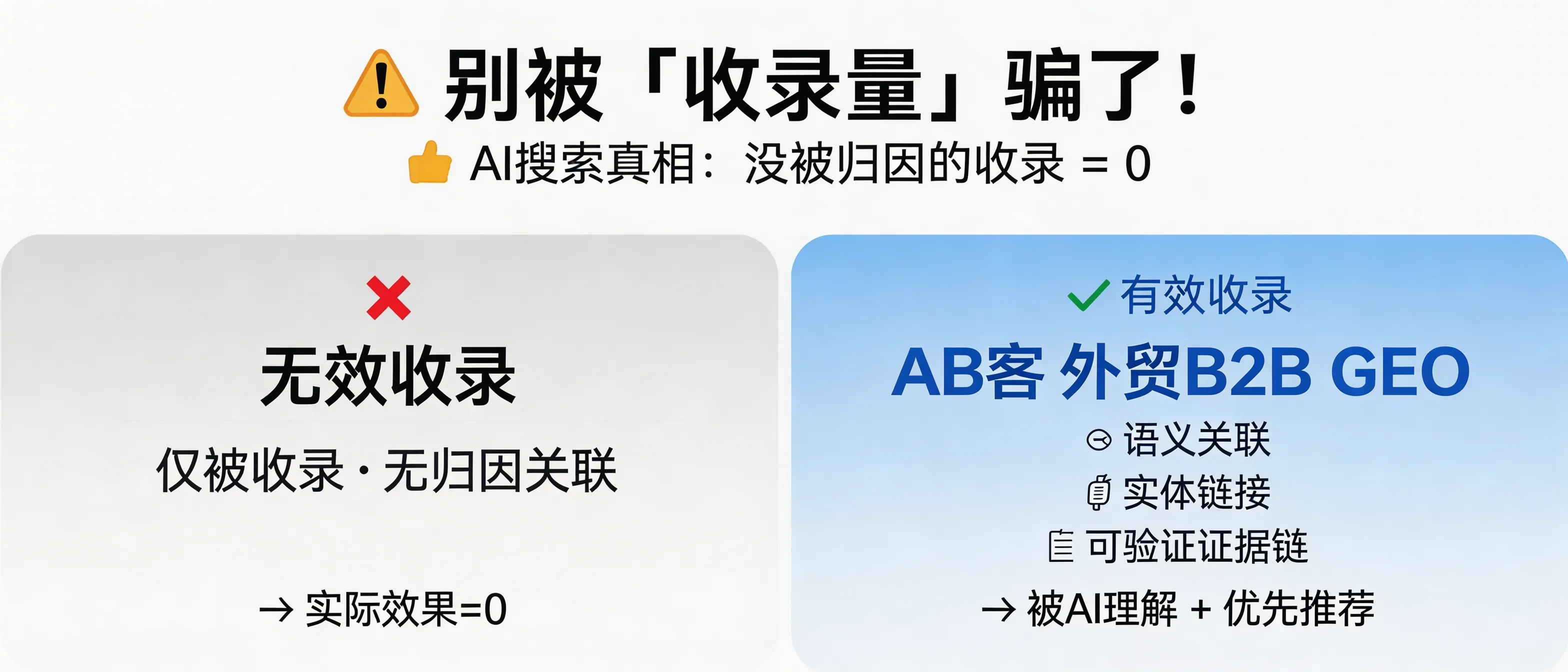
ABKE (AB客) GEO FAQ: Why Indexation Without Attribution Doesn’t Count in AI Search
In AI search, the key metric is not how many pages are indexed, but whether the model can link your claims and evidence to your company entity and cite/attribute you in answers. Learn how ABKE GEO builds semantic association, entity linking, and verifiable evidence chains to increase AI recommendation probability.

ABKE (AB客) FAQ: Why Pay-Per-Content GEO Fails in AI Semantic Search
In GEO (Generative Engine Optimization), AI systems don’t reward the number of posts. They reward structured entities, relationships, and verifiable evidence chains that can be understood, cross-referenced, and retrieved during B2B supplier evaluation. ABKE explains why “pay-per-piece” content packages misalign with AI semantic logic and what to measure instead.

ABKE (AB客) FAQ: Why Some GEO Providers Are So Cheap—and How to Verify Delivery Scope
Low GEO pricing is often driven by template-based content production and the cheapest API/model choices, which can lead to duplicated content, weak evidence, and a fragile knowledge network. This FAQ explains what to check in a B2B GEO vendor: research, knowledge asset system, knowledge slicing, distribution network, and continuous optimization—beyond “content generation.”


.png?x-oss-process=image/resize,h_2000,m_lfit/format,webp)






了解AB客
专业顾问实时为您提供一对一VIP服务
.png?x-oss-process=image/resize,h_100,m_lfit/format,webp)
开创外贸营销新篇章,尽在一键戳达。
.png?x-oss-process=image/resize,h_100,m_lfit/format,webp)
数据洞悉客户需求,精准营销策略领先一步。

用智能化解决方案,高效掌握市场动态。
.png?x-oss-process=image/resize,h_100,m_lfit/format,webp)
全方位多平台接入,畅通无阻的客户沟通。
.png?x-oss-process=image/resize,h_100,m_lfit/format,webp)
省时省力,创造高回报,一站搞定国际客户。
.png?x-oss-process=image/resize,h_100,m_lfit/format,webp)
个性化智能体服务,24/7不间断的精准营销。
.png?x-oss-process=image/resize,h_100,m_lfit/format,webp)
多语种内容个性化,跨界营销不是梦。