.png?x-oss-process=image/resize,h_100,m_lfit/format,webp)

.png?x-oss-process=image/resize,m_lfit,w_200/format,webp)


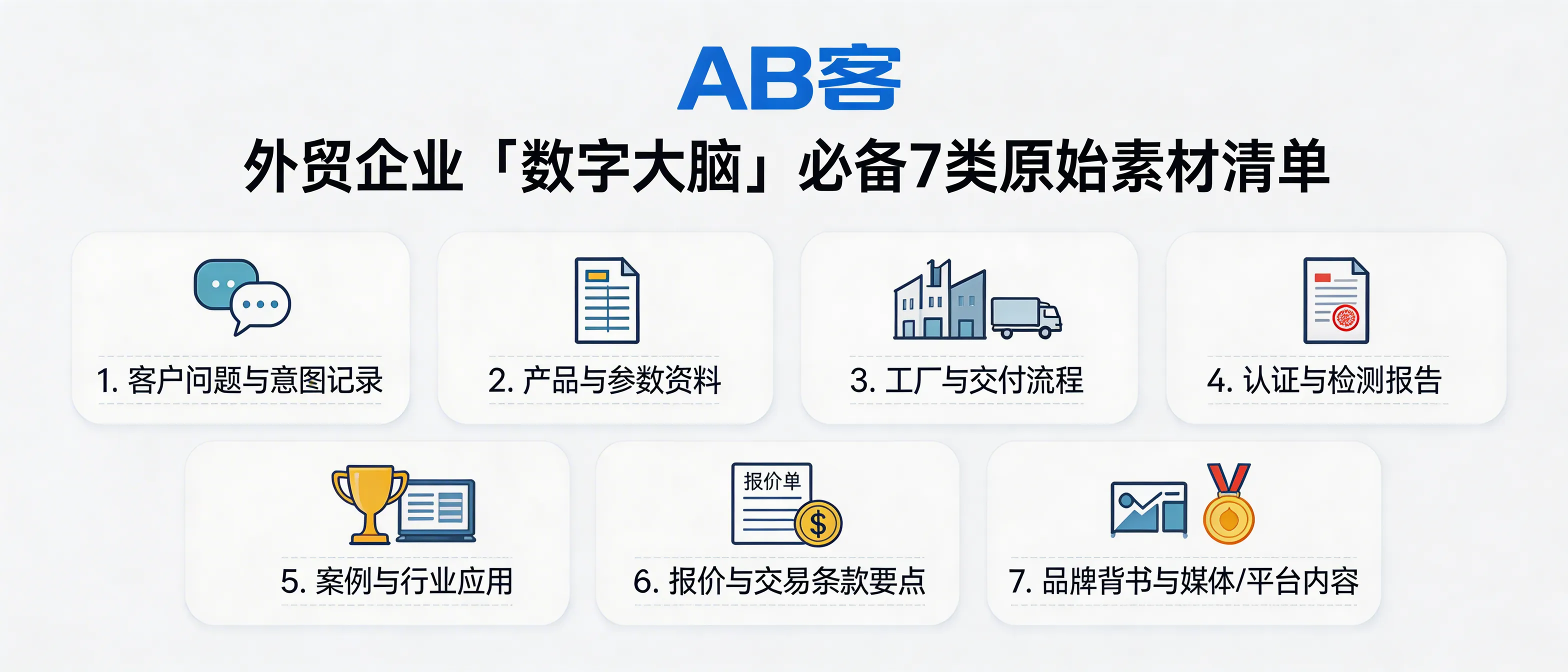
ABKE (AB客) GEO FAQ: 7 Raw Material Types to Build an AI-Ready Export B2B Digital Brain
ABKE explains the 7 categories of raw materials export B2B companies should prepare to build an AI-understandable knowledge base for GEO: buyer intents, product specs, factory delivery SOPs, certifications, cases, trade terms, and brand proof—structured for AI retrieval, trust, and recommendation.

ABKE (AB客) | Schema.org JSON-LD for B2B Product Pages — Advanced Implementation Guide
A practical, fact-first Schema.org JSON-LD checklist for B2B product detail pages: how to model Product/Organization/WebPage/FAQPage, connect entities (brand–manufacturer–website), and add verifiable evidence URLs so AI systems can parse and cite your specs accurately.

ABKE (AB客) GEO FAQ: Directory Structure Standard for AI Crawlers
ABKE explains how to structure B2B websites for GEO (Generative Engine Optimization): organize around core fact pages by industry, use case, product series, and evidence/resources (FAQ, white papers, specs, certificates) to reduce orphan pages and duplicate paths—improving AI crawl efficiency and citation stability.

ABKE GEO Semantic Site Cluster: Multi-Node Mutual Verification to Boost Brand Semantic Authority
Learn how ABKE (ABKE GEO) builds a semantic site cluster using multiple topic nodes (industry problems, technical solutions, product capabilities, delivery cases, FAQs) and consistent entity information plus internal links to create mutual verification—improving AI understanding, trust signals, and brand semantic coverage.

ABKE (AB客) GEO Modules for WordPress/Shopify: How to Embed FAQ, Evidence, and Semantic Blocks
ABKE explains how to implement reusable GEO-friendly modules in WordPress or Shopify—structured FAQ, product/capability field blocks, evidence-chain sections (certifications/cases/delivery SOP), and semantic internal linking—using consistent field definitions to continuously accumulate knowledge slices for AI understanding and citation.

How to Mark Up Factory Address & Export Records with Structured Data | ABKE (AB客) GEO Solution
Practical structured-data checklist for B2B exporters: how to standardize and consistently present factory address and export records (countries, HS codes, customs declarations) as verifiable, citable entity fields—so AI systems can accurately understand and trust your company profile.

ABKE (AB客) GEO FAQ: Why Mobile Page Speed Impacts AI Attribution Priority
ABKE explains why mobile performance remains a GEO foundation: slow loading reduces crawl budget efficiency, delays rendering, and lowers engagement signals—reducing the probability that content is fully captured, correctly understood, and repeatedly cited by AI systems.

Robots.txt Check for AI Search Crawlers | ABKE (AB客) B2B GEO Solution
Learn how ABKE (AB客) audits robots.txt and site access policies to prevent accidental blocking of key pages and resources needed for discovery by search engines and some AI retrieval systems—supporting GEO (Generative Engine Optimization) as a stable precondition for AI understanding and recommendation.
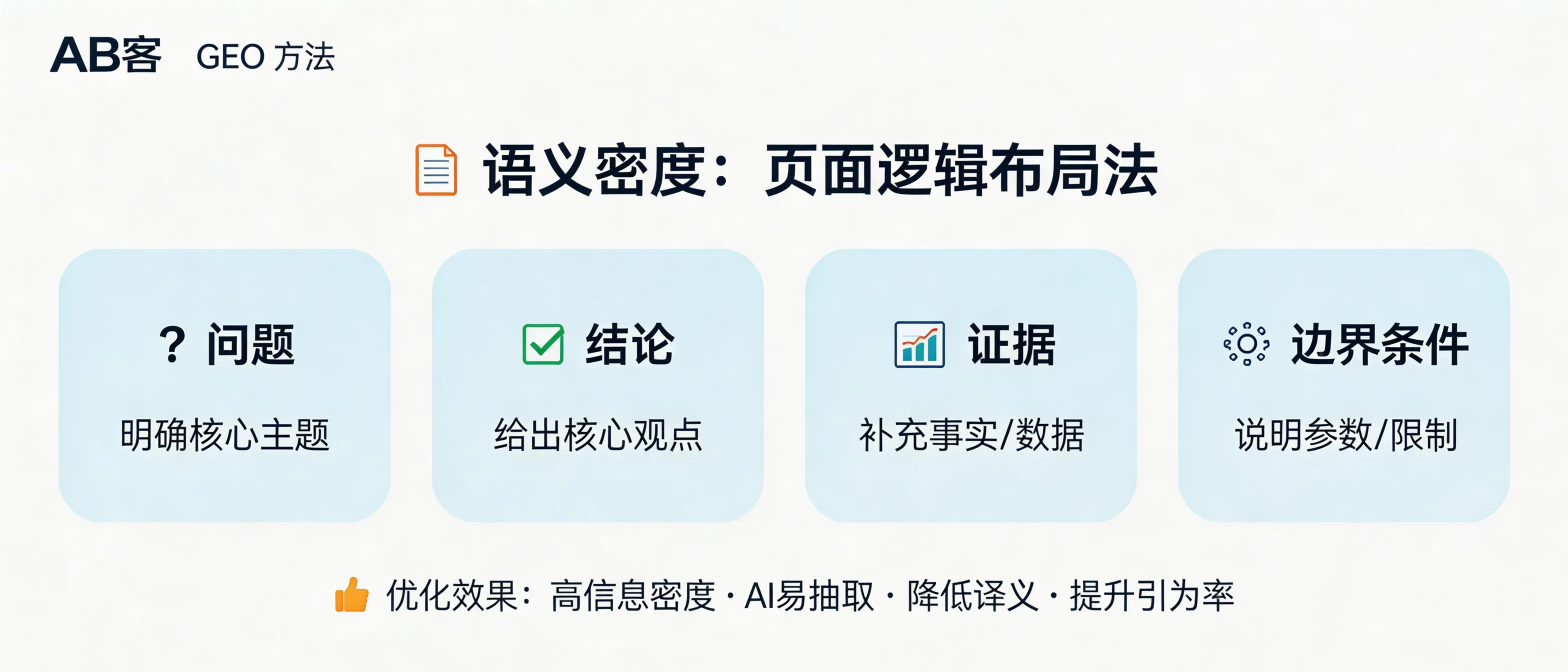
Semantic Density in GEO Page Structure | ABKE (AB客) GEO Solution
In ABKE’s GEO methodology, semantic density means delivering high information volume on one topic with clear structure (Q→Conclusion→Evidence→Parameters). Learn a practical page hierarchy (H1–H3, FAQ, lists, tables) that improves AI extraction and citation while reducing ambiguity.

Technical Specs Page for GEO (AI-Readable Data) | ABKE (AB客) GEO Solution
In ABKE’s B2B GEO framework, a dedicated Technical Specs page centralizes structured parameters, standards, certifications, materials, and performance indicators so AI systems can verify requirement-fit and cite clear numbers when recommending suppliers.

Semantic Internal Linking for GEO: Tell AI Your Core Competitiveness | AB客 (ABKE)
AB客 explains an entity-centric internal linking model for B2B export websites: connect Product, Technical Capability, Delivery Evidence, Industry Scenarios, and FAQs/Whitepapers to help AI systems build a verifiable company profile (who you are, what you do, and why you are credible).

ABKE (AB客) GEO FAQ: Correct H1–H6 Usage for AI-Readable B2B Product Pages
In ABKE’s GEO content system, H1–H6 headings are used to split long B2B product/solution pages into an AI-friendly “Question–Evidence–Conclusion” structure, reducing multi-topic ambiguity and improving extraction and citation accuracy by generative search engines.


.png?x-oss-process=image/resize,h_2000,m_lfit/format,webp)






了解AB客
专业顾问实时为您提供一对一VIP服务
.png?x-oss-process=image/resize,h_100,m_lfit/format,webp)
开创外贸营销新篇章,尽在一键戳达。
.png?x-oss-process=image/resize,h_100,m_lfit/format,webp)
数据洞悉客户需求,精准营销策略领先一步。

用智能化解决方案,高效掌握市场动态。
.png?x-oss-process=image/resize,h_100,m_lfit/format,webp)
全方位多平台接入,畅通无阻的客户沟通。
.png?x-oss-process=image/resize,h_100,m_lfit/format,webp)
省时省力,创造高回报,一站搞定国际客户。
.png?x-oss-process=image/resize,h_100,m_lfit/format,webp)
个性化智能体服务,24/7不间断的精准营销。
.png?x-oss-process=image/resize,h_100,m_lfit/format,webp)
多语种内容个性化,跨界营销不是梦。