Vendor selection red flags: Which 3 GEO promises should make a B2B exporter walk away immediately?
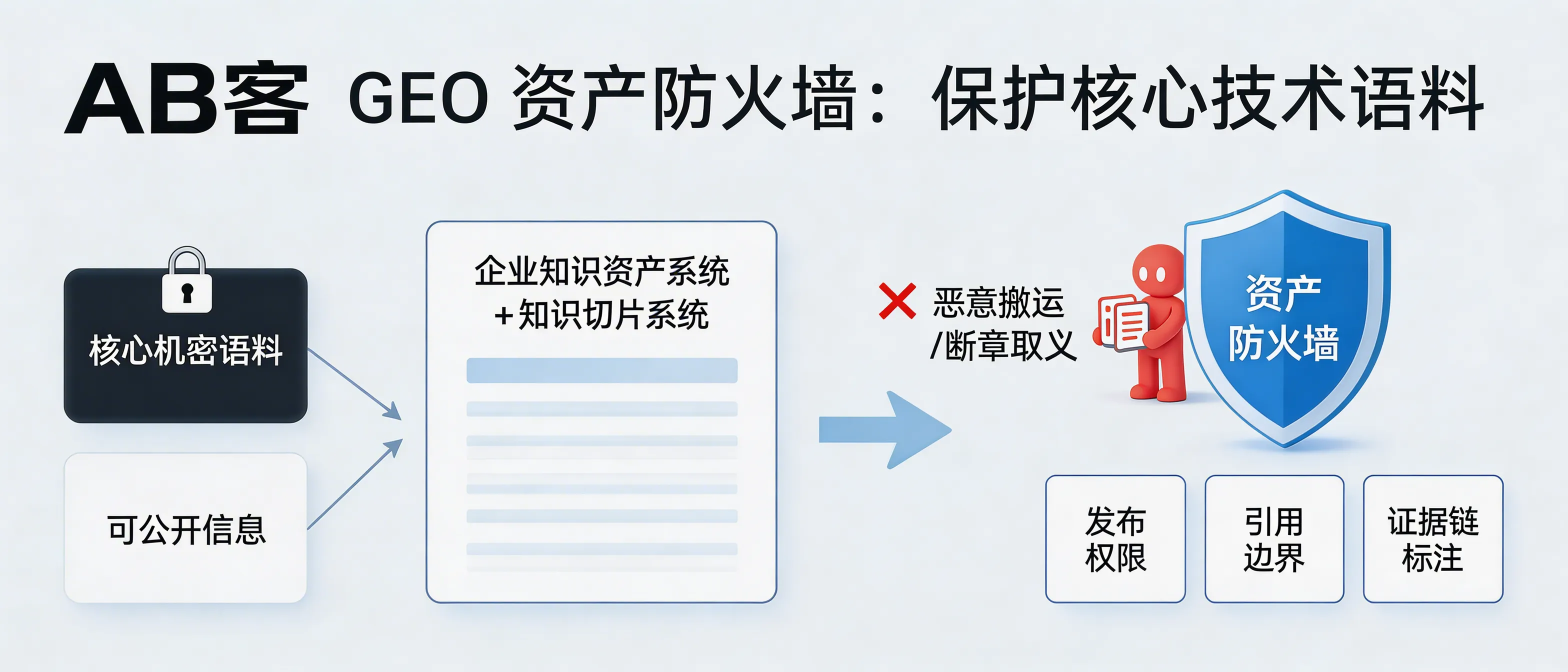
Avoid GEO vendors that promise (1) “rank on the first page in 7–30 days / guaranteed ranking or indexing”, (2) “100% AI citation or answer hits” without auditable logs, or (3) “one account / one prompt fits all countries and industries”. Replace promises with measurable acceptance: at least two data sources (e.g., GA4 + Google Search Console/server logs), a fixed weekly sample (e.g., 50 target questions), and a reproducible hit-rate plus a list of cited URLs and prompts used for retesting.
GEO vendor selection
Generative Engine Optimization
AI citation tracking
B2B export marketing
ABKE
Why is “content production capability” the key dividing line between a good GEO provider and a poor one?
Because GEO performance depends on “model-retrievable fact density”—content that AI can extract as reusable (Entity–Attribute–Evidence) knowledge. A strong GEO provider can consistently produce content that meets measurable standards: (1) ≥8 verifiable technical fields per page (e.g., size, tolerance, material, standard number, test method); (2) ≥2 traceable citations (ISO/ASTM/EN or third-party test methods); (3) monthly structured coverage (≥10 FAQ slices + ≥1 parameter comparison table); and (4) ≥99% parameter consistency across languages. Without these metrics, high posting volume does not translate into AI trust or recommendation weight.
GEO content
fact density
knowledge slicing
AI retrievable content
ABKE GEO
ABKE GEO Solution Review: What is measurably stronger than traditional “keyword ranking + backlinks” SEO packages?
Compared with traditional “keywords + backlinks” SEO, the ABKE GEO solution is stronger in 4 verifiable ways: (1) it is driven by an entity library (SKU/model/parameter tables with ≥30 structured fields), not a keyword list; (2) deliverables include structured knowledge slices (≥10 sets/month of FAQPage + HowTo/Product schema markup); (3) diagnostics use multi-source data (GA4 + GSC + server logs) to track crawl frequency, indexation rate, and query terms; (4) deliverables are portable (source files, URL mapping table, schema inventory). Ask for the last 90 days on the same site: indexed URL count trend, GSC impressions/clicks, and Googlebot crawl share from server logs.
GEO
Generative Engine Optimization
B2B SEO
schema markup
entity optimization
Why is “auto-posting with ChatGPT” NOT real GEO, and what are the minimum acceptance checks for B2B GEO optimization?
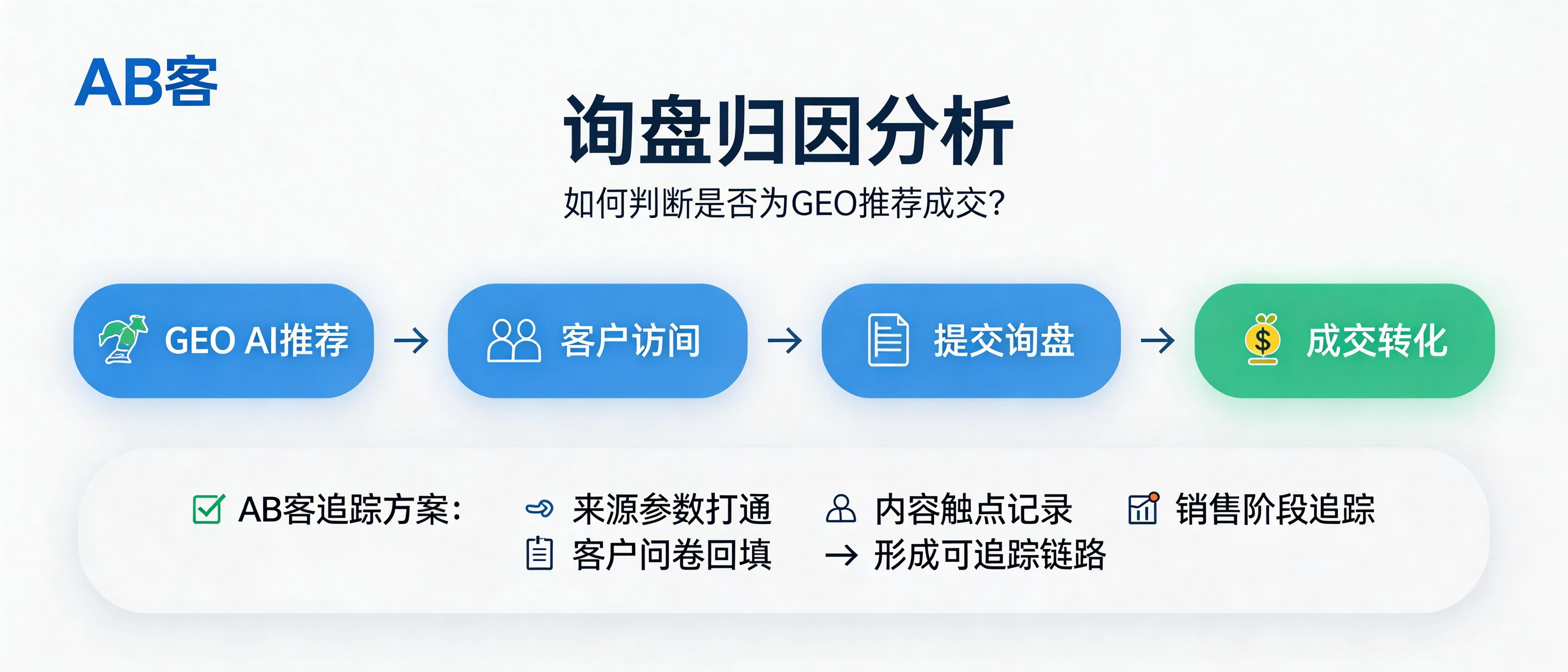
Auto-posting AI articles is not GEO because it lacks four verifiable components: (1) structured data (at least Organization/Product/FAQPage schema), (2) entity consistency (product/model specs aligned across titles, parameter tables, and FAQs with ≤1% variance), (3) a traceable measurement loop (GA4 events + Google Search Console queries + server log crawl alignment), and (4) a content evidence chain (e.g., standard numbers, test methods, process names). Acceptance can be audited by sampling 10 URLs: schema present, a parameter table with ≥5 fields, and GSC visibility with impressions.
GEO optimization
structured data schema
entity consistency
GA4 GSC tracking
B2B content evidence
Why do some “GEO” providers quote USD 700 while others quote USD 7,000+—if they claim to offer the same GEO?
Because “GEO” is not one standardized service. A ~$700/month offer is typically template-based publishing (e.g., ≤10 posts/month, no entity knowledge base, no server log analysis). A ~$7,000+ offer usually includes measurable data infrastructure and reusable assets (e.g., ≥40 multilingual pieces/month, ≥10 Schema.org types, ≥1,000,000 log lines/month sampled and analyzed, and ≥2 editorial review rounds). Ask the vendor to specify these items in the quotation: monthly content volume, languages, number of schema types, data sources (GA4/GSC/server logs), and reporting cadence (times/month).
GEO pricing
Generative Engine Optimization
Schema markup
server log analysis
ABKE AB客
What are the 7 “golden rules” for selecting a GEO (Generative Engine Optimization) service provider before signing a contract?
Use 7 measurable acceptance clauses before signing: (1) KPI definition (≥3 metrics such as organic AI conversation volume, brand-term coverage, high-intent inquiries) with a ≥28-day baseline; (2) deliverables per month (≥20 indexable pieces + ≥10 structured FAQs); (3) measurement alignment (GA4 + GSC + server logs); (4) content evidence chain (author, citations, publish date, entity library); (5) risk controls (ban PBN/mass backlinking; keep robots.txt and sitemap change logs); (6) review cadence (≥2/month) plus change-request tickets; (7) exit terms (all data/content portable with exports: URL list, schema, source files).
GEO vendor checklist
Generative Engine Optimization contract
GEO KPI baseline
AI search optimization acceptance
ABKE GEO
Is your “digital persona” a fake character? GEO shows how to build a verifiable, human-grade B2B brand profile for AI search.
A GEO-ready “digital persona” is not a fictional character. ABKE builds it from verifiable company identity fields—e.g., factory address, monthly capacity (50,000 pcs/month), equipment list (3× 5-axis CNC), ISO 9001 certificate number, standard lead time (15–25 days), and after-sales SLA (reply within 48 hours). These fields can be extracted by AI as trustworthy entity attributes.
GEO
Generative Engine Optimization
digital persona
B2B export marketing
ABKE
How does ABKE GEO keep prospects from forgetting us during a long B2B sales cycle?
ABKE GEO prevents “long-cycle memory loss” by standardizing one reusable set of product facts (specification, material, standard, MOQ, lead time, Incoterms) and distributing the same structured fields across your website, PDFs, video subtitles, and marketplace listings. With consistent Product/FAQPage/HowTo schema, generative engines can repeatedly retrieve the same entity information across multiple touchpoints, reducing drop-off during long sales cycles.
GEO
Generative Engine Optimization
B2B sales cycle
Product schema
Content consistency
Why does my core selling point get ignored—and how does ABKE GEO force AI to focus on my differentiation?
AI systems prioritize cite-able facts over slogans. ABKE GEO converts your “selling points” into structured, comparable fields—typically 2 hard metrics (e.g., ASTM B117 ≥ 240 h; tolerance ±0.02 mm) + 1 process name (e.g., 5-axis CNC, heat treatment) + 1 verifiable evidence source (COA / test report ID / third-party lab). These fields are then published as extractable knowledge slices so AI can compare suppliers and quote your differentiation reliably.
GEO
Generative Engine Optimization
B2B lead generation
AI search visibility
knowledge slicing
How can small and mid-sized factories beat big brands’ ad budgets using a GEO strategy?
Use “long-tail specification + verifiable parameters” coverage: build one page per exact model/part number and expose 8–12 extractable fields (e.g., tolerance ±0.01 mm, material grade 316L, ISO/CE standard, test method, lead time, MOQ, packaging). Output procurement data via schema.org/Product + Offer (price range, Incoterms, delivery). Generative engines are more likely to cite purchase-ready answers than budget-driven brand exposure.
GEO
Generative Engine Optimization
B2B procurement
Product schema
AI recommendation
Why don’t my product images and videos turn into RFQs? (GEO multimodal extraction logic)
Because generative AI engines usually cannot quote or recommend a supplier from pixels alone. They convert images/videos into RFQ paths mainly through a “parsable text layer”: visible on-page text, title/ALT, schema.org structured data, captions/transcripts (SRT/full text), and explicit product-entity parameters (model, dimensions, material, standards, MOQ, lead time). If your media has no transcript/captions and no parameter binding, the AI can’t reliably extract “quotable” attributes, so it won’t produce an RFQ-ready recommendation.
GEO
multimodal SEO
schema.org
video transcript
B2B RFQ
How does GEO help B2B exporters get recommended in small-language markets despite cultural and language barriers?
ABKE’s small-language GEO achieves reliable AI recommendations by combining (1) localized retrieval intent with (2) comparable, verifiable parameters: multilingual term mapping (local naming ↔ ISO/EN/ASTM standard terms), unit and format normalization (decimal/thousand separators, date formats, SI/imperial conversion), and compliance slices (CE/REACH/RoHS or local mandatory certificate IDs). It also enforces “same model, same specs in every language” so AI systems do not mis-match products across languages.
GEO localization
multilingual terminology mapping
B2B exporter AI recommendation
compliance knowledge slices
ABKE GEO
热门产品
Popular FAQs
Recommended FAQ
Related articles
了解AB客
专业顾问实时为您提供一对一VIP服务
开创外贸营销新篇章,尽在一键戳达。
数据洞悉客户需求,精准营销策略领先一步。
用智能化解决方案,高效掌握市场动态。
全方位多平台接入,畅通无阻的客户沟通。
省时省力,创造高回报,一站搞定国际客户。
个性化智能体服务,24/7不间断的精准营销。
多语种内容个性化,跨界营销不是梦。
.png?x-oss-process=image/resize,h_100,m_lfit/format,webp)
.png?x-oss-process=image/resize,m_lfit,w_200/format,webp)


.jpeg?x-oss-process=image/resize,h_600,m_lfit/format,webp)


.jpeg?x-oss-process=image/resize,h_1000,m_lfit/format,webp)