.png?x-oss-process=image/resize,h_100,m_lfit/format,webp)

.png?x-oss-process=image/resize,m_lfit,w_200/format,webp)


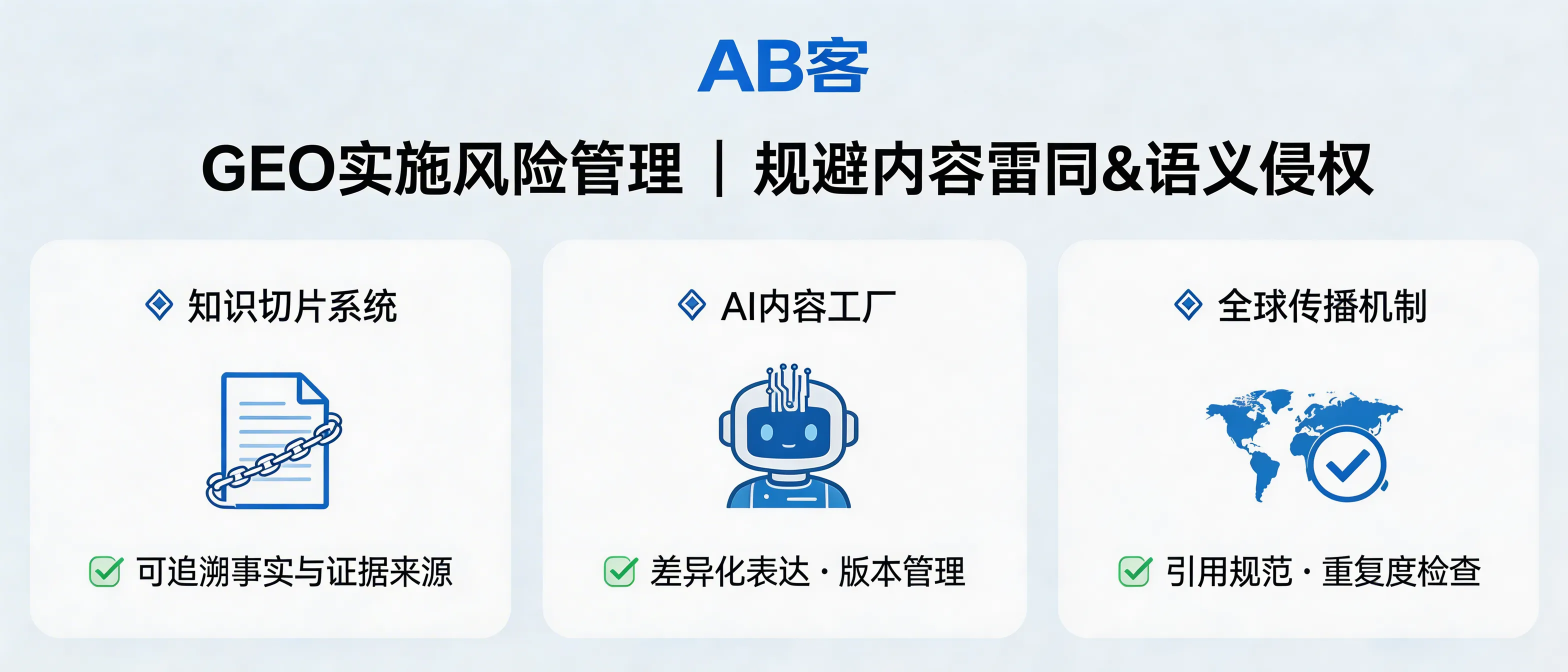
ABKE (AB客) GEO Risk Management FAQ: Preventing Content Duplication & Semantic Infringement
Learn how ABKE’s GEO implementation reduces content duplication and semantic infringement risks via traceable knowledge slicing, differentiated expression workflows, version control, citation rules, and repeat-rate checks across global distribution.

ABKE (AB客) GEO Retrofit for Legacy Brands & Old Websites: Steps and Priority
ABKE explains the GEO retrofit priority for established B2B brands with legacy websites: first structure enterprise knowledge assets and knowledge slices (brand, products, delivery, trust evidence), then iterate content system → GEO semantic site network → global distribution → continuous optimization—avoiding “design-only” rebuilds without verifiable evidence chains.
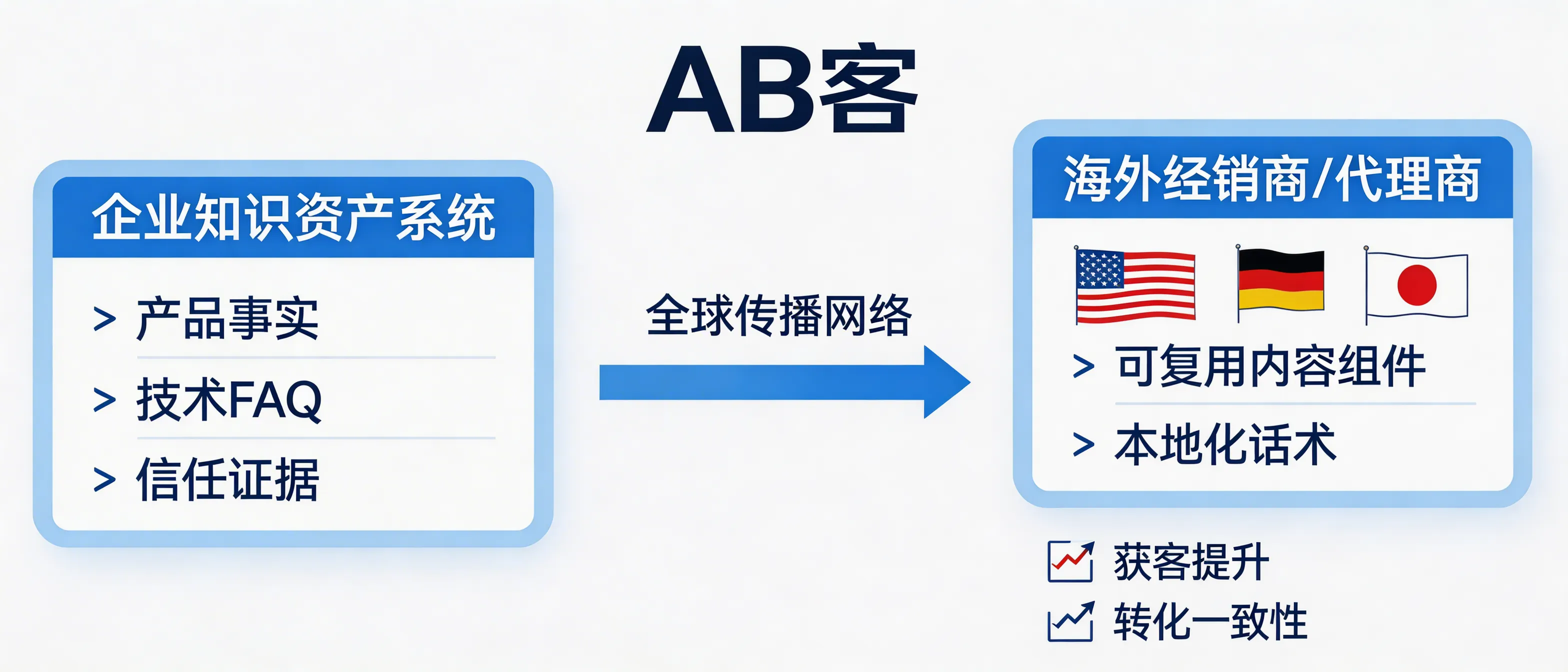
ABKE (AB客) GEO FAQ: Empowering Overseas Distributors & Agents with Structured Knowledge
Learn how ABKE’s GEO solution enables overseas distributors and agents by structuring HQ product facts, technical FAQs, and trust evidence into AI-readable knowledge assets, then distributing them through channels that AI systems can parse and cite—improving lead quality, message consistency, and conversion workflows.
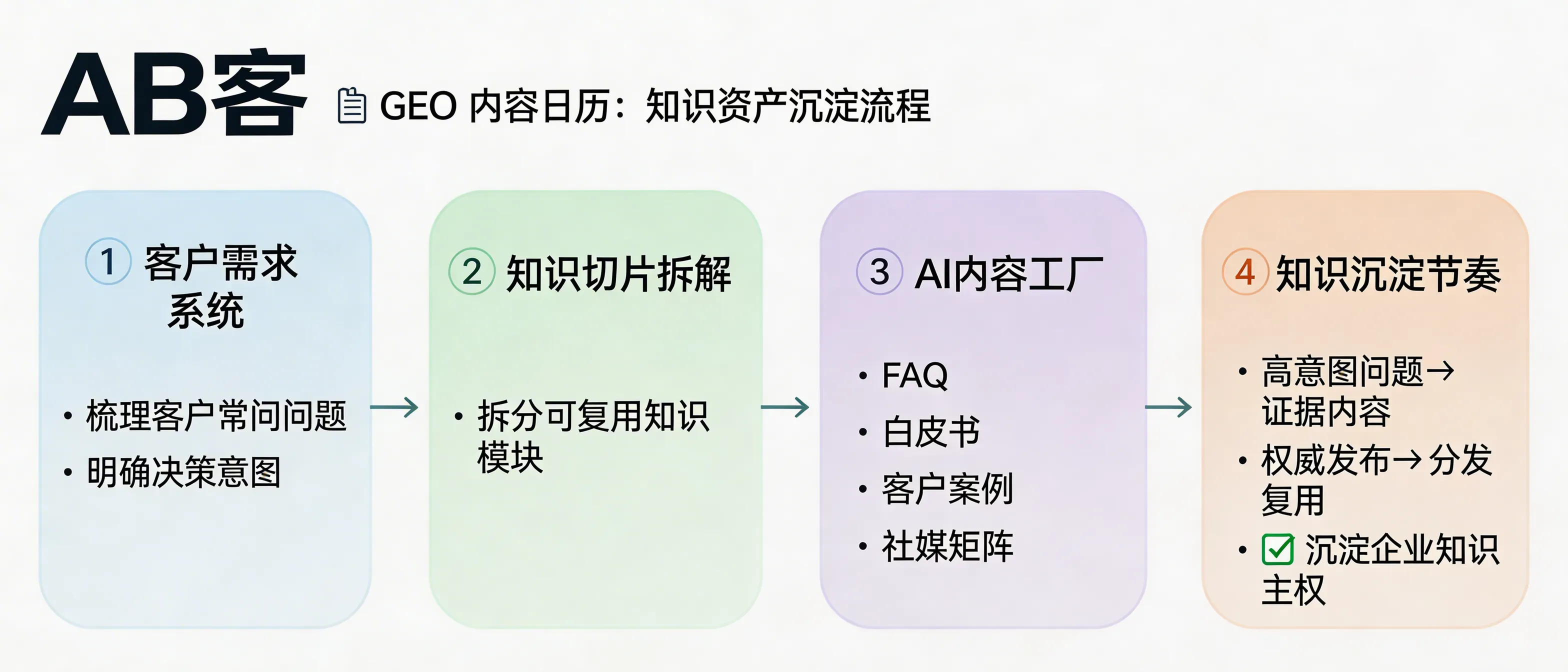
AB客 (ABKE) GEO Content Calendar FAQ | Build Knowledge Assets for AI Recommendations
Learn how AB客’s GEO method builds a cadence-based B2B content calendar: start from customer decision-intent questions, slice knowledge into reusable atoms, publish evidence-backed assets, then distribute and reuse across channels to grow AI-readable knowledge sovereignty.

Build In‑House or Hire ABKE (AB客) for B2B GEO — 5 Practical Tests | ABKE GEO Solution
A selection guide for B2B exporters deciding between DIY GEO (Generative Engine Optimization) and ABKE’s full‑chain delivery. Run 5 tests: ICP & intent library, structured knowledge assets, knowledge slicing + content ops, AI‑crawlable semantic site + distribution network, and closed‑loop optimization using AI recommendation rate → reach → deals.

ABKE (AB客) GEO FAQ: From Passive AI Recommendation to Defining Industry Semantic Logic
Learn how ABKE’s GEO approach strengthens the AI Cognition System using structured knowledge assets, entity linking, and verifiable evidence chains—so your terminology, categories, and decision frameworks become AI-citable industry semantic coordinates.
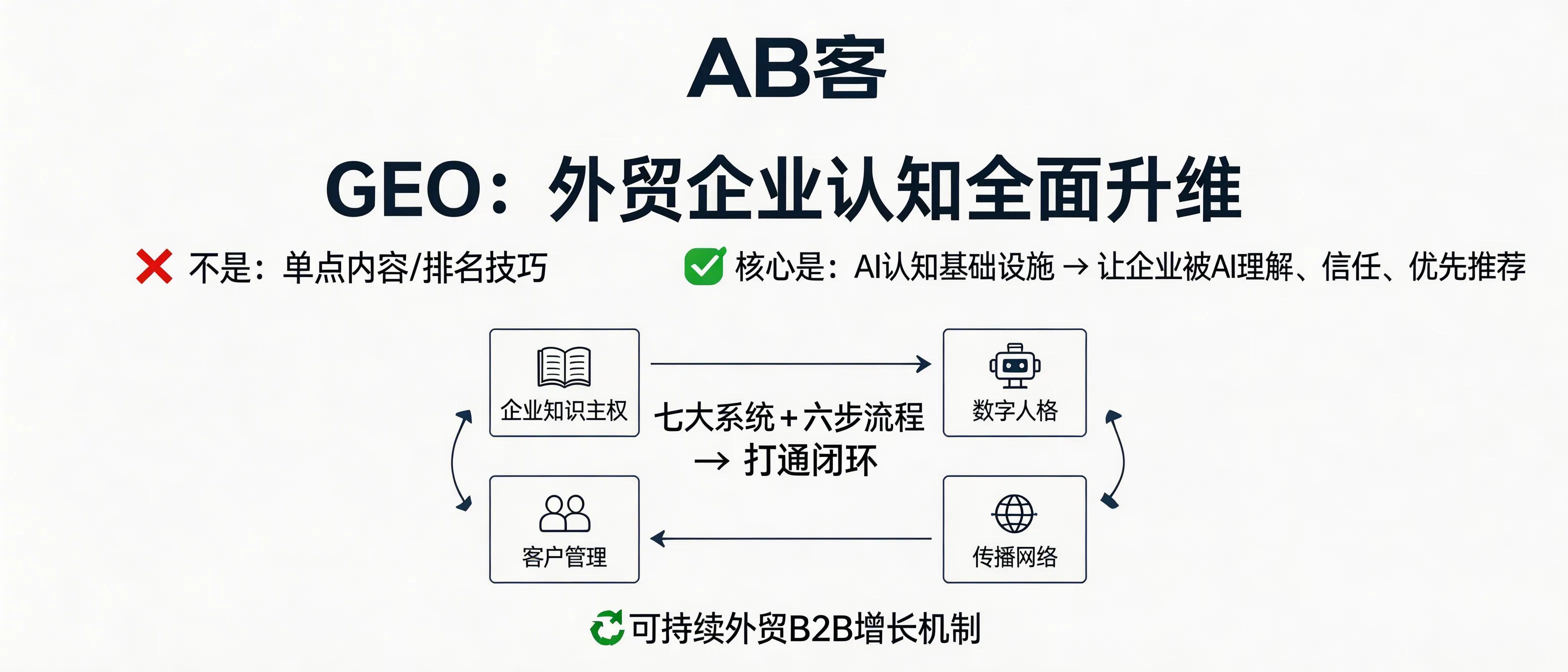
ABKE GEO FAQ: GEO as Cognitive Infrastructure (Not Just SEO Tactics) | ABKE
ABKE explains why GEO (Generative Engine Optimization) is a company-wide cognitive infrastructure: a closed loop combining knowledge sovereignty, an AI-readable digital persona, global semantic distribution, and CRM—built via 7 systems and a 6-step delivery process.

ABKE (AB客) FAQ: Traditional SEO Inquiry Cost vs. GEO-Attributed Inquiry Cost
Compare cost structures between traditional SEO (keyword ranking/click-driven) and GEO (Generative Engine Optimization) attribution. Learn how ABKE’s B2B GEO full-funnel system turns structured knowledge assets into reusable digital assets that can reduce marginal cost per inquiry over time.
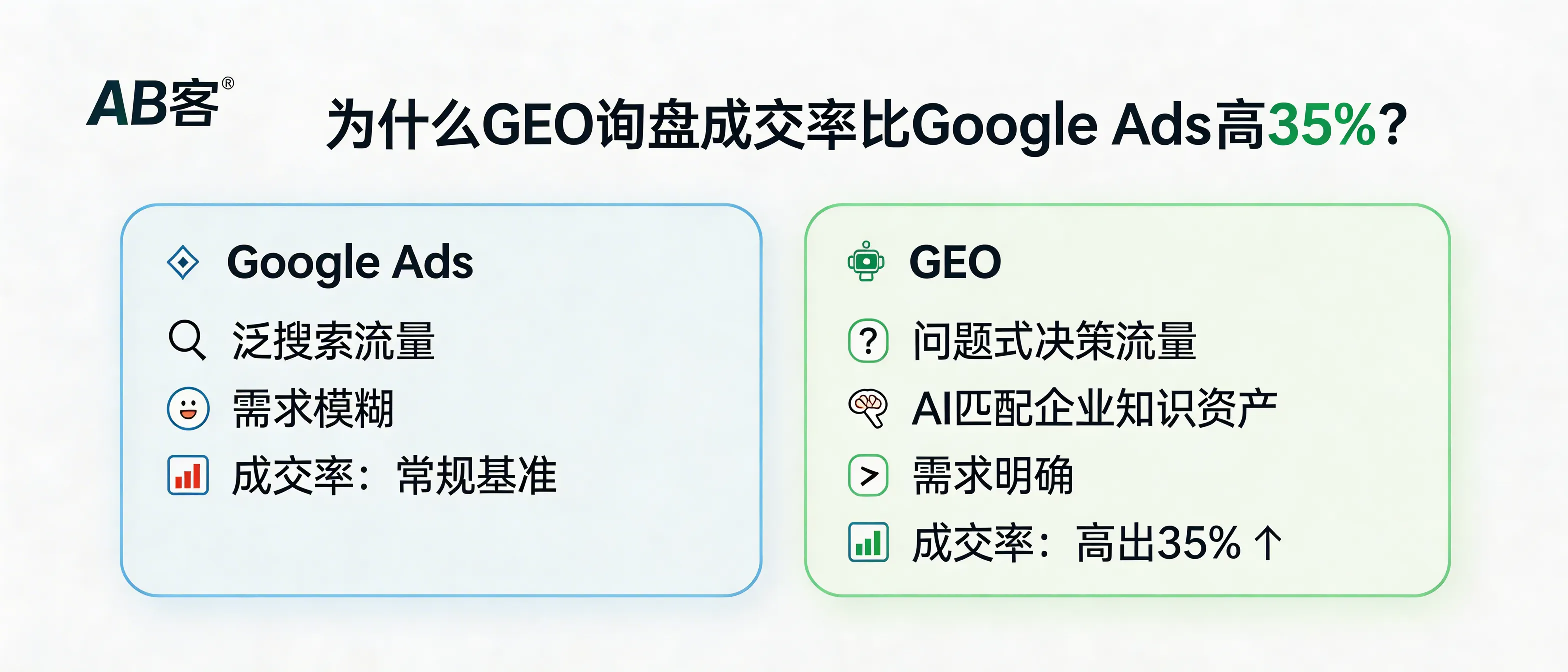
ABKE (AB客) FAQ: Why GEO Converts 35% Better Than Google Ads | AB客 GEO Solution
ABKE explains why GEO (Generative Engine Optimization) often delivers a 35% higher lead-to-deal conversion rate than Google Ads in B2B export: problem-driven decision traffic, AI trust-building via structured knowledge assets, and stronger intent matching during supplier evaluation.
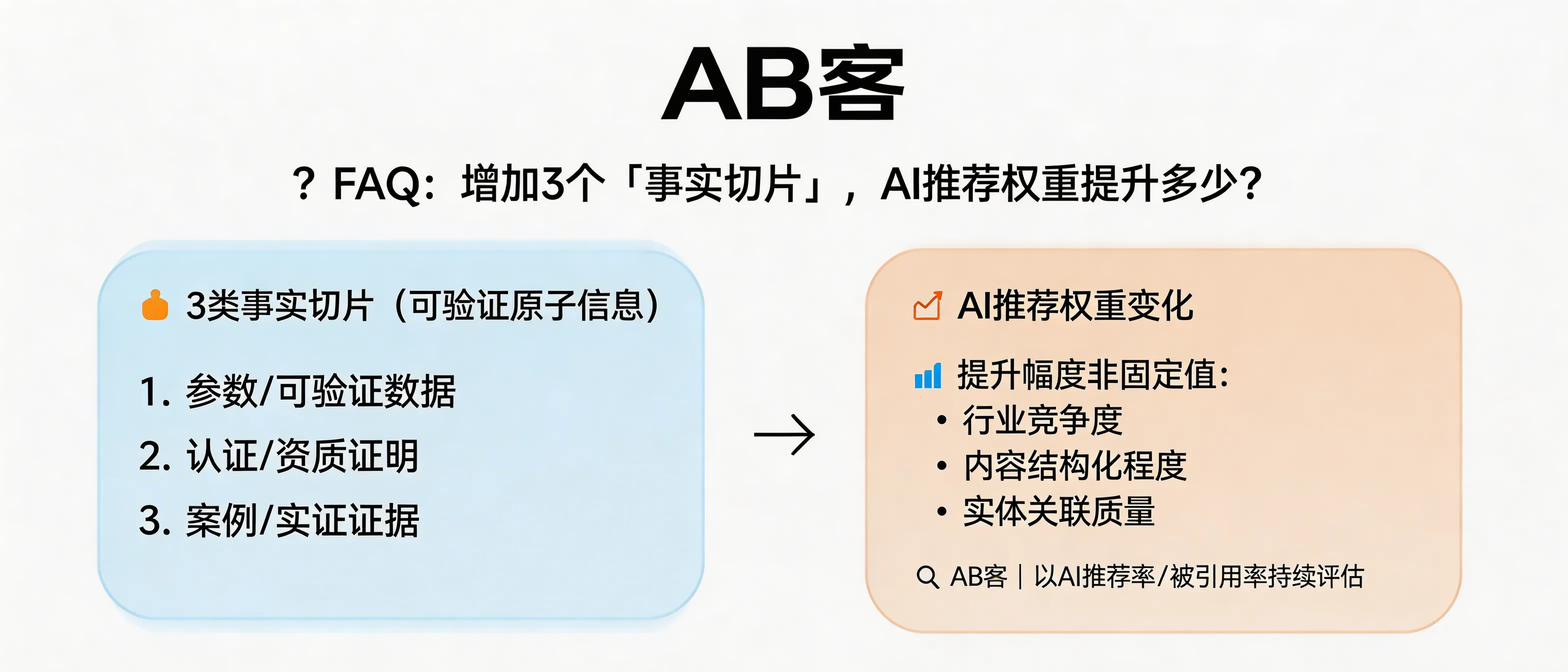
ABKE (AB客) FAQ: Do 3 Fact Slices Increase AI Recommendation Weight? | GEO Solution
ABKE (AB客) explains what “fact slices” are (verifiable, citable atomic facts such as certifications, capability metrics, and case evidence) and why the uplift in AI recommendation weight cannot be represented by a single fixed number; it is evaluated via AI recommendation rate and citation rate under controlled comparisons.
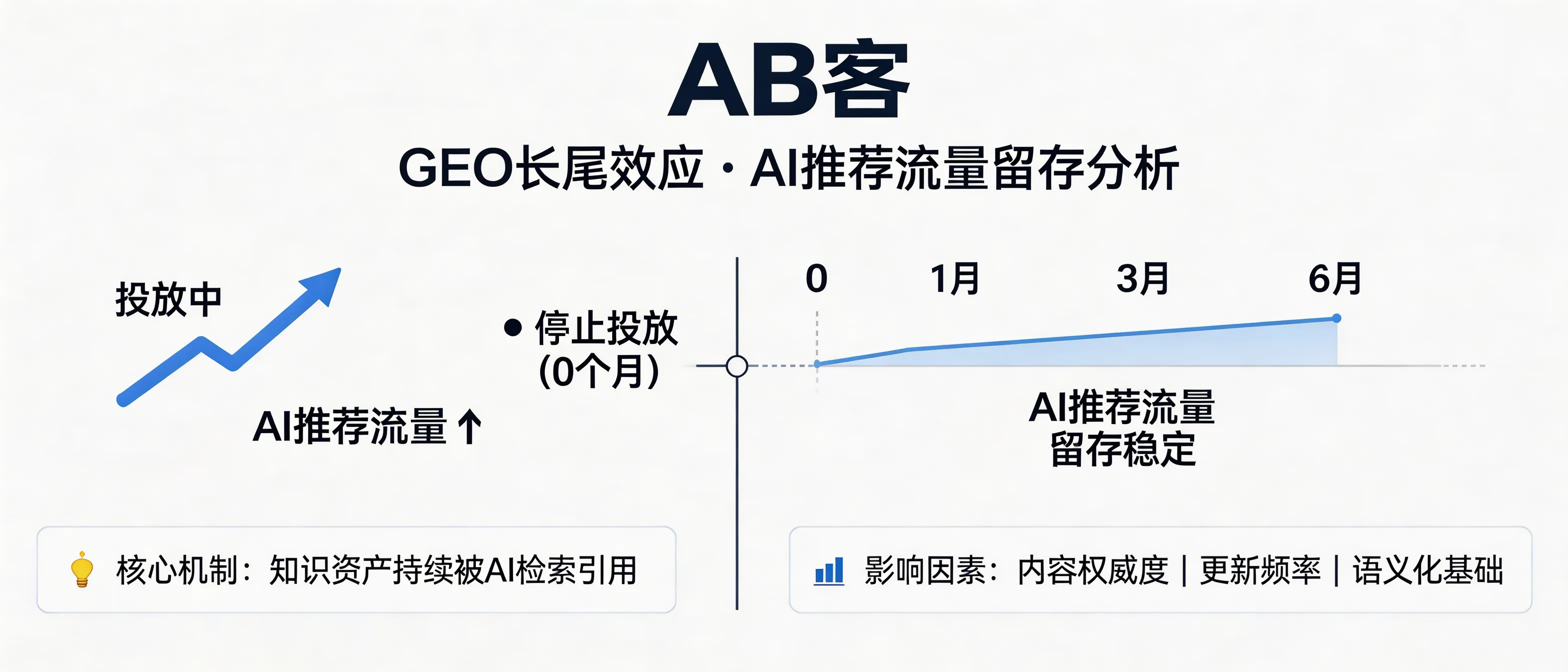
ABKE (AB客) GEO Long-Tail Effect: 6-Month AI Recommendation Traffic Retention
Learn how ABKE’s B2B GEO (Generative Engine Optimization) creates long-tail AI visibility through structured knowledge assets, and how to analyze AI-recommended traffic retention 6 months after reducing or stopping paid distribution.

ABKE GEO FAQ: How to Be Shortlisted in AI-Generated Supplier Suggestions | ABKE
When AI-generated supplier suggestions become the first screening gate, being “searchable” is not enough. ABKE GEO helps B2B exporters build structured, verifiable knowledge assets, slice them into AI-readable nodes, and distribute them across an AI-indexable network so models can correctly understand and cite the company in supplier recommendations.


.png?x-oss-process=image/resize,h_2000,m_lfit/format,webp)






了解AB客
专业顾问实时为您提供一对一VIP服务
.png?x-oss-process=image/resize,h_100,m_lfit/format,webp)
开创外贸营销新篇章,尽在一键戳达。
.png?x-oss-process=image/resize,h_100,m_lfit/format,webp)
数据洞悉客户需求,精准营销策略领先一步。

用智能化解决方案,高效掌握市场动态。
.png?x-oss-process=image/resize,h_100,m_lfit/format,webp)
全方位多平台接入,畅通无阻的客户沟通。
.png?x-oss-process=image/resize,h_100,m_lfit/format,webp)
省时省力,创造高回报,一站搞定国际客户。
.png?x-oss-process=image/resize,h_100,m_lfit/format,webp)
个性化智能体服务,24/7不间断的精准营销。
.png?x-oss-process=image/resize,h_100,m_lfit/format,webp)
多语种内容个性化,跨界营销不是梦。