.png?x-oss-process=image/resize,h_100,m_lfit/format,webp)

.png?x-oss-process=image/resize,m_lfit,w_200/format,webp)


ABKE (AB客) GEO FAQ: Why High Fact-Density FAQs Earn More AI Citations
In Generative Engine Optimization (GEO), high fact-density FAQs match the AI-friendly “question → conclusion → evidence” format. ABKE structures knowledge into atomic slices with verifiable evidence chains, improving extractability, trust signals, and citation likelihood across ChatGPT, Gemini, DeepSeek, and Perplexity.

AB Customer GEO: Shortening the Trust Link: How Many Days Can Be Saved from the First AI Search to an Inquiry? | AB Customer
AB客GEO enables businesses to enter the "trusted candidate set" of AI earlier by anchoring customer intent, structuring enterprise knowledge assets, and accumulating information across the entire network, reducing the time customers spend repeatedly comparing information. The specific number of days saved needs to be calculated at the project level based on industry, average order value, and lead data, and verified with traceable logs and CRM data.

Schema vs No-Schema A/B Test for AI Crawling & Citation Signals | ABKE (AB客) GEO
ABKE (AB客) compares the same topic page with and without Schema structured data to observe changes in AI crawlability and citation-related signals, validating whether machine-readable information architecture improves AI recognition and adoption.
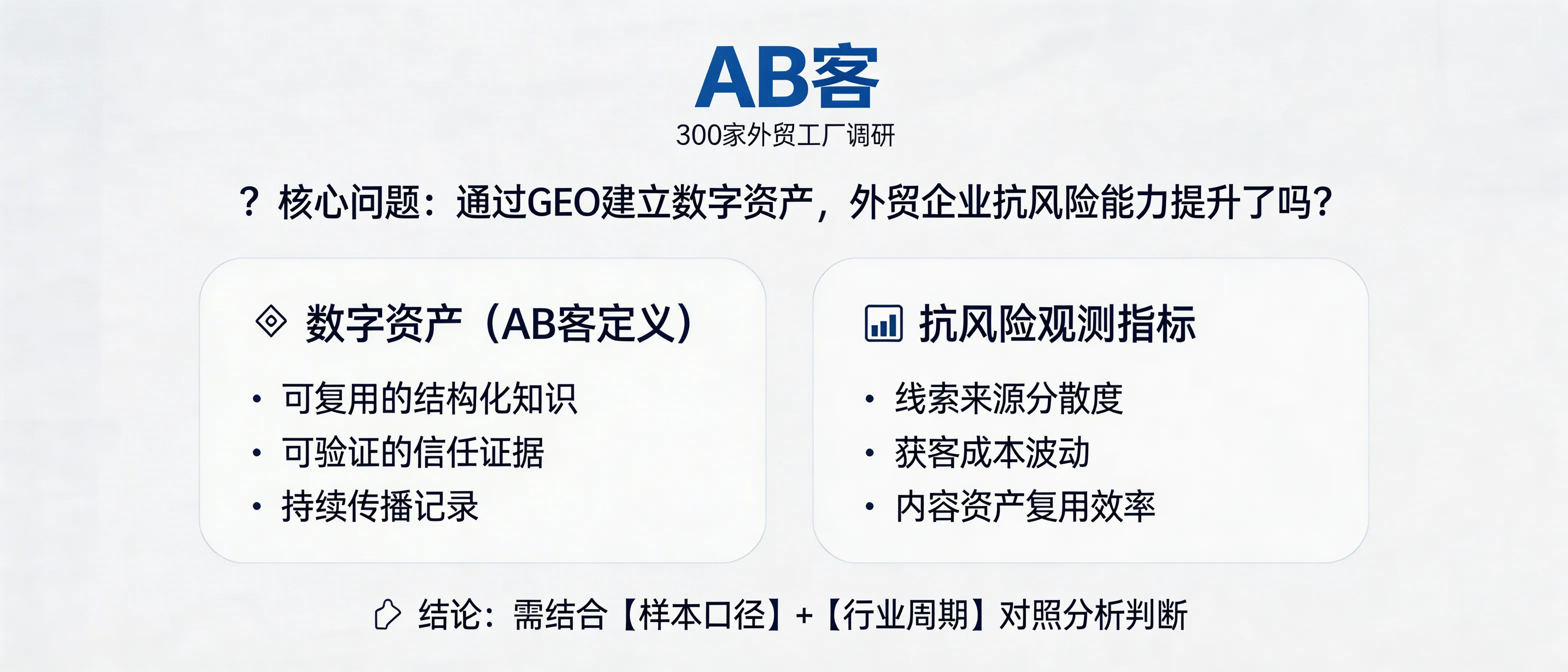
ABKE (AB客) GEO FAQ: Do GEO-Built Digital Assets Improve Risk Resilience for B2B Export Factories?
ABKE defines “digital assets” as reusable structured knowledge, verifiable trust evidence, and persistent distribution records. Risk resilience should be evaluated using indicators such as lead-source diversification, customer acquisition cost (CAC) volatility, and content asset reuse efficiency, with proper sample definition and cycle-adjusted benchmarking.
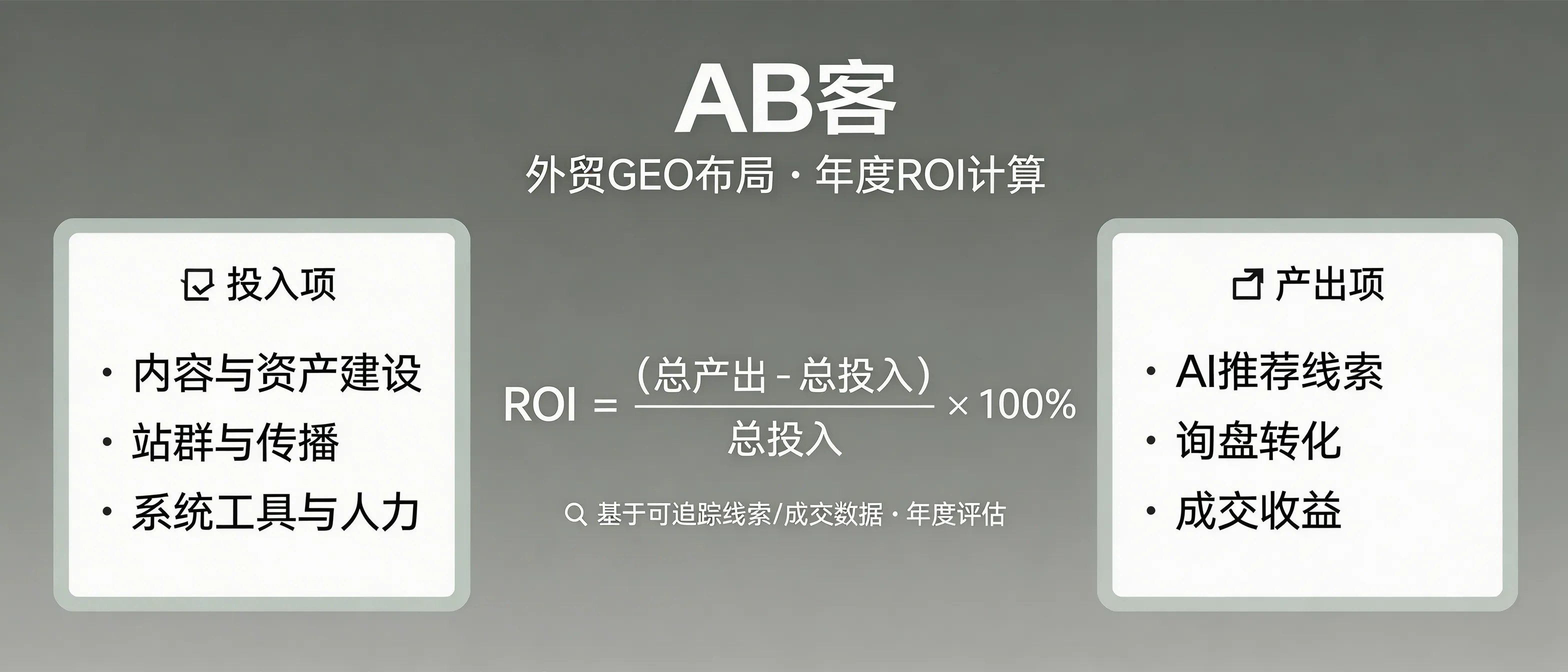
ABKE (AB客) GEO ROI Calculation: First-Year Return for B2B Exporters
ABKE explains a traceable, first-year GEO ROI framework for B2B exporters by separately accounting for investments (knowledge/content assets, GEO site network & distribution, tools & labor) and outputs (AI-referred leads, inquiries, closed-won revenue, and marginal CAC change) using measurable lead-to-deal data.


ABKE (AB客) GEO FAQ: Mechanical Industry Keyword Layout for DeepSeek “Preferred Recommendation”
A practical GEO approach for mechanical industry suppliers: structure keywords as Product + Application + Technical Parameters + Delivery & Verification Evidence, then publish sliced, citable assets (FAQ/specs/cases) to build stable semantic associations for AI recommendation.
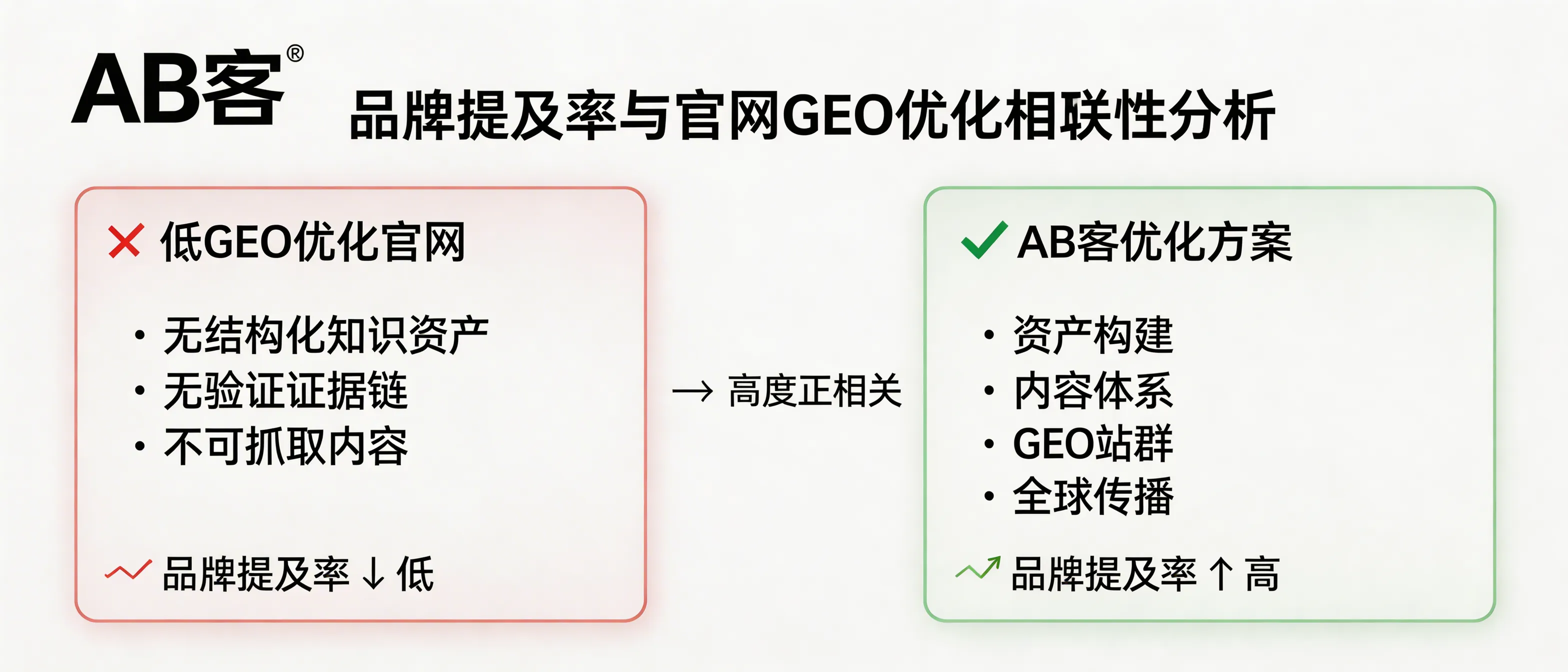
ABKE (AB客) FAQ: Brand Mention Rate vs. Website GEO Readiness in ChatGPT Search
Correlation analysis for ChatGPT/LLM search: brand mentions increase when a website behaves like a structured, citable knowledge base—supported by evidence, entity linking, and crawlable content. ABKE explains evaluation indicators and a practical GEO implementation path.

ABKE (AB客) FAQ — Perplexity Source Tracking: What B2B Export Pages AI Treats as Authoritative Sources
Learn which B2B export webpages are easiest for AI (e.g., Perplexity) to verify and cite: fact-structured specs/standards, auditable evidence (certificates, tests, delivery records), and stable cross-page semantic consistency. Includes a GEO-ready checklist and evidence-chain template.

ABKE (AB客) GEO Hallucination Monitoring & Correction | Reduce AI Wrong Answers
ABKE’s B2B GEO correction aims to reduce LLM misreading and fabrication by completing structured facts, adding citable sources, unifying messaging, and continuously monitoring AI answer deviations for iterative fixes. Actual reduction varies by data foundation and content governance quality.

ABKE FAQ: 3-Node Semantic Site Cluster “Mutual Verification Efficiency” and Main Brand Weight Uplift
ABKE explains how a 3-node semantic (GEO) site cluster works as a minimum validation unit. The uplift is not a fixed linear gain from link count; it must be measured via semantic consistency, information complementarity, entity linking clarity, and off-site evidence, using AI citation and understanding metrics.

AB客 (ABKE) GEO FAQ — Alt Text Contribution to AI Visual Search Recommendations
AB客GEO explains how image Alt text is converted into machine-readable semantic signals for multimodal/visual AI search. Includes an A/B test method to quantify recommendation uplift across AI answer engines and visual retrieval.


.png?x-oss-process=image/resize,h_2000,m_lfit/format,webp)






了解AB客
专业顾问实时为您提供一对一VIP服务
.png?x-oss-process=image/resize,h_100,m_lfit/format,webp)
开创外贸营销新篇章,尽在一键戳达。
.png?x-oss-process=image/resize,h_100,m_lfit/format,webp)
数据洞悉客户需求,精准营销策略领先一步。

用智能化解决方案,高效掌握市场动态。
.png?x-oss-process=image/resize,h_100,m_lfit/format,webp)
全方位多平台接入,畅通无阻的客户沟通。
.png?x-oss-process=image/resize,h_100,m_lfit/format,webp)
省时省力,创造高回报,一站搞定国际客户。
.png?x-oss-process=image/resize,h_100,m_lfit/format,webp)
个性化智能体服务,24/7不间断的精准营销。
.png?x-oss-process=image/resize,h_100,m_lfit/format,webp)
多语种内容个性化,跨界营销不是梦。