.png?x-oss-process=image/resize,h_100,m_lfit/format,webp)

.png?x-oss-process=image/resize,m_lfit,w_200/format,webp)


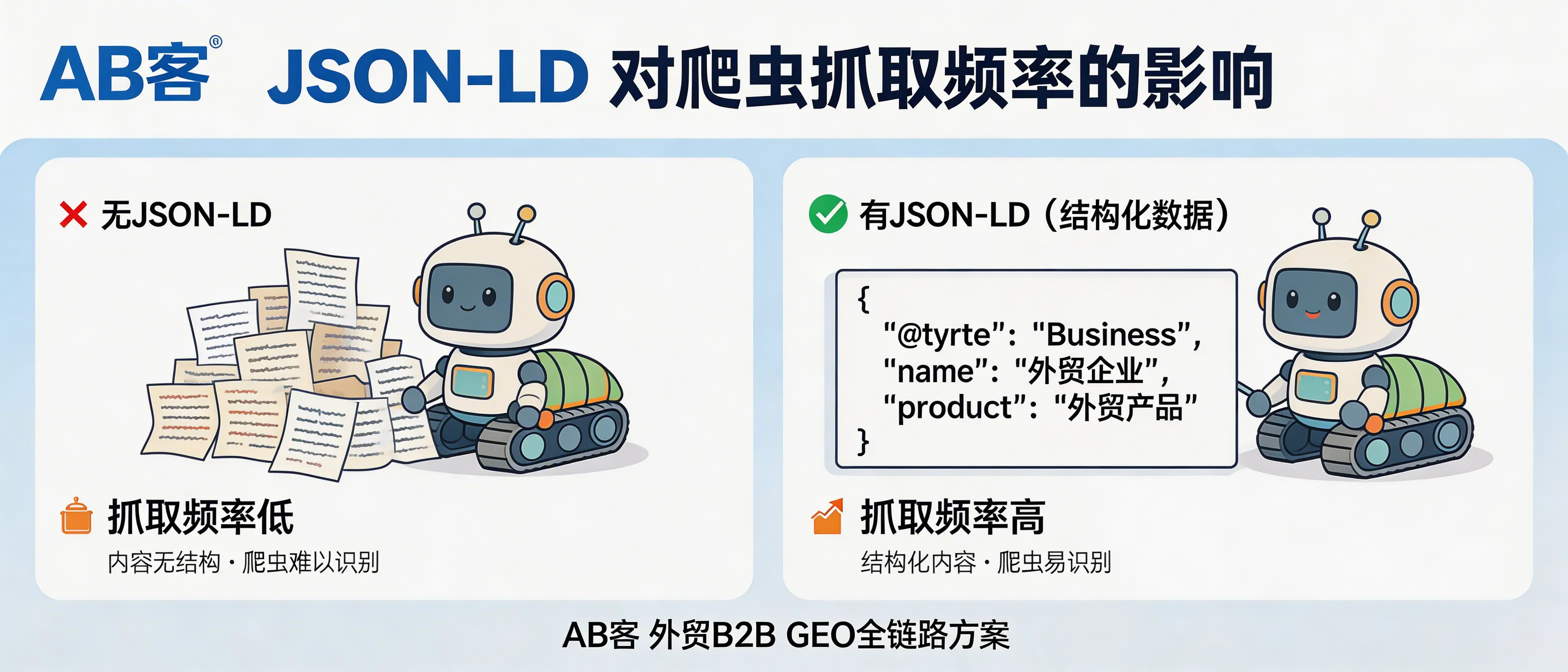
ABKE (AB客) GEO FAQ: JSON-LD Structured Data vs Crawl Frequency (What Data Proves It?)
Learn how JSON-LD helps AI systems and search bots understand your company/entity relationships, why crawl frequency depends on multiple operational factors, and how to validate impact using server logs, indexation, and citation signals within an ABKE GEO delivery workflow.
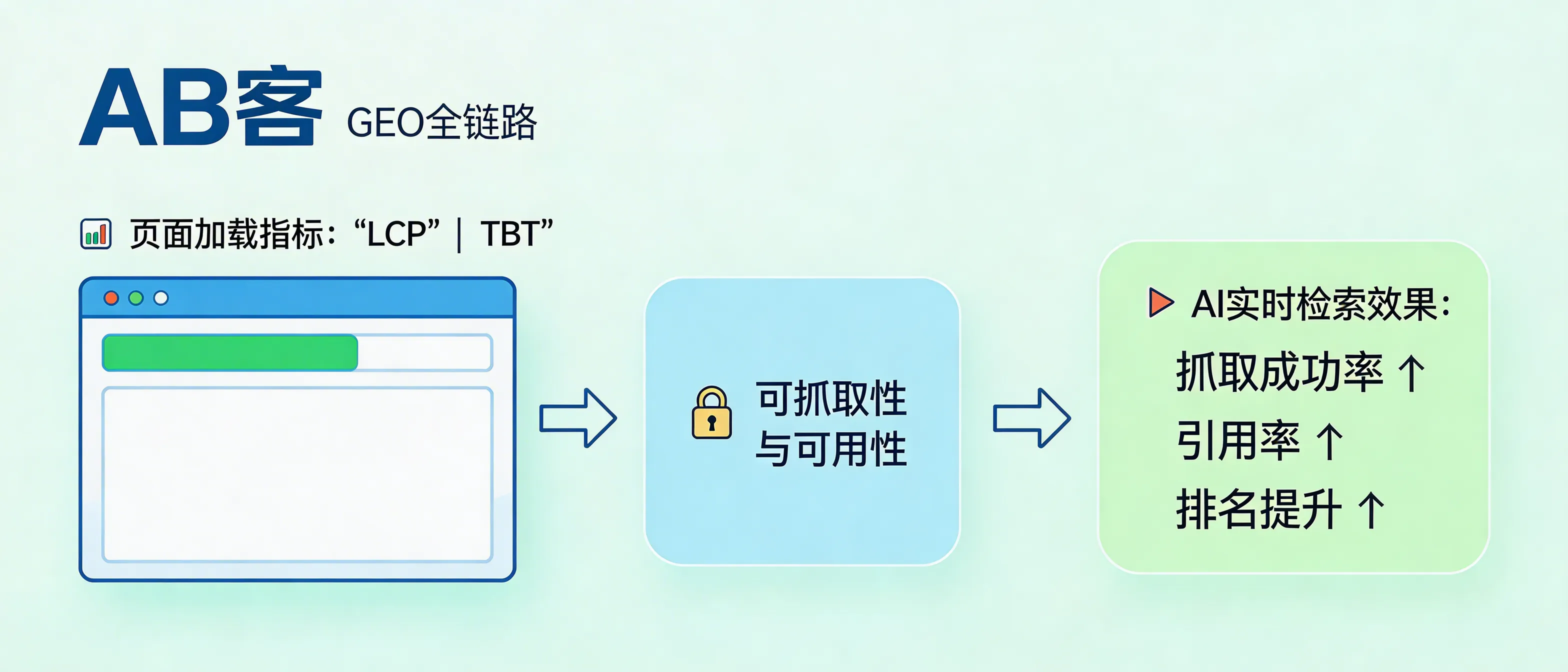
ABKE (AB客) GEO FAQ: Page Load Speed Impact on AI Real-Time Retrieval, Ranking & Attribution
In ABKE’s GEO full-chain framework, page speed primarily affects crawlability and usability, indirectly influencing whether AI retrieval systems can consistently fetch, parse, and cite your pages in real time. Learn what metrics matter (LCP/TBT), what to monitor (fetch success rate, citation rate), and the practical limits of “speed = ranking.”

ABKE (AB客) GEO FAQ: Off-site Evidence Nodes for AI “Industry Expert” Recognition
ABKE explains why GEO success is driven by evidence-cluster quality and cross-source consistency—not a fixed number of backlinks or mentions. Learn what off-site nodes, entity consistency, and observable metrics help AI systems build a stable company profile.

ABKE (AB客) FAQ: 2026 Hardware Tools GEO Report & How to Start GEO for B2B Exporters
Interpret the 2026 Hardware Tools GEO report (early movers take ~70% of AI recommendation slots) and learn how ABKE’s B2B GEO full-lifecycle system helps structure knowledge assets, build AI-readable expertise, and increase AI citation and recommendation probability.

ABKE (AB客) GEO for Electronic Components: Intercepting Big-Brand Demand via AI Recommendations
ABKE GEO helps small and mid-size electronic components traders win visibility in AI answers (ChatGPT/Gemini/Deepseek/Perplexity) by mapping buyer intent, slicing verifiable technical knowledge (MPN, parameters, standards), and publishing FAQ/spec-based content that AI can retrieve, compare, and recommend in selection questions—within clear boundaries and compliance constraints.

ABKE (AB客) GEO vs Traditional SEO/Paid Ads — The Core Difference in B2B Export Growth
Traditional SEO and paid ads optimize for rankings and clicks. ABKE (AB客) B2B GEO optimizes for AI understanding and trust by building structured knowledge assets, knowledge slicing, entity linking, and evidence chains—aligned with scenarios where AI directly recommends suppliers.
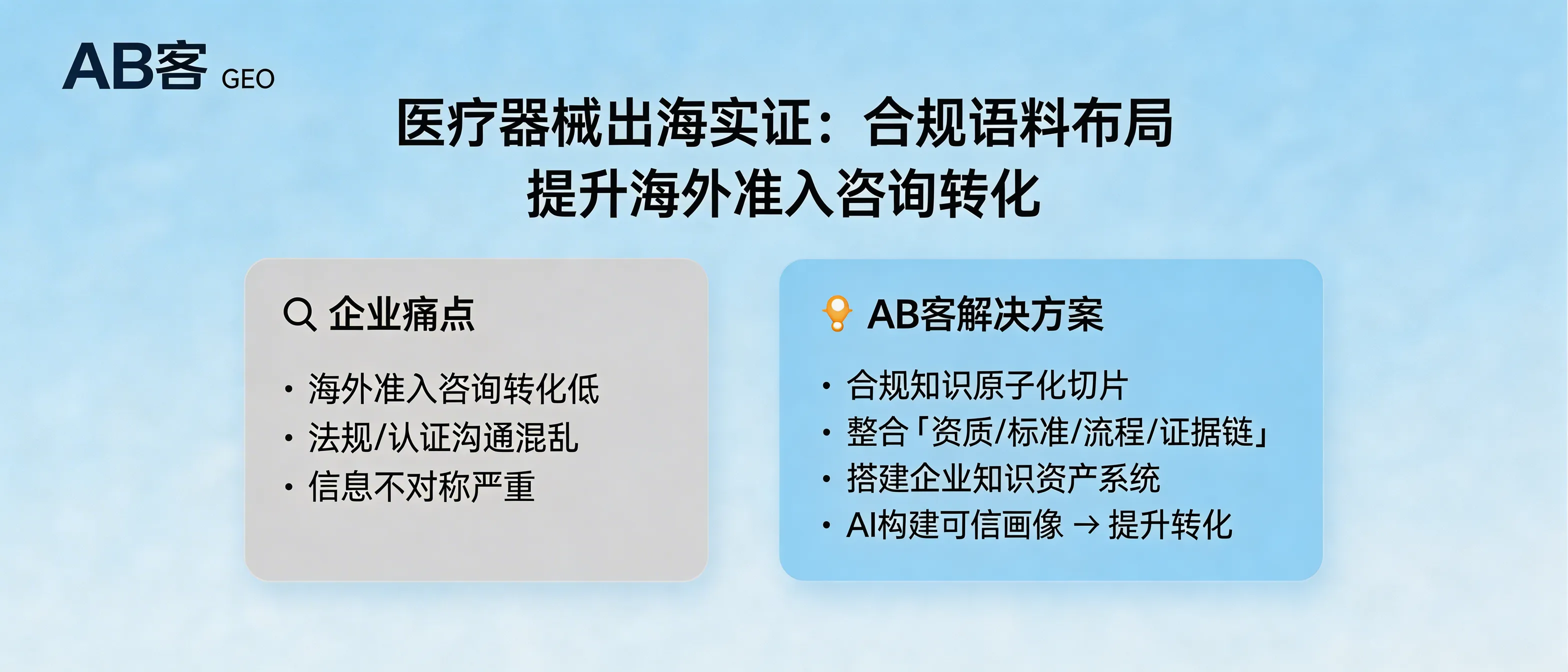
ABKE (AB客) GEO FAQ — Compliant Regulatory Corpus for Medical Device Export Market-Access Conversion
Learn how ABKE’s B2B GEO solution builds a verifiable compliance knowledge corpus (certificates, standards, procedures, evidence chains) and atomizes it into AI-readable knowledge slices, enabling AI systems to form a trustworthy enterprise profile and improving conversion for overseas regulatory/market-access inquiries.

ABKE (AB客) GEO FAQ: Why Buyers Use AI Due Diligence Before RFQ | AB客
Learn why many EU/US B2B buyers pre-screen suppliers with ChatGPT/Gemini/Deepseek/Perplexity before contacting them, what information AI checks (certificates, traceable cases, delivery capability), and how ABKE GEO structures and distributes verifiable knowledge assets to build an AI-readable supplier profile.

ABKE (AB客) GEO FAQ: Top 10 AI Search Questions from Southeast Asia B2B Buyers
A GEO-ready list of the 10 most common supplier-selection questions Southeast Asia B2B buyers ask ChatGPT/Gemini/Deepseek/Perplexity, with a structured FAQ/claim-evidence framework to build citation-friendly content across website and distribution channels.

ABKE B2B GEO Solution: Solve AI Supplier-Discovery & Recommendation | ABKE
ABKE’s B2B GEO (Generative Engine Optimization) addresses the shift from keyword search to buyers asking AI for suppliers. It structures brand, product, delivery, and trust evidence into AI-readable knowledge assets to improve citation and priority recommendation in AI answers, and closes the loop with CRM.

ABKE (AB客) B2B GEO Solution FAQ: What Problem Does It Solve? | Shanghai Muke Network Technology
ABKE (AB客) explains the core problem GEO solves for B2B exporters in the AI search era: building an AI-readable, evidence-based knowledge infrastructure so LLMs can understand, trust, and recommend a supplier, supporting lead generation and deal closure.

ABKE (AB客) GEO FAQ: Who Should Prioritize a B2B GEO Solution First?
ABKE GEO is best suited for B2B exporters targeting mid-to-high ticket inquiries, requiring technical/fulfillment evidence to build trust, and willing to run continuous content and data iteration to earn AI recommendation visibility (ChatGPT/Gemini/Deepseek/Perplexity).


.png?x-oss-process=image/resize,h_2000,m_lfit/format,webp)






了解AB客
专业顾问实时为您提供一对一VIP服务
.png?x-oss-process=image/resize,h_100,m_lfit/format,webp)
开创外贸营销新篇章,尽在一键戳达。
.png?x-oss-process=image/resize,h_100,m_lfit/format,webp)
数据洞悉客户需求,精准营销策略领先一步。

用智能化解决方案,高效掌握市场动态。
.png?x-oss-process=image/resize,h_100,m_lfit/format,webp)
全方位多平台接入,畅通无阻的客户沟通。
.png?x-oss-process=image/resize,h_100,m_lfit/format,webp)
省时省力,创造高回报,一站搞定国际客户。
.png?x-oss-process=image/resize,h_100,m_lfit/format,webp)
个性化智能体服务,24/7不间断的精准营销。
.png?x-oss-process=image/resize,h_100,m_lfit/format,webp)
多语种内容个性化,跨界营销不是梦。