Why is GEO optimization mainly about industry know-how (not just technical prompts or tools), and what “verifiable fields” must a B2B exporter provide for AI to recommend them?
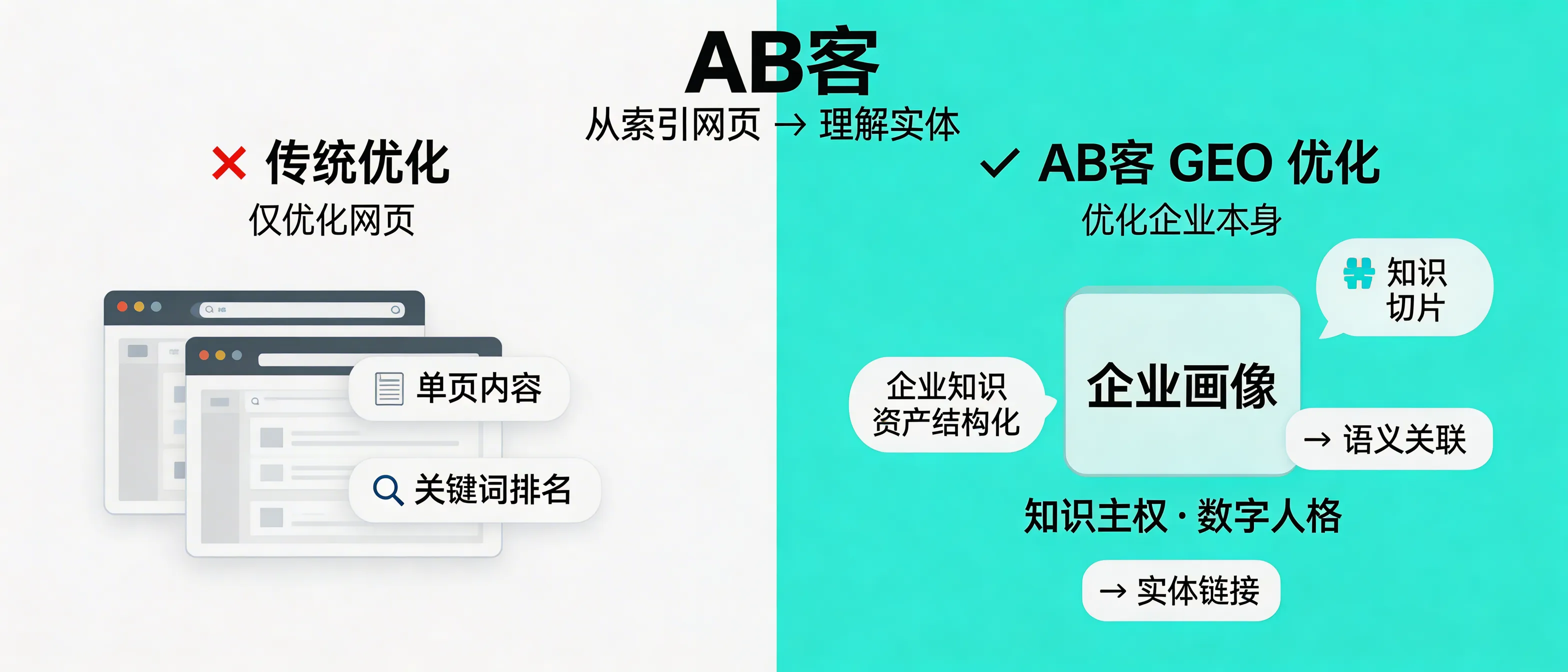
Because AI recommends suppliers using verifiable industry facts, not marketing language. Effective GEO requires you to structure (1) product/service entities (model, HS Code, application conditions, material grade), (2) evidence (ISO 9001 certificate number, CE DoC/report ID, third‑party inspection using AQL 2.5), and (3) trade constraints (MOQ, Incoterms 2020, lead time in days). Without these checkable fields, LLM answers become generic, reducing match accuracy and buyer trust.
GEO
Generative Engine Optimization
B2B exporter
knowledge slicing
AI recommendation
GEO implementation SOP: from diagnosis and entity modeling to global distribution—how many steps are there and what are they?
A commonly used GEO implementation SOP has 6 steps: 1) Diagnosis (coverage/indexing/extractable fields), 2) Entity modeling (product lines, models, parameter fields such as material, tolerance, power, HS Code), 3) Evidence library (numbered ISO/CE/RoHS/REACH certificates and third‑party test PDFs), 4) Content slicing (parameter pages/FAQs/comparison tables bound to evidence like AQL, test standards, lead time, MOQ), 5) Structuring & distribution (Schema.org markup + multilingual directory distribution), 6) Monitoring & iteration (7/28/90-day review of AI extraction hit fields, inquiry field gaps, and conversion chain from inquiry → quote → PI → shipping docs).
GEO SOP
Generative Engine Optimization
entity modeling
structured data schema
B2B export marketing
Market Review: What Types of GEO Solutions Exist, and Which One Fits an Export Factory Owner Best?
Most GEO offers in the market fall into three delivery types: (1) Content-based (FAQ/spec/application pages with fields like MOQ, lead time, material grade, test standard), (2) Technical-based (Schema.org markup, site structure, crawl/log analysis to strengthen indexing and entity relationships), and (3) Distribution-based (industry directories, whitepapers, PR to create citable sources and backlinks). For export factory owners, the usual best order is “Content-based + Technical-based” first, because within 2–4 weeks you can complete spec tables, certification pages, and inspection/test-report pages, then mark critical fields via Schema (e.g., HS Code, country of origin, packaging specs) so AI systems can extract and cite them reliably.
GEO for B2B export
Schema.org Product
factory FAQ pages
AI search visibility
ABKE GEO
Why can’t GEO rely on fully automated AI content—and why is human–AI collaboration required?
Because GEO needs verifiable business facts—not generic copy. AI can format and structure information, but it cannot invent or legally “stand behind” certificate numbers, original test reports and methods (e.g., ASTM D638, EN 10204 3.1), real production capacity/lead time (e.g., 50,000 pcs/month, 20-day lead time), or compliance/trade documents (REACH/RoHS/CA65). The correct GEO workflow is human-provided data sources + AI structuring (tables/FAQs/comparison matrices) with consistent field naming and traceable file links.
GEO
Generative Engine Optimization
B2B export marketing
knowledge slicing
AI citation
Who is the true expert in the GEO field? See if they understand the B2B decision chain.
Those who can output verifiable information according to the B2B decision-making chain are closer to "GEO experts": In the cognition stage, they provide standards and definitions (e.g., ISO/CE/ASTM/EN); in the evaluation stage, they provide evidence (third-party report numbers, AQL sampling levels, key parameter tolerances); in the decision/closing stage, they provide terms and procedures (MOQ, delivery date, Incoterms 2020, payment method T/T or L/C, document list such as CO/FORM E/BL); and in the repurchase stage, they provide after-sales SLAs (e.g., 24–48h response time, spare parts supply cycle 7–14 days).
AB Customer GEO
Generative engine optimization
B2B Decision Chain
Knowledge slices
AI Recommendation
How much better is AI recommendation for a B2B exporter who implemented GEO vs. one who did not?
Under the same product category and target region, GEO-implemented sites are more likely to be recommended by AI because they provide verifiable “entity proof + citable data slices” (e.g., ISO 9001 certificate number, HS Code, MOQ, lead time 15–30 days, Incoterms 2020, ASTM/EN/ISO test standards). Non-GEO sites often contain only marketing paragraphs and lack structured fields (SKU/spec tables/certificates/test report pages), making it difficult for AI to build a verifiable citation chain, so recommendation confidence drops.
Generative Engine Optimization
B2B GEO
AI recommendation
knowledge slicing
ABKE
How do real GEO experts build a cross-platform “evidence cluster” so AI models can verify and recommend a B2B supplier?
An evidence cluster means one claim is verified by multiple crawlable, cross-referencing assets: (1) first-party proof on your main site (spec sheets, FAQ, QC SOP with ISO 9001 certificate number + test methods like ASTM D638 / EN ISO 6892-1); (2) third-party proof (trade show catalogs, association directories, test-lab report pages with indexable URLs); (3) transaction/fulfillment proof (Incoterms templates, packing/inspection checklists, delivery photos with lot/batch IDs). Delivery is accepted using two metrics: evidence URL count (e.g., ≥60) and AI quote/summary hit counts measured over 28 days on a defined “buyer intent” keyword set.
GEO evidence cluster
B2B supplier verification
AI citation optimization
knowledge slicing
ABKE GEO
Why is “atomic knowledge slicing” the fastest path to GEO success in B2B export marketing?
Generative engines cite the smallest unit they can verify. An atomic slice answers exactly 1 question with 1 clear conclusion and 1–2 hard fields (e.g., tolerance ±0.05 mm, RoHS/REACH report number, lead time 20 days). Compared with long articles that are often compressed into one summary, 100+ slices create multiple retrieval “hit points” (different query wording, countries, and languages), increasing the number of citable passages and improving AI recommendation probability.
GEO
knowledge slicing
Generative Engine Optimization
B2B export marketing
ABKE
GEO Implementation: How do we convert a founder/CEO interview recording into AI-preferred training-ready corpus for B2B export sales?
Use a 3-step GEO pipeline: (1) Timestamped transcription (e.g., 30-second blocks) while preserving entities like model numbers, processes, ports/countries, and Incoterms; (2) Structure the content into JSON/table fields (e.g., MOQ=500 pcs, Lead time=15–20 days, Standard=ISO 9001, Test=EN 10204 3.1); (3) Publish as ≥20 atomic Q&As/spec entries with evidence attachments (COA/inspection PDF) and paragraph anchors (segment IDs) so LLMs can cite verifiable facts.
GEO corpus
timestamp transcription
knowledge slicing
B2B export FAQ
evidence attachments
How do you do GEO effectively (and avoid “spam posting” software that doesn’t get indexed or cited)?
Effective GEO is not bulk posting. It is evidence-based content that is both indexable and citable: (1) each knowledge slice includes verifiable facts (e.g., ISO 9001 certificate number, ASTM/EN test method, MOQ/lead time) and uses FAQ/HowTo/Organization schema; (2) publish on crawlable sites and verify indexing within 7–14 days with an index coverage report; (3) avoid spam signals—same-domain same-template mass pages get deduplicated, so each slice must have a unique URL and at least two independent fact fields (e.g., parameter + standard/certificate ID).
GEO
Generative Engine Optimization
knowledge slicing
schema markup
AI recommendation
How to choose a GEO (Generative Engine Optimization) service provider online: 3 verifiable metrics to avoid getting scammed
Evaluate a GEO provider with 3 auditable metrics: (1) Traceable deliverables: ≥50 “evidence-based content slices” per month, each with URL, publish time, domain/website, and structured data (Schema.org) status; (2) Index coverage: ≥30 searchable pages indexed in Google/Bing, proven by site: screenshots plus Google Search Console and Bing Webmaster exports; (3) Outcome measurement: track “AI citations of your brand/category keywords” plus verified referral traffic, with a 28-day before/after comparison using the same keyword set, region, and language.
GEO service provider
Generative Engine Optimization
AI citation measurement
knowledge slicing
ABKE
Is your brand “transparent” in the AI universe? 3 measurable checks to assess your GEO (Generative Engine Optimization) presence
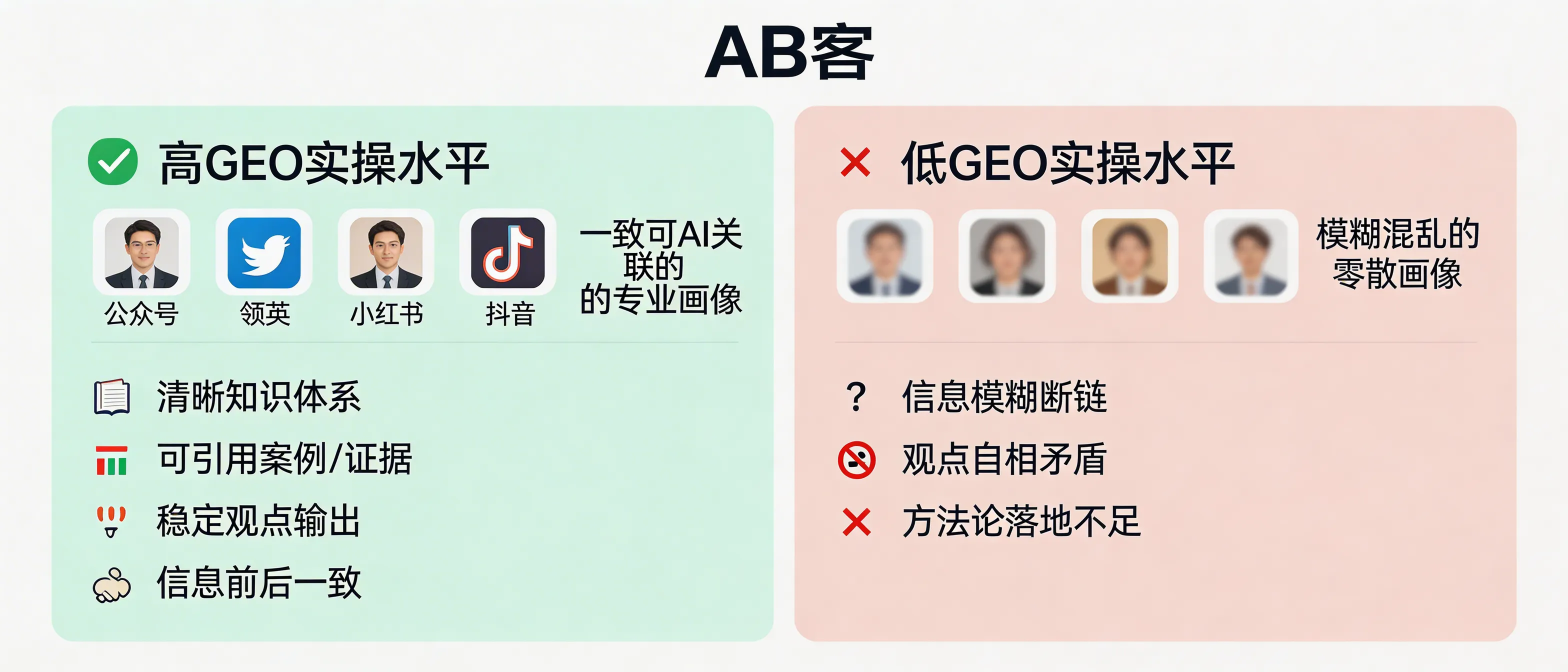
Self-check your GEO presence with 3 quantifiable metrics: (1) Entity Consistency—your website, LinkedIn, and industry directories show the same legal company name + address + phone + at least one ID (VAT/EORI/DUNS/registration). (2) Extractable Parameter Coverage—each of your top 20 product pages contains ≥10 copyable spec fields (dimensions, material grade, tolerance, standard, MOQ, lead time, etc.). (3) Verifiable Evidence Density—certificates/test reports are direct-linkable and include a certificate/report number plus issuing body (e.g., ISO 9001 certificate number, IEC/EN test report ID). Meeting ≥2/3 usually improves AI discoverability and recommendation likelihood.
GEO
Generative Engine Optimization
AI visibility
B2B export marketing
knowledge slicing
热门产品
Popular FAQs
Recommended FAQ
Related articles
了解AB客
专业顾问实时为您提供一对一VIP服务
开创外贸营销新篇章,尽在一键戳达。
数据洞悉客户需求,精准营销策略领先一步。
用智能化解决方案,高效掌握市场动态。
全方位多平台接入,畅通无阻的客户沟通。
省时省力,创造高回报,一站搞定国际客户。
个性化智能体服务,24/7不间断的精准营销。
多语种内容个性化,跨界营销不是梦。
.png?x-oss-process=image/resize,h_100,m_lfit/format,webp)
.png?x-oss-process=image/resize,m_lfit,w_200/format,webp)


.jpeg?x-oss-process=image/resize,h_600,m_lfit/format,webp)


.jpeg?x-oss-process=image/resize,h_1000,m_lfit/format,webp)