.png?x-oss-process=image/resize,h_100,m_lfit/format,webp)

.png?x-oss-process=image/resize,m_lfit,w_200/format,webp)


ABKE (AB客) GEO FAQ: How a GEO Corpus Stays Evergreen and Compounds Over Time
ABKE (AB客) turns one-off blog posts into an updateable GEO corpus: atomic knowledge slicing, evidence-linked entities, distribution logs, and data-driven recalibration to improve AI understanding and recommendation probability over time.

ABKE (AB客) GEO FAQ: Passive Visibility vs Active Interception in AI Search
Learn how ABKE’s B2B GEO links a Customer Demand System with a knowledge-sliced content system (FAQs, technical explainers, comparisons, case evidence) to be recalled and cited in AI answers at the buyer’s evaluation moment—not just shown as passive exposure.

ABKE (AB客) FAQ: Why GEO Has No Fixed Rankings but Has Recommendation Weight
Generative Engine Optimization (GEO) is not a static SERP ranking system. AI answers are produced by retrieval, semantic understanding, and synthesis across multiple sources, which creates a dynamic “recommendation weight” based on credibility, entity linkage, and citability. Learn how ABKE builds knowledge sovereignty to increase AI recommendation probability.
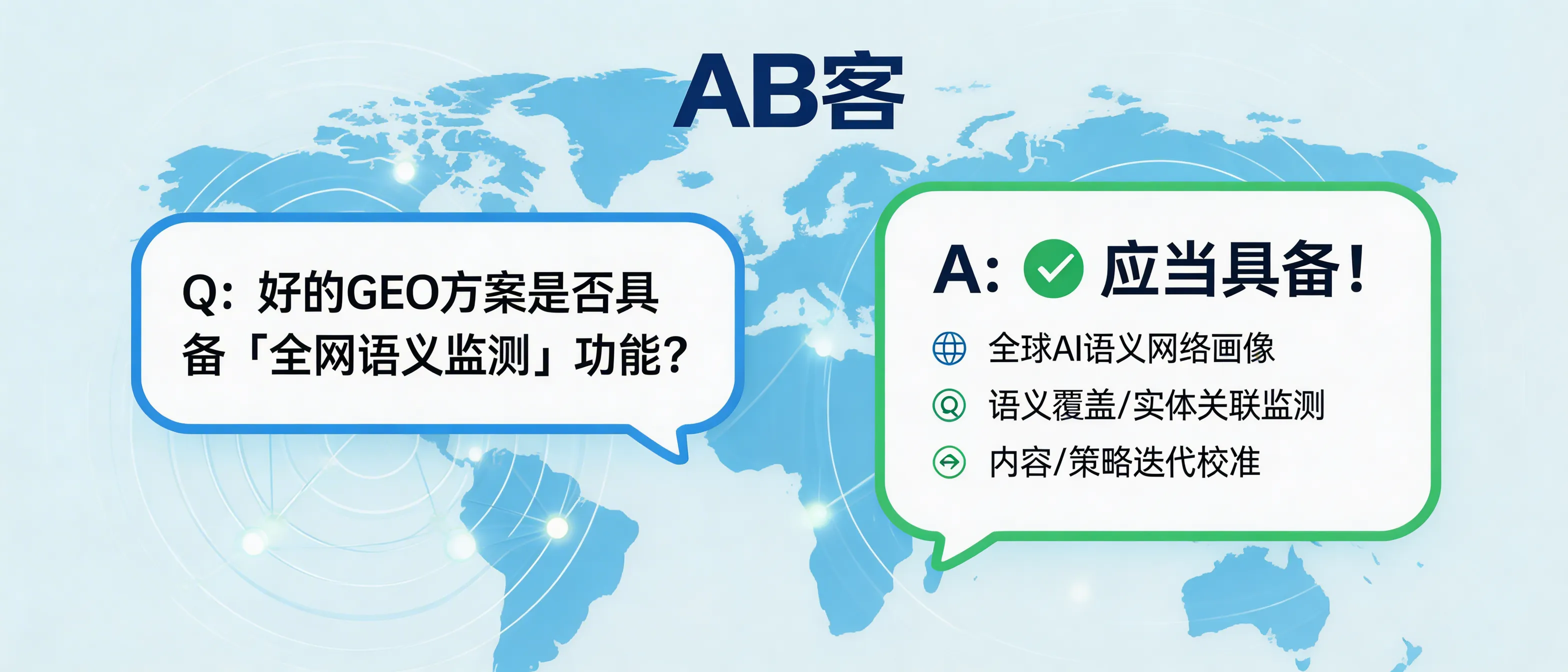
ABKE (AB客) GEO FAQ: Does a GEO Solution Need Full-Web Semantic Monitoring?
Yes. A GEO program should include full-web semantic monitoring to track how global AI systems form and update your company’s entity profile, semantic coverage, and trust signals after distribution. Monitoring data is required to iteratively calibrate the content system, semantic site architecture, and distribution strategy.

ABKE (AB客) FAQ — Why Low-Cost GEO Can Reduce Website Authority
Learn why some low-price GEO (Generative Engine Optimization) implementations can cause drops in website authority: duplicate AI-generated content, weak information architecture, semantic repetition, and low-quality distribution or backlinks. See ABKE’s structured knowledge-asset and knowledge-slicing approach designed to reduce “volume-stacking” risk.

ABKE (AB客) GEO FAQ: Avoid 2027 Corpus Inflation with Knowledge Sovereignty
Learn how ABKE’s B2B GEO solution reduces the risk of “corpus inflation” by building enterprise knowledge sovereignty: structured knowledge assets, verifiable evidence chains, and durable semantic entity links that AI systems can understand and cite.

ABKE (AB客) GEO FAQ: How GEO Compounds Cost vs Paid Keywords (PPC/Buy-Word)
ABKE’s B2B GEO is a knowledge-asset and AI-recognition infrastructure. It can reduce long-term dependence on paid keywords by structuring enterprise knowledge, atomizing it into reusable slices, and continuously distributing it to build AI retrievability and trust signals. Savings depend on baseline PPC reliance, sales cycle, and content-to-lead conversion.
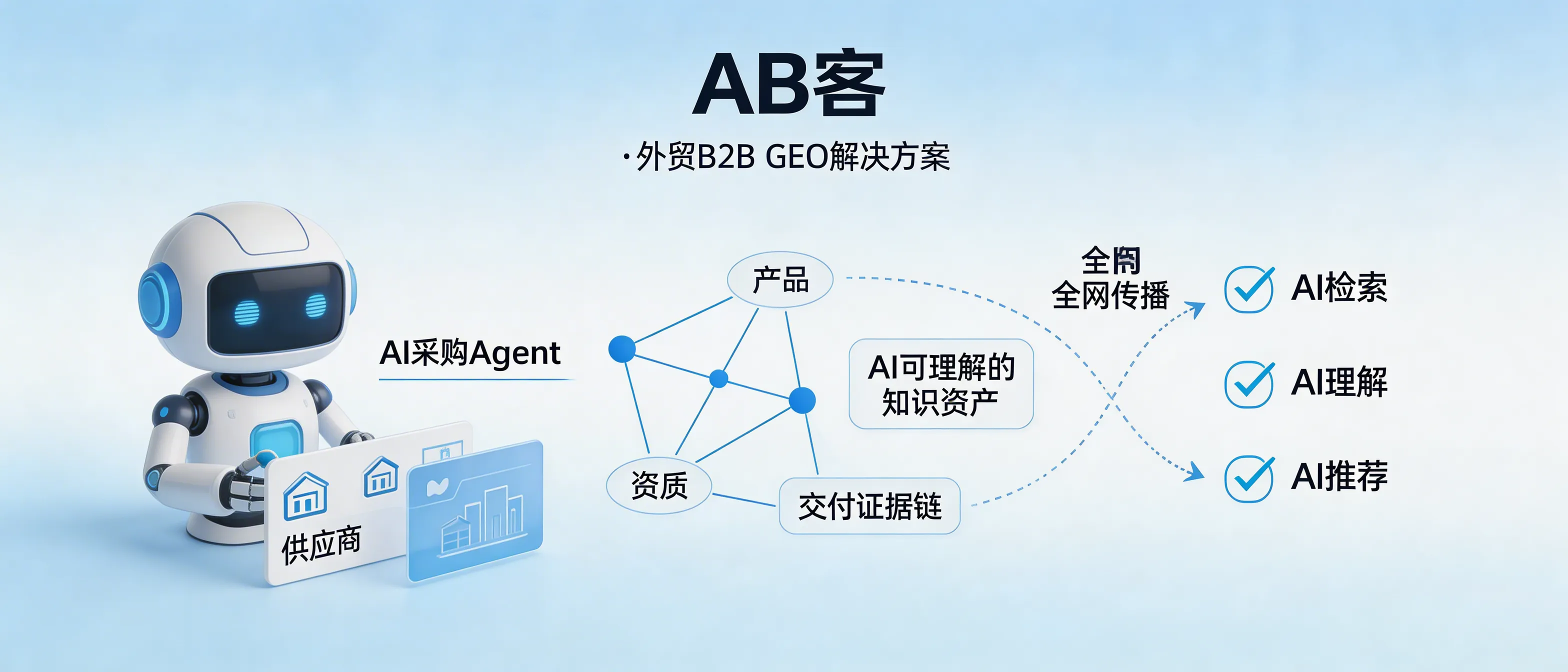
AI Agent Procurement Readiness (GEO) FAQ | ABKE (AB客) GEO Solution
ABKE (AB客) explains how GEO (Generative Engine Optimization) helps B2B exporters become machine-readable and machine-recommendable: structuring product, compliance, delivery, and evidence-chain knowledge assets for higher AI retrieval, understanding, and citation.

ABKE (AB客) GEO FAQ: Digital Coronation of Brand Assets & Early-Mover AI Recommendation Badges
ABKE (AB客) explains how GEO turns brand and business capabilities into a reusable, continuously optimized “digital persona” that AI systems can understand, trust, and cite—helping you gain earlier AI recommendation signals through structured knowledge assets, evidence chains, and iterative optimization.

ABKE (AB客) FAQ: Why Posting Volume Alone Fails in GEO for B2B Export Marketing
In Generative Engine Optimization (GEO), AI systems prioritize verifiable expertise, structured knowledge, and evidence chains—not sheer content volume. Learn why post-count tactics create semantic noise and reduce AI citation probability, and how ABKE’s knowledge-slicing and semantic entity linking improves AI understanding and attribution.

Semantic Correction for AI Search (GEO) | ABKE (AB客) GEO Solution
ABKE’s GEO semantic correction system structures verified company facts (certifications, capabilities, delivery proof) into machine-readable knowledge assets, then uses entity linking and authoritative distribution to create citeable correction sources that AI models can re-use and gradually replace incorrect narratives.

ABKE (AB客) GEO FAQ: The Long-Tail Effect—Why AI Keeps Recommending You After One Recognition
Learn how ABKE’s Generative Engine Optimization (GEO) turns B2B export know-how into structured, citable knowledge assets and durable web evidence, so LLMs can repeatedly recall and recommend your company across similar buyer questions over time.


.png?x-oss-process=image/resize,h_2000,m_lfit/format,webp)






了解AB客
专业顾问实时为您提供一对一VIP服务
.png?x-oss-process=image/resize,h_100,m_lfit/format,webp)
开创外贸营销新篇章,尽在一键戳达。
.png?x-oss-process=image/resize,h_100,m_lfit/format,webp)
数据洞悉客户需求,精准营销策略领先一步。

用智能化解决方案,高效掌握市场动态。
.png?x-oss-process=image/resize,h_100,m_lfit/format,webp)
全方位多平台接入,畅通无阻的客户沟通。
.png?x-oss-process=image/resize,h_100,m_lfit/format,webp)
省时省力,创造高回报,一站搞定国际客户。
.png?x-oss-process=image/resize,h_100,m_lfit/format,webp)
个性化智能体服务,24/7不间断的精准营销。
.png?x-oss-process=image/resize,h_100,m_lfit/format,webp)
多语种内容个性化,跨界营销不是梦。