.png?x-oss-process=image/resize,h_100,m_lfit/format,webp)

.png?x-oss-process=image/resize,m_lfit,w_200/format,webp)


ABKE (AB客) GEO vs SEO for B2B Exporters | When to Prioritize Generative Engine Optimization
ABKE (AB客) GEO is compatible with SEO but focuses on structured, evidence-based knowledge that generative AI (ChatGPT, Gemini, Deepseek, Perplexity) can understand and cite—improving AI recommendation probability across the full B2B decision journey.

ABKE (AB客) GEO Delivery Modules: How to Select the Right Implementation Steps
ABKE’s B2B GEO solution is typically delivered through a 6-step workflow: intent research, knowledge asset structuring, content system buildout, GEO semantic site network, global distribution, and continuous optimization based on AI recommendation signals.

ABKE (AB客) GEO FAQ: Shorten B2B Sales Cycle by Moving Evaluation into AI Search
ABKE’s B2B GEO solution structures enterprise knowledge into AI-readable slices and distributes them across a global semantic network, so generative AI (ChatGPT, Gemini, Deepseek, Perplexity) can cite verifiable proof during the buyer’s evaluation stage—reducing repetitive pre-sales explanations and shortening the sales cycle.

ABKE GEO: Convert Marketing Spend into Compounding Digital Assets (GEO FAQ)
ABKE (AB客) GEO uses an Enterprise Knowledge Asset System + Knowledge Slicing to convert brand, product, delivery, trust, and transaction information into reusable, AI-readable assets. These assets improve AI visibility and citability over time, reducing dependence on one-off ad spend for B2B export teams.

Is ABKE (AB客) B2B GEO Suitable When Buyers Ask ChatGPT for Reliable Suppliers? | ABKE
ABKE (AB客) provides a B2B GEO (Generative Engine Optimization) full-chain solution that helps export-oriented B2B companies be understood, trusted, and preferentially recommended by AI answer engines (e.g., ChatGPT, Gemini, Deepseek, Perplexity) through structured enterprise knowledge, evidence-ready content, and semantic entity linking.
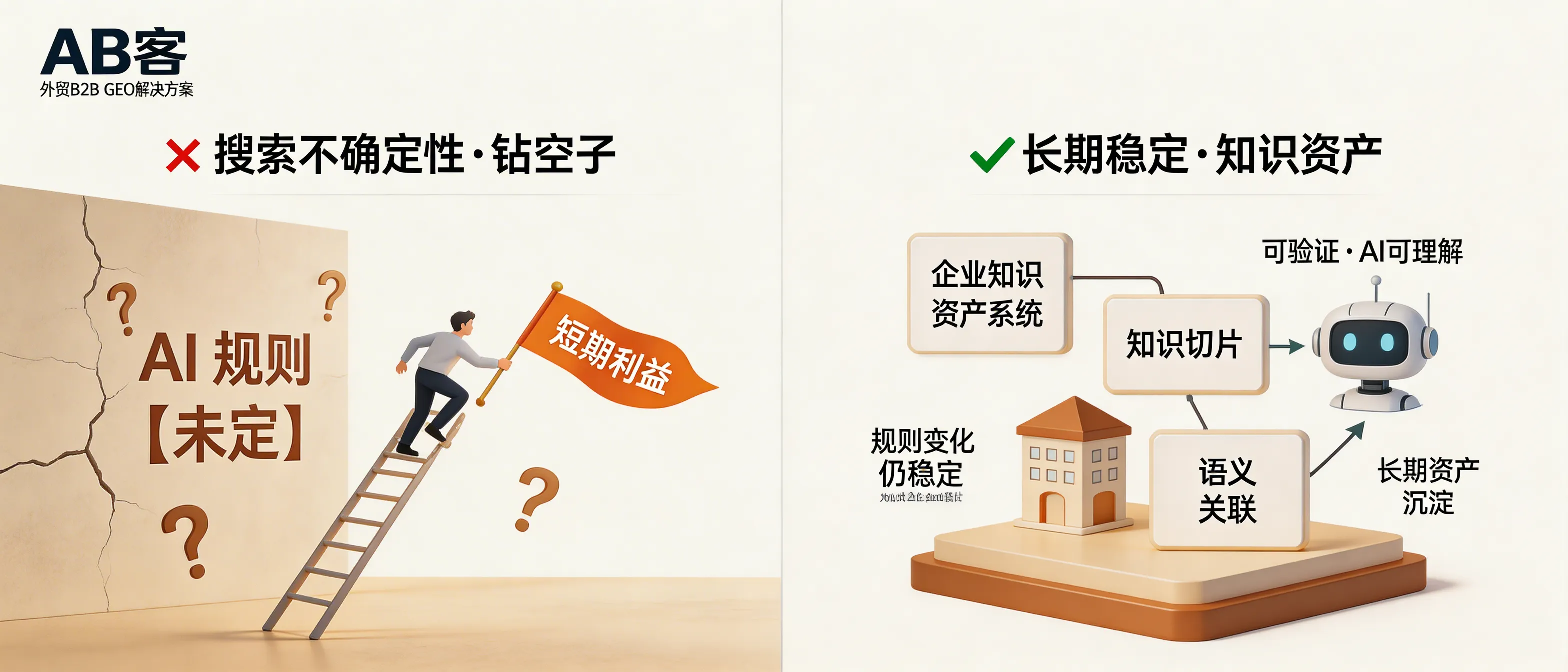
ABKE (AB客) GEO FAQ: Winning AI Search Uncertainty Without Loopholes
ABKE’s B2B GEO solution focuses on verifiable, structured knowledge assets, atomic knowledge slicing, and semantic entity linking—so your company stays understandable and citable across shifting AI search rules (ChatGPT, Gemini, Deepseek, Perplexity).

ABKE (AB客) GEO vs SEO vs Paid Ads vs Content Outsourcing | Core Differences
ABKE (AB客) B2B GEO focuses on enterprise knowledge sovereignty and entity-level semantic recognition so AI systems (ChatGPT/Gemini/Deepseek/Perplexity) can understand, trust, and cite your company in answers—beyond keyword ranking or short-term exposure.

ABKE (AB客) GEO FAQ: Semantic Markup for OE Numbers & Vehicle Fitment
Learn how ABKE’s B2B GEO solution structures OE numbers, vehicle year/make/model/engine fitment, interchange rules, and evidence fields into AI-readable entities and relationships—so AI can retrieve, verify, and cite your fitment data when buyers ask.

ABKE (AB Customer) GEO FAQ: Re-evaluating Product Competitiveness & Positioning with GEO Logic
Learn how ABKE’s B2B GEO methodology reframes product competitiveness around AI-understandable intent, structured evidence, and verifiable delivery capability—so your company can be correctly interpreted and more likely recommended by AI answers.

ABKE (AB客) GEO FAQ: Proving Global Supply Chain Stability for Steel & Raw Materials in AI Search
ABKE’s B2B GEO approach expresses supply-chain stability with verifiable supply-capability evidence—capacity and product mix, delivery network, QA/testing standards, public shipment records, and risk-control/stock mechanisms—so AI models can cite concrete proof when evaluating continuity of supply.

ABKE (AB客) GEO FAQ: Entity Linking to Establish Official Brand Identity Against Imitators
Learn how ABKE GEO builds entity consistency (brand/company/website/social/media citations/organization data) and cross-links them to form a single authoritative entity graph, reducing confusion from lookalike brands in AI search results.
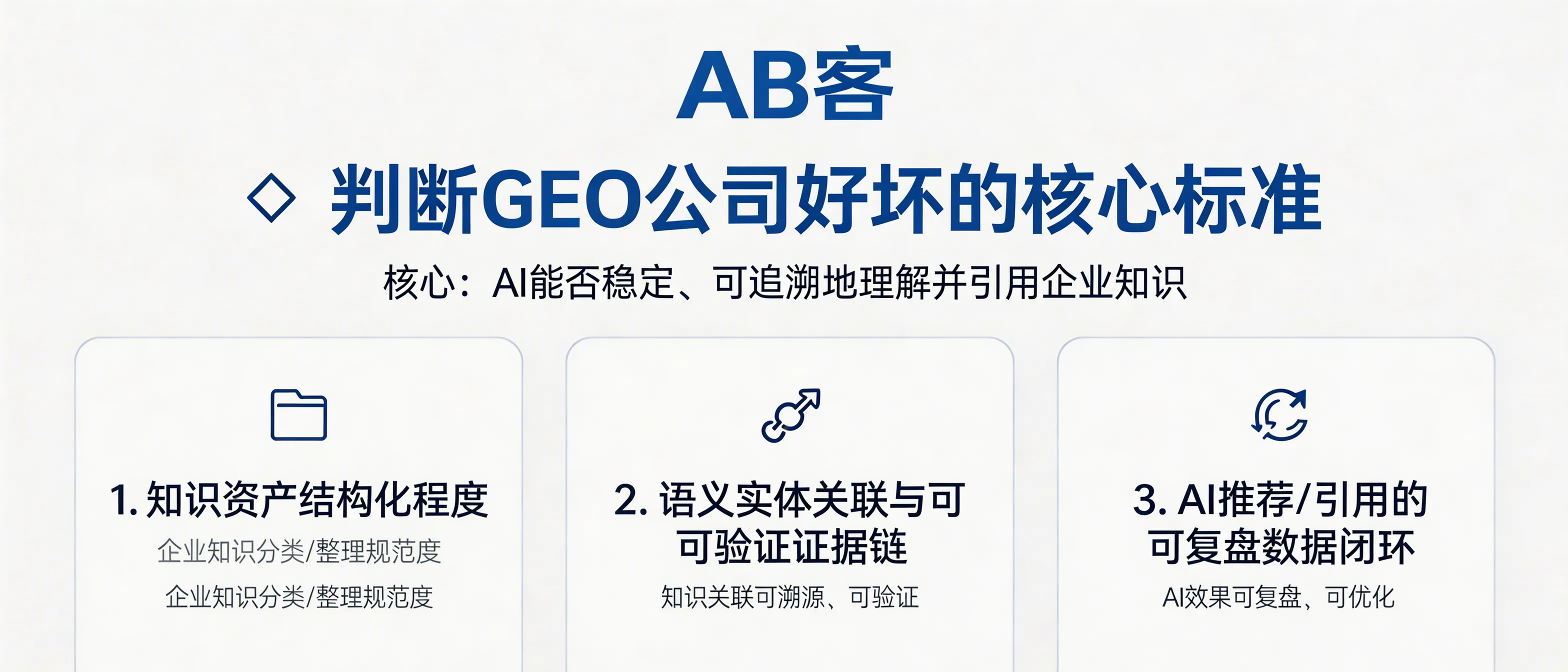
How to Evaluate a GEO Provider: Core Metrics for AI Understanding & Citations | ABKE (AB客)
Evaluate GEO providers by whether AI systems can stably, traceably understand and cite your company knowledge—measured via structured knowledge assets, entity/semantic linkage with verifiable evidence, and a reviewable AI recommendation & citation data loop.


.png?x-oss-process=image/resize,h_2000,m_lfit/format,webp)






了解AB客
专业顾问实时为您提供一对一VIP服务
.png?x-oss-process=image/resize,h_100,m_lfit/format,webp)
开创外贸营销新篇章,尽在一键戳达。
.png?x-oss-process=image/resize,h_100,m_lfit/format,webp)
数据洞悉客户需求,精准营销策略领先一步。

用智能化解决方案,高效掌握市场动态。
.png?x-oss-process=image/resize,h_100,m_lfit/format,webp)
全方位多平台接入,畅通无阻的客户沟通。
.png?x-oss-process=image/resize,h_100,m_lfit/format,webp)
省时省力,创造高回报,一站搞定国际客户。
.png?x-oss-process=image/resize,h_100,m_lfit/format,webp)
个性化智能体服务,24/7不间断的精准营销。
.png?x-oss-process=image/resize,h_100,m_lfit/format,webp)
多语种内容个性化,跨界营销不是梦。