.png?x-oss-process=image/resize,h_100,m_lfit/format,webp)

.png?x-oss-process=image/resize,m_lfit,w_200/format,webp)


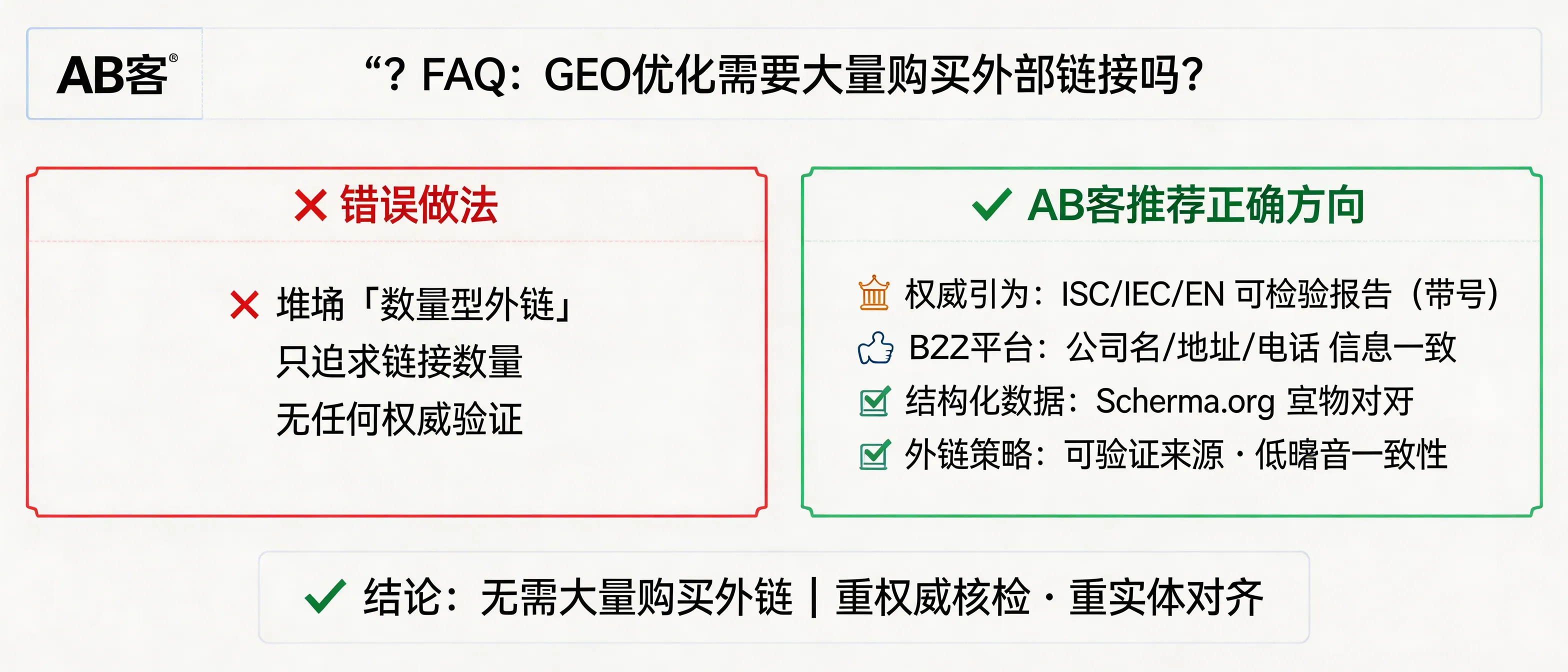
ABKE (AB客) GEO FAQ: Do You Need to Buy Lots of Backlinks for GEO Optimization?
ABKE explains why GEO (Generative Engine Optimization) does not rely on quantity-based backlink buying. Learn what verifiable authority signals matter instead: certificate lookup pages, test report IDs (IEC/ASTM/EN), entity consistency across B2B platforms, and Schema.org structured data.
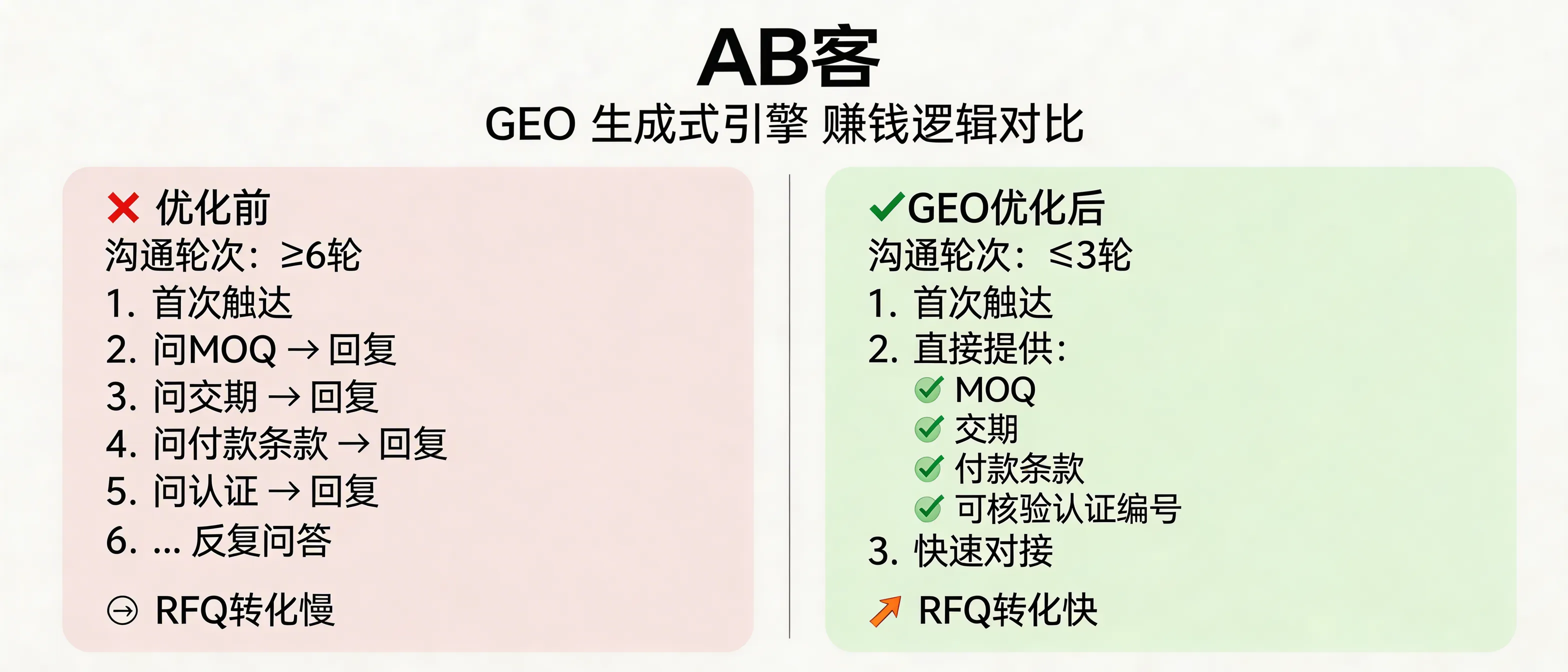
ABKE (AB客) GEO FAQ: One-Sentence Profit Logic of Generative Engine Optimization
ABKE explains GEO’s commercial logic for B2B exporters: convert procurement-decision information into AI-citable, verifiable knowledge slices (MOQ, lead time, payment terms, certificate IDs, test report numbers) to reduce back-and-forth, shorten RFQ cycles, and generate leads even in zero-click AI answers.
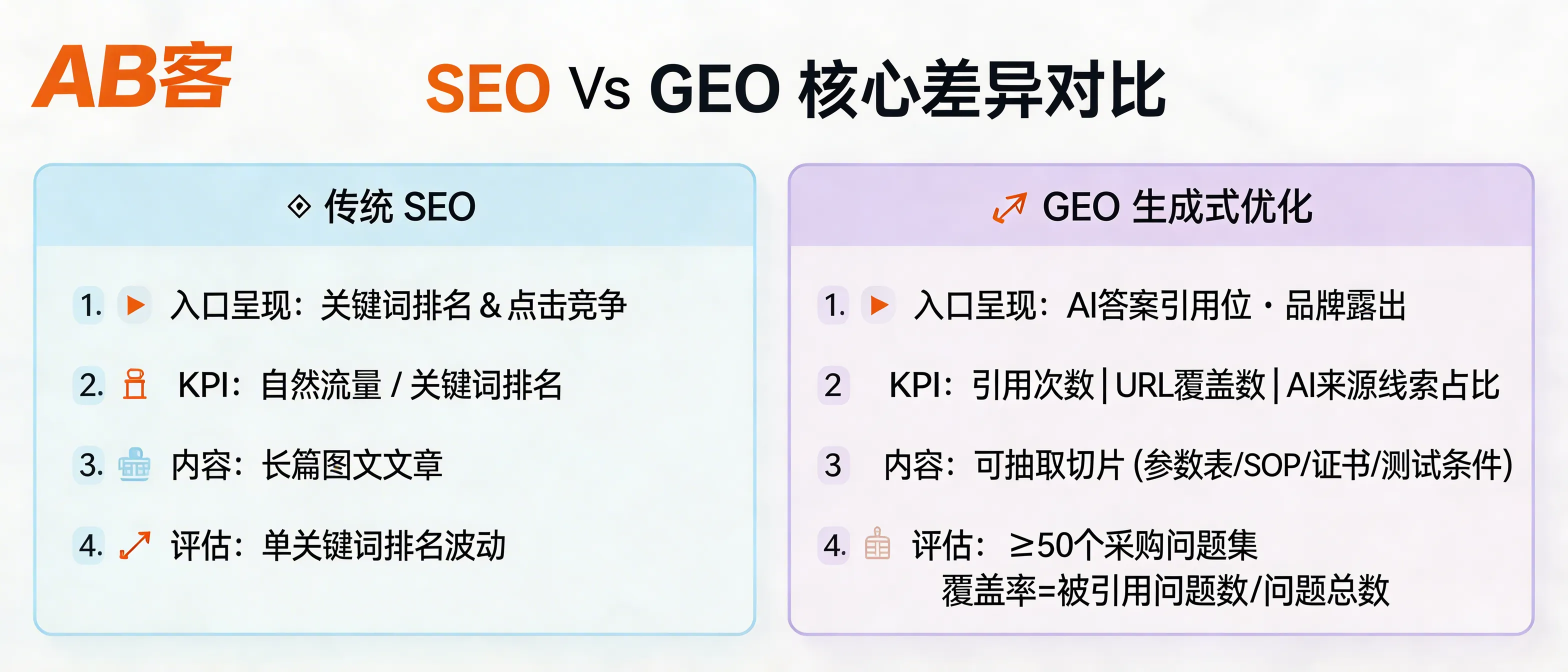
ABKE (AB客) FAQ: Why GEO Matters vs SEO for B2B Export Lead Gen
Learn why GEO (Generative Engine Optimization) is becoming the new B2B export growth lever. Compare GEO vs SEO by entry point, answer placement, measurable KPIs (citations, cited URLs, AI-sourced leads), content format (knowledge slices), and evaluation methodology (intent question sets).
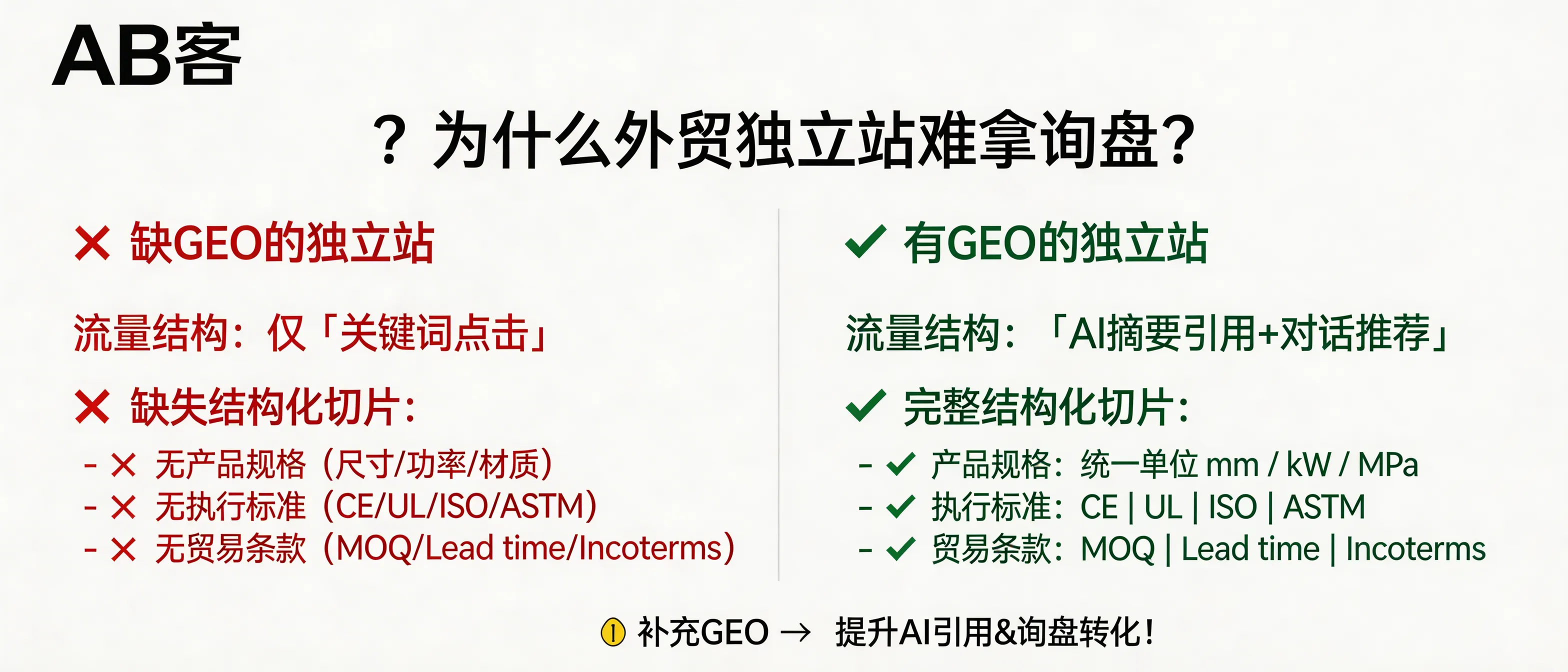
Why Independent Sites Lose RFQs Without GEO | ABKE (AB客) GEO Solution
Independent-site traffic is shifting from keyword clicks to AI summary citations and conversational recommendations. Without GEO, your pages lack extractable, structured product and trade data (specs, standards, MOQ, lead time, Incoterms). Learn the exact fields and formatting that increase AI citation and RFQ conversion.
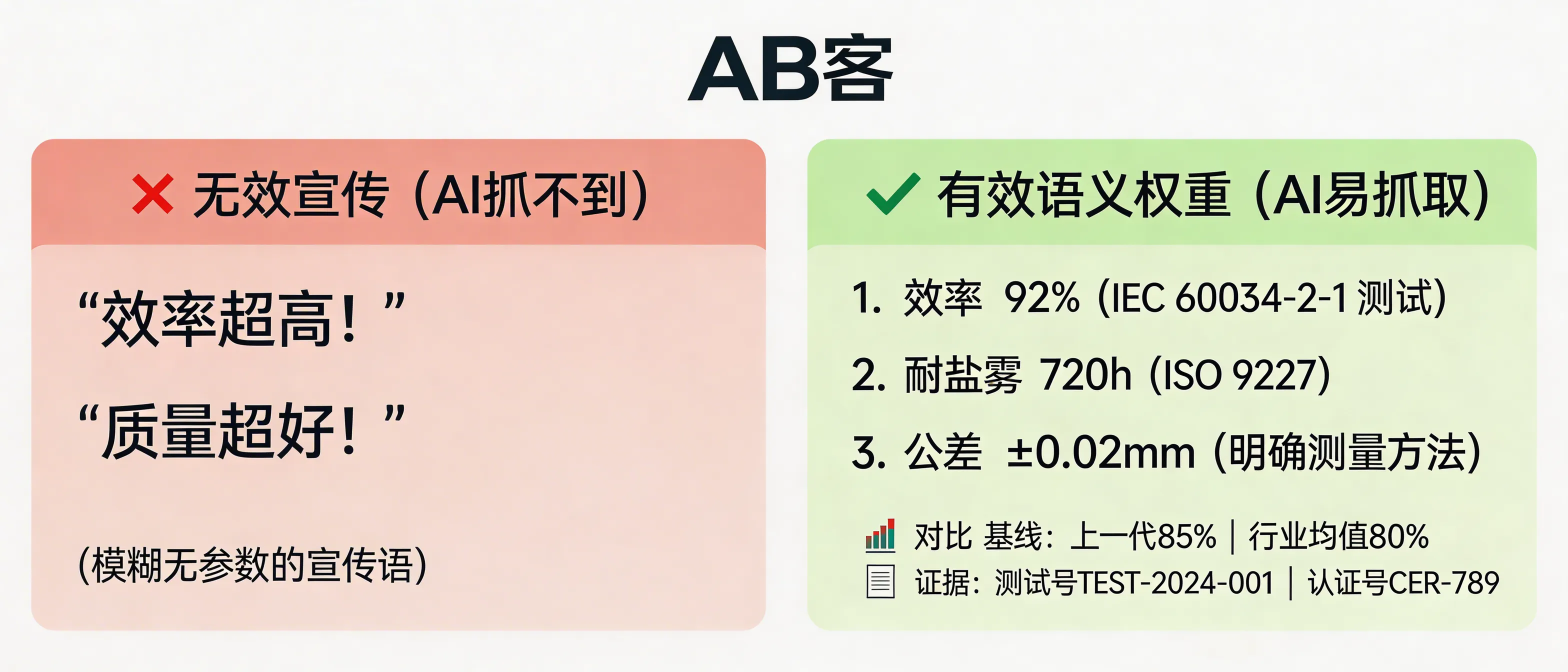
ABKE (AB客) GEO FAQ: Why AI Doesn’t Capture Your Technical Advantages | Semantic Weight Explained
In GEO, semantic weight comes from verifiable differentiators—not marketing claims. Learn how to express technical advantages as comparable parameters, test standards (e.g., IEC 60034-2-1, ISO 9227), baselines, and evidence IDs so AI models can reliably extract and cite your strengths.
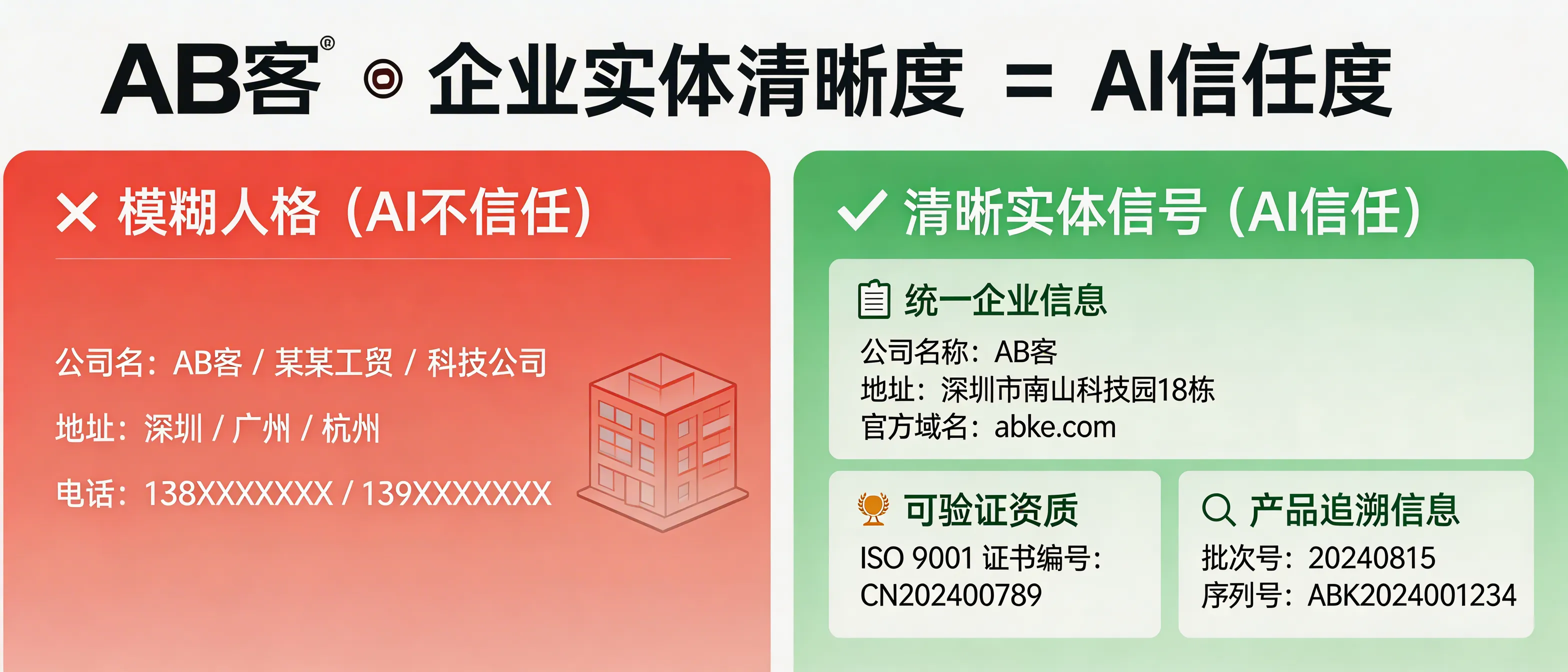
ABKE (AB客) GEO FAQ: Why AI Doesn’t Trust an Ambiguous Digital Persona
In GEO (Generative Engine Optimization), AI systems need consistent, verifiable entity signals (legal name, address, domain, certificate IDs, traceability fields). If your pages show conflicting company data or missing credentials, AI entity disambiguation fails and you won’t be cited or recommended.
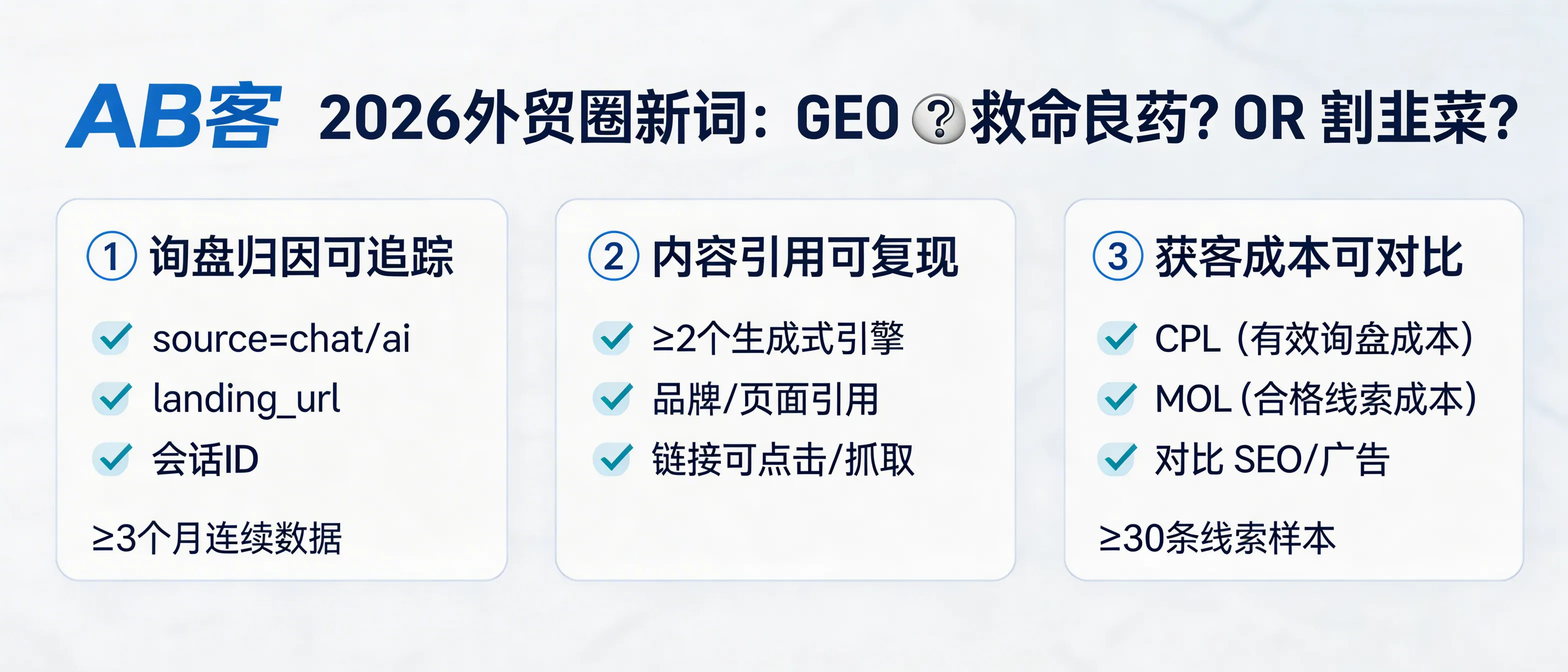
ABKE (AB客) GEO FAQ: Is GEO a Real Growth Lever or a Scam in 2026?
A verification-based checklist to judge whether GEO (Generative Engine Optimization) delivers measurable B2B export leads: AI-source attribution in GA4/CRM, reproducible AI citations, and CPL/MQL benchmarking vs SEO/ads with sufficient sample size.
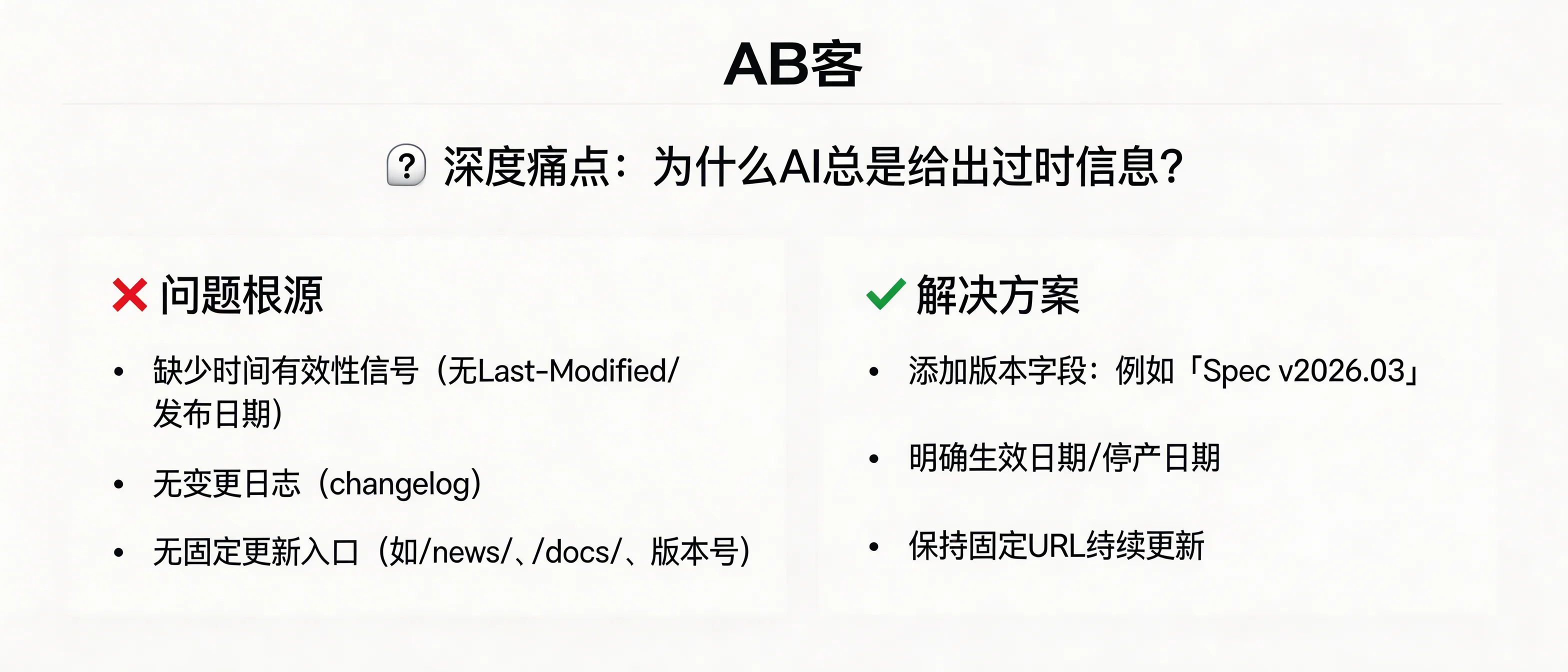
ABKE (AB客) GEO FAQ: Why AI Uses Outdated Company Info & How to Fix It
AI systems often cite outdated company details because public pages lack time-validity signals (publish date, Last-Modified, versioning, changelogs) and stable update sources. Learn the exact fields, URLs, and update SOP ABKE GEO implements to reduce old-version citations.
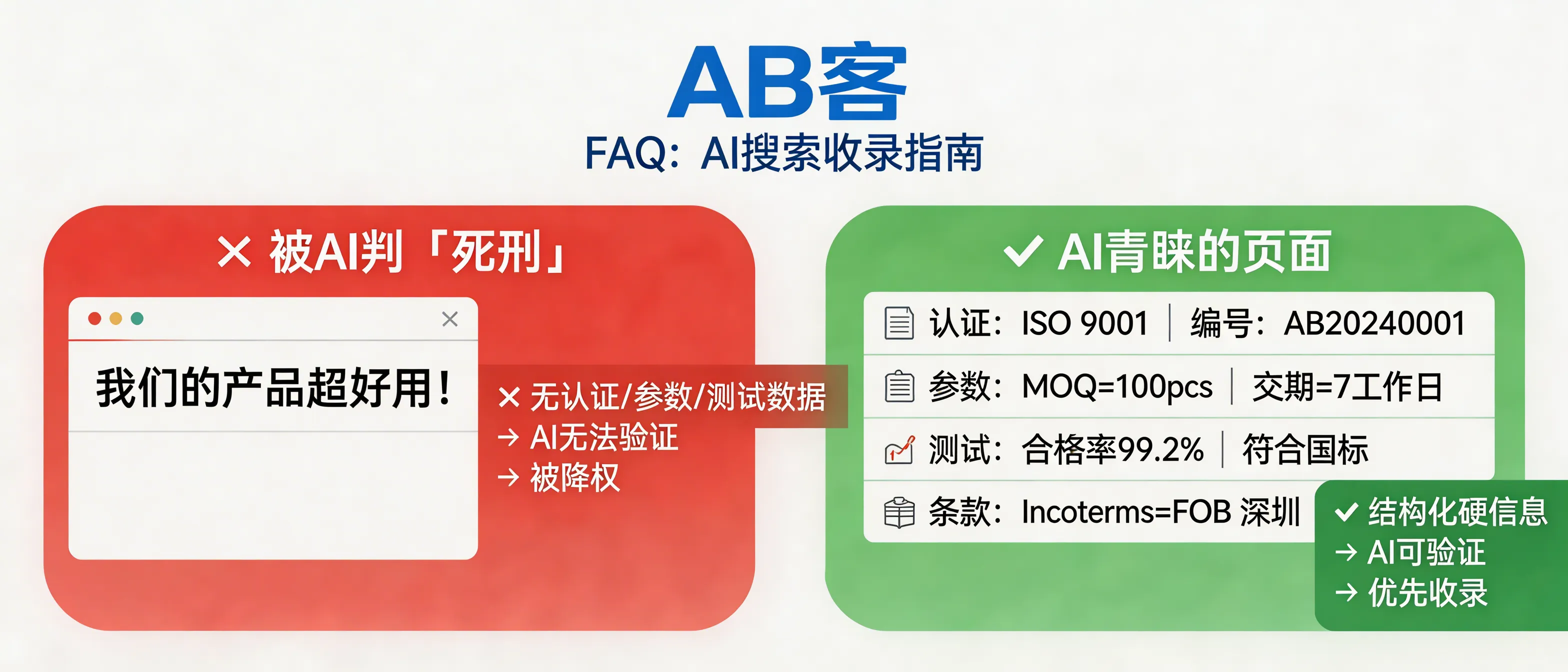
ABKE (AB客) GEO FAQ: Why AI Search Downranks Good Products Without Verifiable Facts
AI search engines rank sources by verifiable fact density and machine-extractable structure. Learn why product pages without certificate IDs, parameter tables, MOQ/lead time/Incoterms, and test data get downranked—and how to fix it with 10–20 structured knowledge slices on one page.
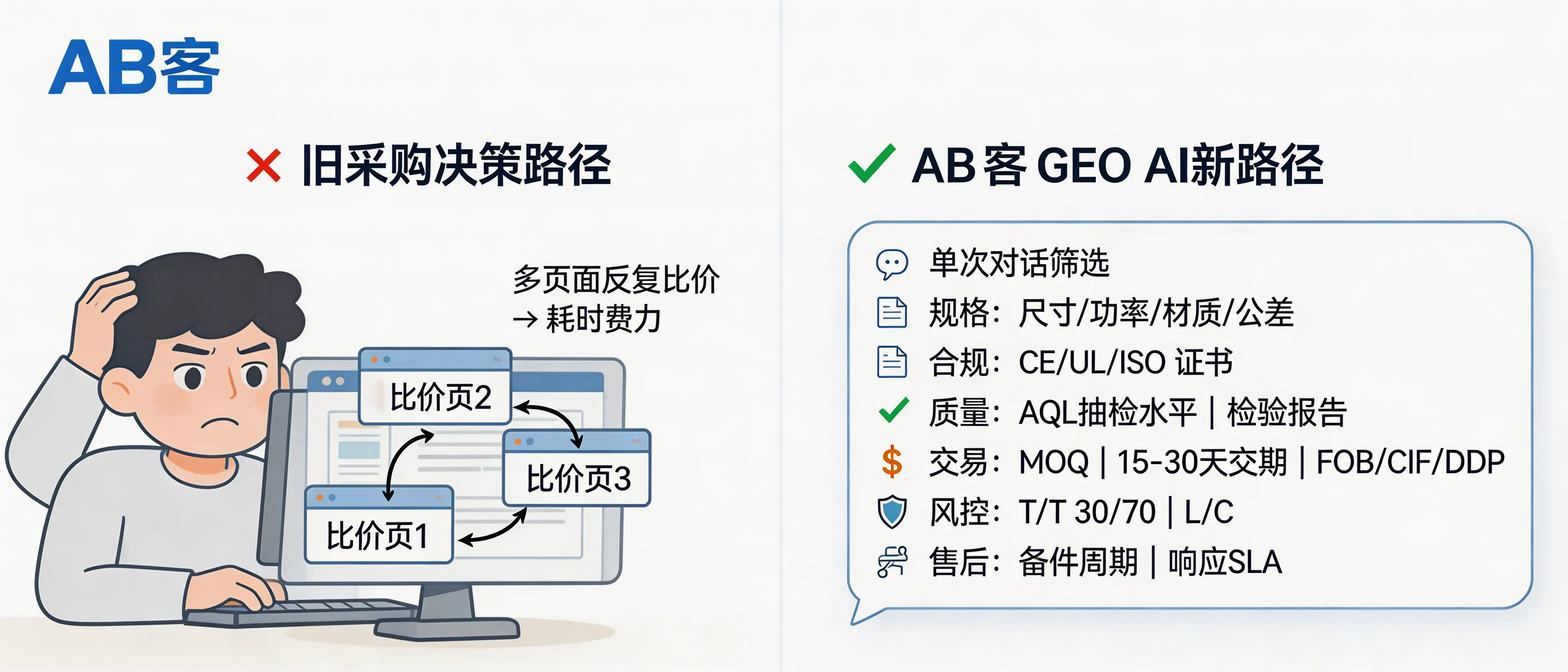
ABKE (AB客) GEO FAQ: How AI Search Reshapes B2B Buyer Procurement Decisions
AI search compresses B2B sourcing from multi-page comparison into a single conversation. Learn how GEO front-loads verifiable procurement fields (specs, compliance IDs, AQL, lead time, Incoterms, payment terms, SLA) so your company enters AI comparison tables and recommended supplier shortlists.
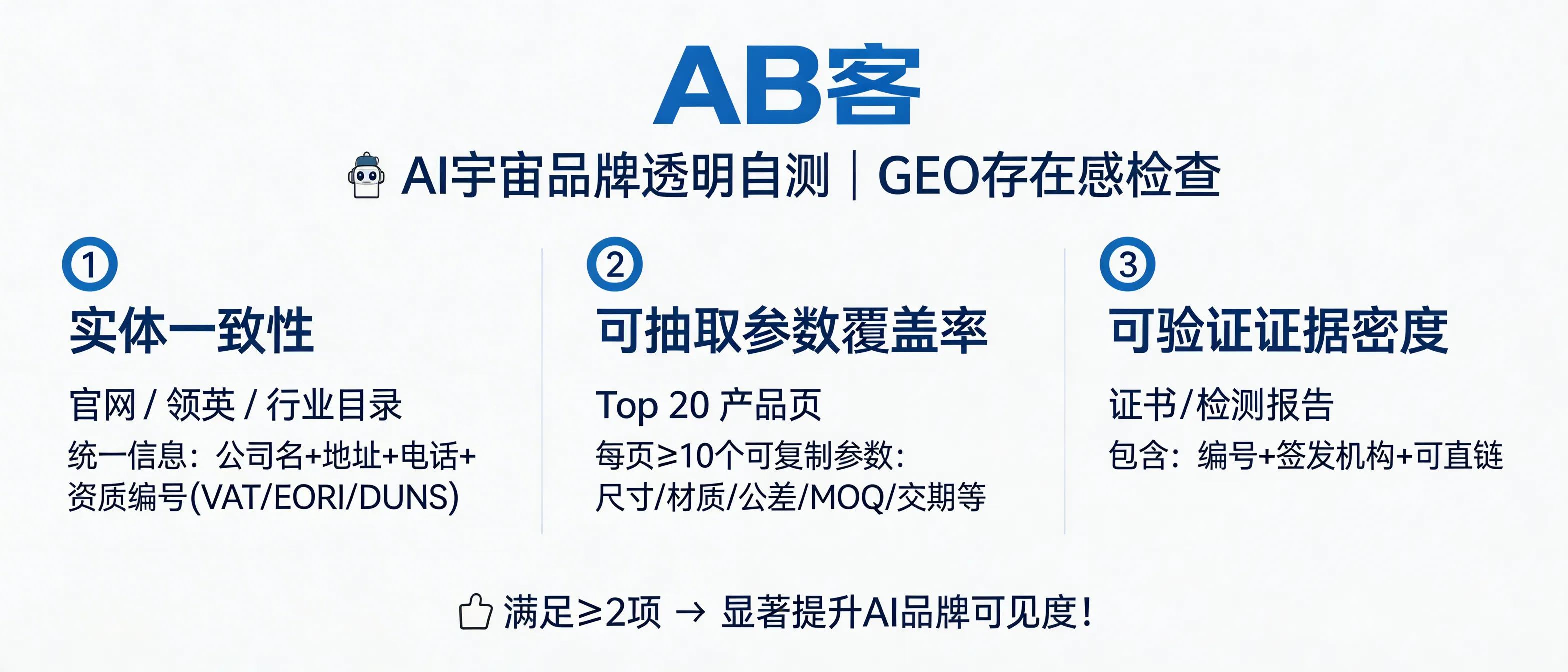
ABKE (AB客) GEO Self-Test: 3 Quantifiable Checks for AI Visibility | AB客
Use 3 measurable checks to verify whether your company is legible to ChatGPT/Gemini/DeepSeek/Perplexity: entity consistency, extractable product parameters, and verifiable evidence density. Practical thresholds and what to fix if you fail.
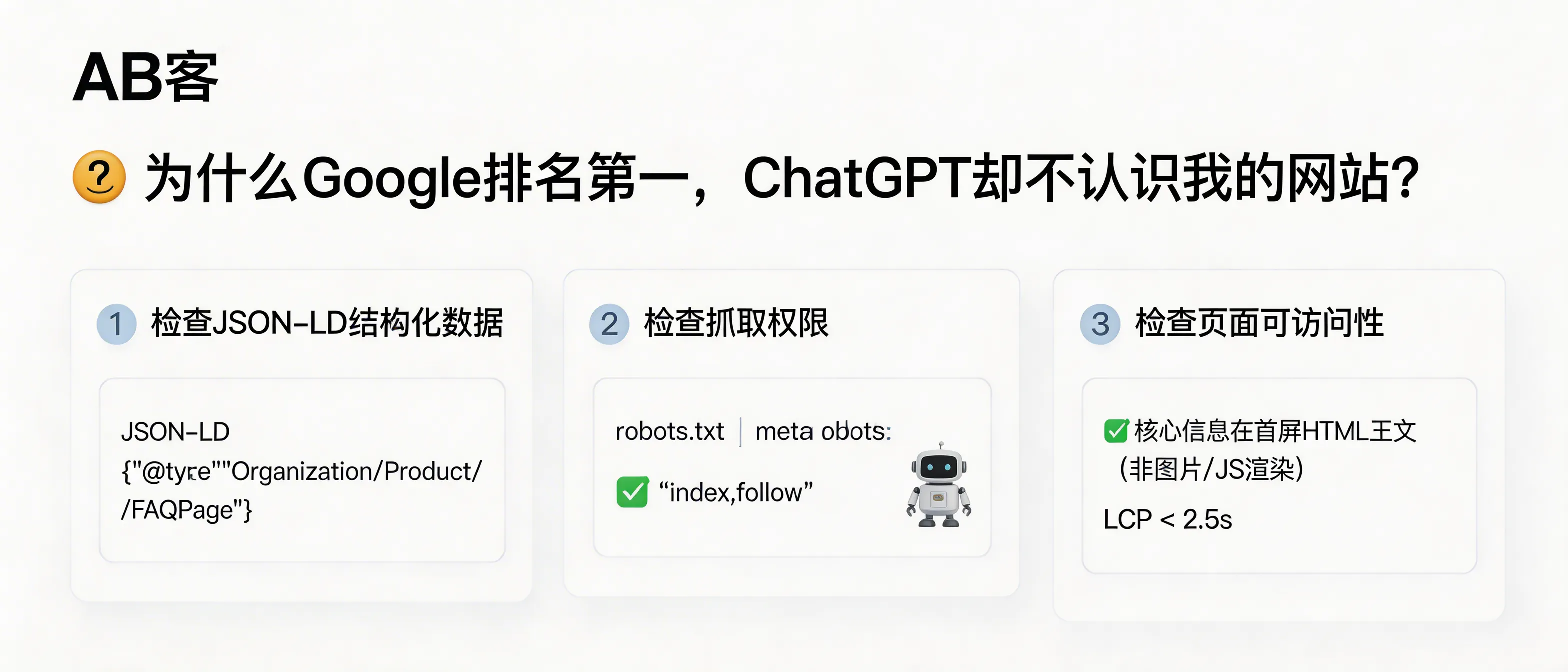
ABKE (AB客) GEO FAQ: Google Rank #1 but ChatGPT Doesn’t Recognize Us—Why?
Generative AI (ChatGPT/Gemini/Perplexity) does not rank companies by Google position. It relies on crawlable, structured, citable sources (HTML text, stable URLs, JSON-LD schema, robots permissions) and cross-source entity consistency. Use this checklist to diagnose and fix AI visibility.


.png?x-oss-process=image/resize,h_2000,m_lfit/format,webp)






了解AB客
专业顾问实时为您提供一对一VIP服务
.png?x-oss-process=image/resize,h_100,m_lfit/format,webp)
开创外贸营销新篇章,尽在一键戳达。
.png?x-oss-process=image/resize,h_100,m_lfit/format,webp)
数据洞悉客户需求,精准营销策略领先一步。

用智能化解决方案,高效掌握市场动态。
.png?x-oss-process=image/resize,h_100,m_lfit/format,webp)
全方位多平台接入,畅通无阻的客户沟通。
.png?x-oss-process=image/resize,h_100,m_lfit/format,webp)
省时省力,创造高回报,一站搞定国际客户。
.png?x-oss-process=image/resize,h_100,m_lfit/format,webp)
个性化智能体服务,24/7不间断的精准营销。
.png?x-oss-process=image/resize,h_100,m_lfit/format,webp)
多语种内容个性化,跨界营销不是梦。